
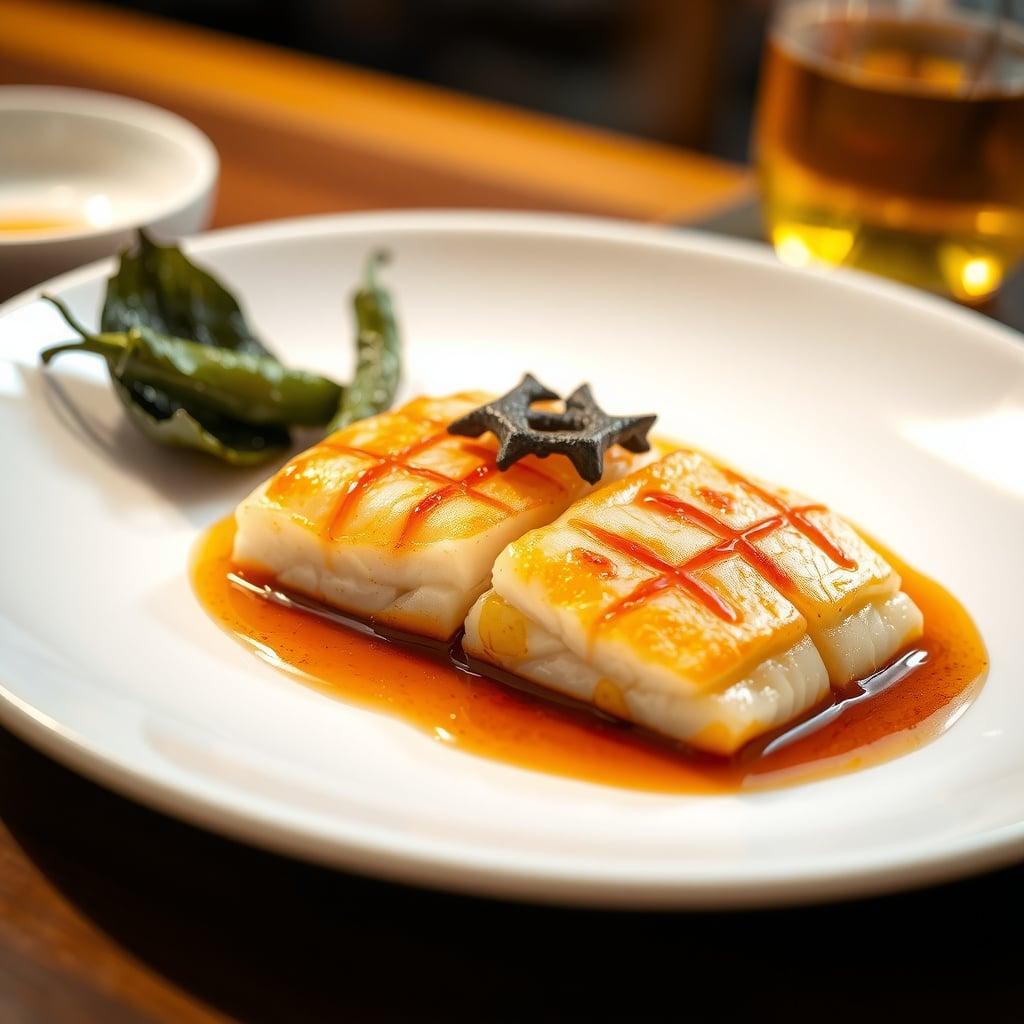
Kelp-Cured Halibut (Kobujime) with Yuzu-Ponzu and Blistered Shishitos
25min
2h 5min
4
185
Chef's Note
The magic of Kobujime lies in the synergy between the fish's natural inosinic acid and the kombu's glutamic acid. Be careful not to over-cure delicate white fish like halibut; 2 hours is the sweet spot. Curing it for too long (over 4 hours) can make the texture unpleasantly rubbery and cause the kelp flavor to completely overpower the delicate fish.
Tags
Ingredients
12 oz Sashimi-grade halibut fillet (skinless and deboned)
2 pieces Dried kombu (kelp) sheets
2 tbsp Sake (for dampening the kombu)
1/2 tsp Fine sea salt
1 tbsp Yuzu juice (or fresh lime juice)
1 tbsp Light soy sauce (usukuchi)
1 tsp Mirin
1 tsp Toasted sesame oil
8 oz Fresh shishito peppers
1 tbsp Neutral cooking oil (such as canola or grapeseed)
1 tsp Toasted white sesame seeds
to taste garnish Microgreens or finely sliced scallions
Instructions
- 1
Moisten a paper towel with the sake and gently wipe both sides of the dried kombu sheets. This cleans the kelp and slightly softens its rigid texture, allowing the glutamic acid to release more easily.
- 2
Lightly season both sides of the halibut fillet with the sea salt. Let it rest at room temperature for 5 minutes, then thoroughly pat dry with a paper towel to remove any surface moisture drawn out by the salt.
- 3
Lay a large sheet of plastic wrap on a clean work surface. Place one kombu sheet on the plastic wrap, lay the halibut fillet flat on top of it, and cover the fish with the second kombu sheet, sandwiching the fish tightly between them.
- 4
Wrap the kombu-fish sandwich tightly with the plastic wrap to ensure maximum surface contact between the kelp and the flesh. Place a small cutting board or plate on top of the wrapped package to apply light, even pressure.
- 5
Refrigerate the weighted fish for 2 hours. This allows osmosis to draw out excess moisture while transferring savory glutamates into the fish.
- 6
While the fish is curing, whisk together the yuzu juice, light soy sauce, mirin, and toasted sesame oil in a small bowl to create the dressing. Set aside.
- 7
Just before retrieving the fish, heat the neutral cooking oil in a cast-iron skillet over high heat. Add the shishito peppers and cook, tossing occasionally, for 4 to 5 minutes until they are blistered and charred in spots. Season with a tiny pinch of salt and transfer to a serving plate.
- 8
Unwrap the halibut and discard the kombu sheets (or freeze them to make dashi later). The fish should feel noticeably firmer and have a slightly translucent, glossy appearance.
- 9
Using a very sharp knife held at a 45-degree angle, slice the cured halibut against the grain into thin sashimi-style slices (about 1/4-inch thick).
- 10
Arrange the sliced halibut on a chilled platter next to the warm blistered shishito peppers. Drizzle the yuzu-ponzu dressing over the fish and garnish with toasted sesame seeds and microgreens.
Nutrition Information (per serving)
185
19g
5g
9g
Reviews (0)
No reviews yet
Be the first to review this recipe!