
Thermal Science of Yunnan Crossing the Bridge Noodle Soup
Learn how a layer of lipid insulation keeps broth hot enough to flash-cook fresh ingredients at the table for an interactive family dining experience.
Marcus Rivera
Culinary Editor
October 13, 2026
4 min read
Gathering family around the table for an interactive meal often brings up a major challenge: keeping the food hot while everyone cooks and eats at their own pace. Hot pots require an active burner, while standard soup bowls cool down before second helpings are served. The Yunnan region of southwestern China solved this thermodynamic puzzle centuries ago with Guòqiáo Mǐxiàn, better known as Crossing the Bridge Noodles. This dish uses basic kitchen physics to transform a bowl of broth into a self-sustaining tabletop cooking vessel.
By understanding how thermal insulation and evaporative cooling work in broth, you can recreate this educational and engaging dining experience at home without specialized heating equipment.
The Origin Story
Legend has it that a scholar's wife in Mengzi, Yunnan, discovered that a thick layer of rendered chicken oil atop herbal broth kept her husband's lunch piping hot as she crossed a long bridge to deliver it to his study island.
The Physics of Lipid Thermal Insulation
When a open bowl of hot soup sits on a dining table, it loses heat primarily through evaporative cooling. As water molecules escape from the surface into the air as vapor, they carry away significant thermal energy. Secondary heat loss occurs through conduction into the bowl itself and convection currents in the surrounding room.
Crossing the Bridge Noodles counters evaporative heat loss by using a pure layer of rendered fat—typically chicken or pork oil—floated across the surface of a gelatin-rich stock. Oil is less dense than water, causing it to form a continuous, unbroken barrier across the liquid.
Because oil does not evaporate at the same low temperatures as water, this floating lipid layer prevents steam from escaping. The surface layer acts as a seal, trapping thermal energy inside the liquid core. Underneath this calm, non-steaming oil blanket, the liquid remains near boiling temperature (90°C to 98°C) for up to twenty minutes.
“Understanding heat transfer turns a meal into an interactive laboratory where physics cooks dinner right before your eyes.”
OttoChef Culinary TeamDesigning the Tabletop Thermal Assembly Line
Because the broth maintains high temperatures without an active flame, raw and fresh ingredients can be flash-cooked directly at the dinner table. However, success depends on the sequence in which ingredients enter the thermal bath. Adding cold ingredients lowers the overall temperature of the system, so order of operation matters.
Beware the Hidden Heat
Because the lipid cap traps steam, the surface of the soup looks completely still and calm, hiding its scalding temperature. Always warn family members that the broth is significantly hotter than it appears.
To ensure food safety and optimal texture, ingredients should be arranged on individual plates and introduced according to their density and required cooking times.
Scalding Broth & Oil Cap
Pour boiling, gelatin-rich broth topped with a generous layer of rendered poultry fat into warm, heavy ceramic bowls.
Raw Thinly Sliced Proteins
Immediately submerge paper-thin raw meats, such as pork loin or fish fillets. Swirl them through the broth to flash-cook within 15 to 30 seconds.
Eggs and Delicate Greens
Crack a quail egg into the broth, followed by delicate vegetables like spinach, chives, and mushrooms to wilt in the residual heat.
Cooked Rice Noodles
Slide pre-cooked, warm rice noodles into the bowl last. Since the noodles are already cooked, they only need a quick bath to heat through without absorbing too much broth.
Optimizing Heat Retention at Home
To maximize the thermal retention of your tabletop soup, every variable in the environment should be considered. Bowl material, ingredient temperature, and fat density all play vital roles in maintaining heat transfer.
Preheat Your Servings Bowls
Thin ceramic or glass cools soup down almost instantly. Use thick earthenware or stone bowls, and preheat them with boiling water for five minutes before serving.
First, bring your proteins and vegetables close to room temperature before serving. Dropping refrigerator-cold meat into hot liquid rapidly pulls energy away from the core, dropping the temperature below the safe threshold for flash cooking. Second, ensure your raw proteins are sliced as thinly as possible—ideally between 1 and 2 millimeters thick—so the heat penetrates instantly.
Emulsification vs. Layering
Do not whisk or aggressively stir the soup broth before adding ingredients. The goal is to keep the fat layer separated on top to maintain the insulating blanket rather than emulsifying it into the liquid.
By leveraging basic thermodynamics, you can bring an educational, tactile, and deeply enjoyable culinary tradition to your family table. It transforms dinner from a simple meal into an engaging exploration of how science makes great food possible.
Try This Recipe
Now that you've learned about thermal insulation mechanics in yunnan crossing the bridge noodle soup for family tabletop cooking, put your knowledge into practice with this recipe:
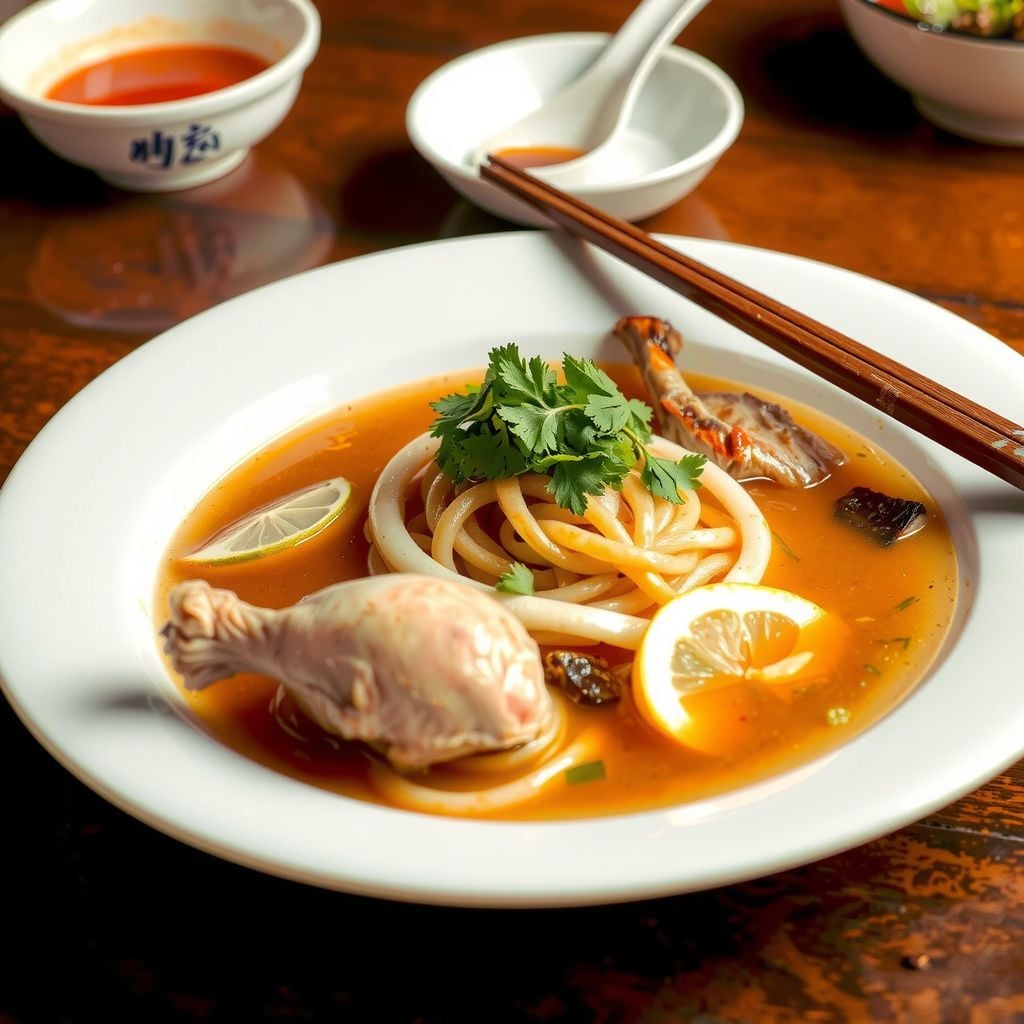
Yunnan Crossing the Bridge Noodle Soup (Guòqiáo Mǐxiàn)
155min
4
View Full Recipe →
Ready to simplify your meal planning?
Let OttoChef AI create personalized meal plans for your family — free to use, no credit card.