
Mastering Emulsions: From Silky Vinaigrettes to Perfect Hollandaise
Learn the science and technique behind perfect culinary emulsions. Master vinaigrettes, mayonnaise, and hollandaise with our expert guide for home cooks.
Marcus Rivera
Culinary Editor
June 23, 2026
5 min read
Achieving a perfectly smooth, silky sauce is one of the most rewarding milestones for any home cook. Yet, many of us have experienced the frustration of a vinaigrette that separates into puddles of oil or a hollandaise that curdles into a greasy mess. These failures often stem from a misunderstanding of emulsions—the science of forcing two liquids that naturally repel each other into a stable partnership. Understanding the mechanics of how oil and water interact allows you to move beyond following recipes and start cooking with intuition. At its core, an emulsion is a mixture of two immiscible liquids. In the kitchen, this usually means a fat (like oil or butter) and an aqueous liquid (like vinegar, lemon juice, or water). Normally, these liquids will separate no matter how vigorously you shake them. To keep them together, you need two essential components: mechanical energy and an emulsifier.
Mechanical energy, provided by whisking, blending, or shaking, breaks the dispersed liquid into millions of tiny droplets. However, energy alone isn't enough; without a stabilizer, those droplets will quickly find each other and recombine. This is where emulsifiers come in. An emulsifier is a molecule that acts as a bridge, possessing one hydrophilic (water-loving) end and one lipophilic (fat-loving) end. By surrounding the oil droplets, the emulsifier creates a protective barrier that prevents them from merging.
The Power of Mustard
In a standard vinaigrette, Dijon mustard acts as a powerful stabilizer. It contains complex carbohydrates and plant mucilage that help coat oil droplets, keeping them suspended in the vinegar for a much longer period than whisking alone.
Emulsions are categorized by their stability. Temporary emulsions, such as a simple Italian dressing of olive oil and balsamic vinegar, rely strictly on agitation. They stay mixed only as long as the droplets are moving. Semi-permanent emulsions use a light stabilizer like mustard or honey to maintain their structure for an hour or two. Permanent emulsions are the gold standard of sauce-making. Using potent emulsifiers like the lecithin found in egg yolks, these sauces—such as mayonnaise or Hollandaise—can remain stable for days when stored correctly.
"A great sauce is the signature of a cook who has mastered the balance of physics and patience."
Chef's InsightWhen working with cold emulsions like mayonnaise or Caesar dressing, the most common pitfall is the rate at which fat is introduced. If you pour a cup of oil into a small amount of acid all at once, the oil becomes the 'continuous phase,' and the acid will simply float in it like beads. To create a thick, creamy texture, the acid must remain the continuous phase, with the oil broken into tiny droplets within it.
The Slow Stream
The first few drops of oil are the most critical part of the process. If you rush the beginning, the emulsion will never form properly, regardless of how fast you whisk later.
Establish the Base
Combine your acid—such as lemon juice or vinegar—with your chosen emulsifier and any seasonings. Whisk these until they are fully integrated and slightly frothy. This creates the environment where the oil will be suspended.
The Initial Incorporation
Add your oil literally one drop at a time while whisking vigorously with your dominant hand. You are looking for the mixture to transition from translucent to opaque and slightly thicker.
The Steady Thread
Once you have established a stable 'nucleus' (after about 25% of the oil is in), you can begin adding the remaining fat in a very thin, steady stream. If you see oil pooling at the edges of the bowl, stop pouring immediately and whisk until the mixture is uniform before adding more.
Transitioning to hot emulsions, such as Hollandaise or Beurre Blanc, adds the complexity of temperature management. These sauces are part of the French 'Mother Sauces' tradition and require a gentle hand. In a Hollandaise, the egg yolks serve as the emulsifier for clarified butter. The challenge is that egg yolks begin to coagulate (scramble) at 145°F (63°C), while the butter must be warm enough to remain liquid.
The 'Goldilocks' Temperature
For a Hollandaise, aim for a temperature between 145°F and 150°F. Any cooler and the butter will solidify, causing the sauce to grain; any hotter and the eggs will scramble, leading to a lumpy mess.
Using a double boiler (bain-marie) provides the indirect heat necessary to cook the yolks slowly without curdling them. The goal is to reach the 'ribbon stage,' where the whisk leaves a visible trail in the thickened yolks before you begin adding the butter. Another essential hot technique is 'monter au beurre,' or mounting with butter. This involves whisking cold cubes of butter into a hot reduction at the end of cooking. The milk solids and proteins in the cold butter act as natural emulsifiers, creating a glossy, rich finish to pan sauces.
If you notice your sauce beginning to look greasy or thin, it is likely 'breaking.' A broken emulsion occurs when the droplets of fat coalesce. This can happen due to high heat, adding fat too quickly, or over-whisking. However, a broken sauce is rarely a lost cause.
The Rescue Technique
To fix a broken cold emulsion, place a teaspoon of water or a fresh egg yolk in a clean bowl. Slowly whisk the broken sauce into this new base, drop by drop, as if it were fresh oil. For a hot sauce that has separated, whisking in a single tablespoon of boiling water can often encourage the proteins to realign and re-capture the fat droplets.
Mastering these techniques transforms your cooking from a series of memorized steps into a precise craft. Whether you are creating a simple lemon-tahini dressing or a complex Béarnaise, the principles of emulsification remain the same. By respecting the science of the bridge between oil and water, you gain the ability to create textures that are smooth, luxurious, and consistently professional.
Try This Recipe
Now that you've learned about mastering emulsions: from vinaigrettes to hollandaise, put your knowledge into practice with this recipe:
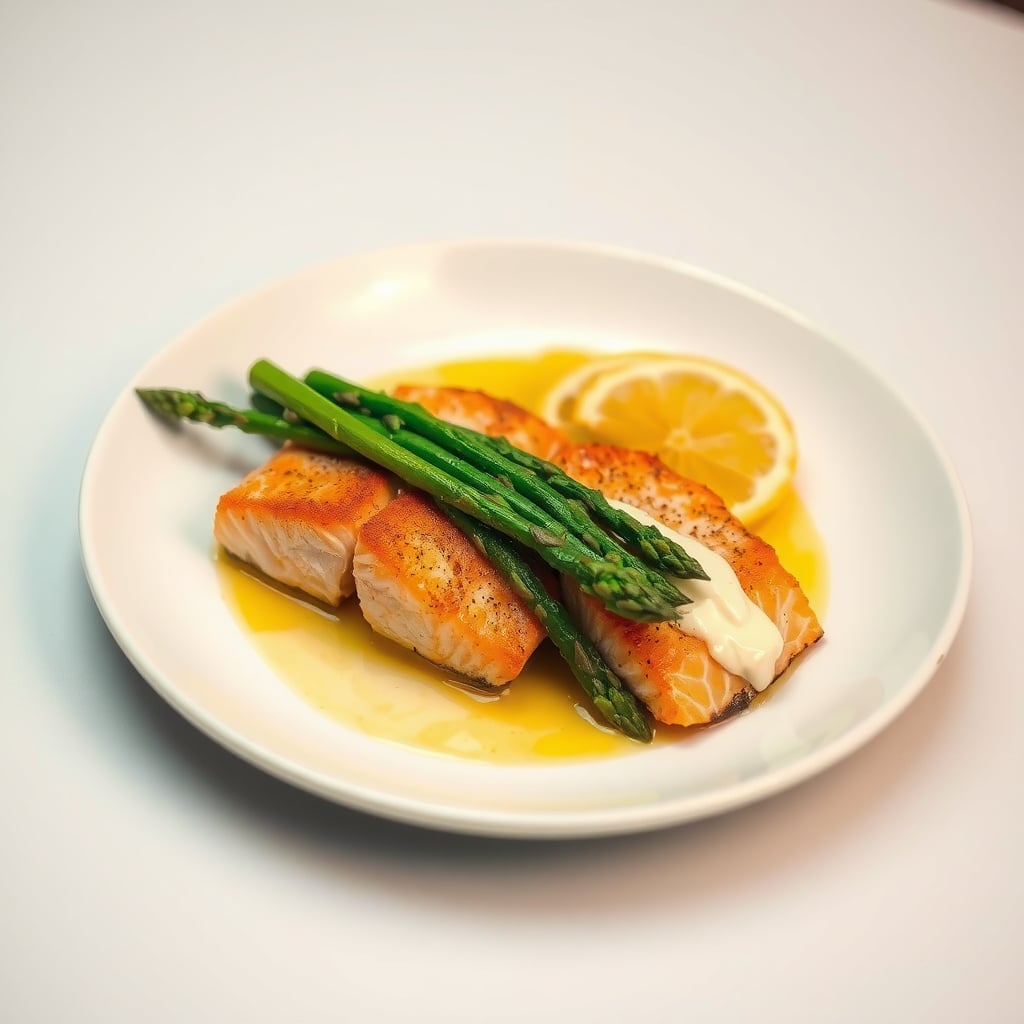
Pan-Seared Salmon with Hand-Whisked Lemon-Dijon Aioli
35min
4
View Full Recipe →
Ready to simplify your meal planning?
Let OttoChef AI create personalized meal plans for your family in seconds.