
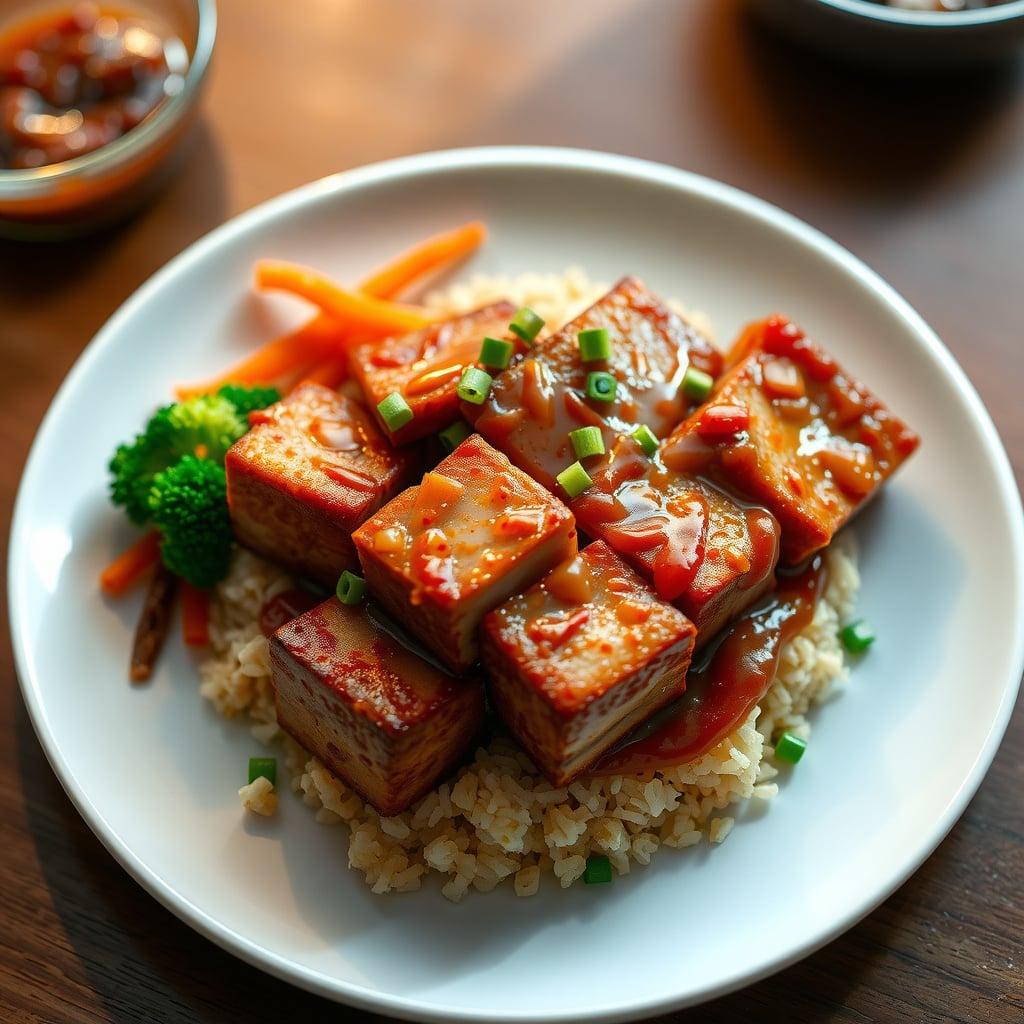
Gochujang-Glazed Pork Belly with Kimchi Fried Rice
25min
45min
4
685
Free account. Otto builds a week around this recipe, with the shopping list done.
Chef's Note
This recipe demonstrates the principle of *jeong seong*—the care and attention that elevates Korean cooking. Notice how we layer fermented ingredients (gochujang, doenjang, kimchi) at different stages, each contributing its unique character. The aged kimchi is crucial here; its developed sourness and funk balance the rich pork belly, while the gochujang glaze showcases how fermentation creates both heat and sweetness. Use day-old rice for the best texture—fresh rice will turn mushy. If you can only find young kimchi, let it sit open in your fridge for a few days to develop more complex flavors.
Tags
Ingredients
1.5 lbs pork belly, skin removed, cut into 1-inch cubes
3 tbsp gochujang (Korean fermented chili paste)
1 tbsp doenjang (Korean fermented soybean paste)
2 tbsp soy sauce
2 tbsp honey
1 tbsp rice vinegar
1 tbsp sesame oil
4 cloves garlic, minced
1 tbsp fresh ginger, minced
1.5 cups aged kimchi, roughly chopped
4 cups day-old cooked short-grain rice
2 tbsp vegetable oil
4 large eggs
4 whole scallions, thinly sliced
2 tbsp toasted sesame seeds
1 tsp gochugaru (Korean red chili flakes)
2 tbsp kimchi juice
Instructions
- 1
Make the gochujang glaze: In a bowl, whisk together gochujang, doenjang, soy sauce, honey, rice vinegar, sesame oil, half the garlic, and ginger. This showcases the layered umami from multiple fermented ingredients working in harmony.
- 2
Marinate the pork belly cubes in half the glaze for 15 minutes at room temperature. Reserve the remaining glaze for finishing.
- 3
Heat a large cast-iron skillet or heavy-bottomed pan over medium-high heat. Add the marinated pork belly in a single layer (work in batches if needed). Sear without moving for 4-5 minutes until deeply caramelized on the bottom.
- 4
Flip the pork pieces and continue cooking for another 3-4 minutes. Reduce heat to medium and cook for an additional 8-10 minutes, turning occasionally, until the pork is cooked through and beautifully glazed. The sugars in the gochujang and honey should create a sticky, lacquered coating.
- 5
Remove pork to a plate and tent with foil. Don't wash the pan—those caramelized bits are flavor gold.
- 6
In the same pan, add 1 tablespoon vegetable oil over medium-high heat. Add the remaining garlic and cook for 30 seconds until fragrant.
- 7
Add the chopped kimchi and stir-fry for 2-3 minutes. The aged kimchi's sour, funky notes will develop as it hits the hot pan, creating new layers of flavor through the Maillard reaction.
- 8
Add the day-old rice, breaking up any clumps. Stir-fry for 4-5 minutes, letting the rice get slightly crispy on the bottom. Add kimchi juice and gochugaru, tossing to coat evenly.
- 9
Push the rice to the sides of the pan, creating a well in the center. Add remaining oil and crack the eggs into the center. Let them fry for 1-2 minutes, then break the yolks and scramble, gradually incorporating into the rice.
- 10
Taste and adjust seasoning. The fermented ingredients provide salt, so you may not need additional.
- 11
Divide the kimchi fried rice among four bowls. Top each with glazed pork belly pieces and drizzle with the reserved glaze.
- 12
Garnish generously with sliced scallions and toasted sesame seeds. Serve immediately while the contrasts are at their peak—hot rice, crispy-edged pork, and cool scallions.
Nutrition Information (per serving)
685
28g
58g
38g
Reviews (0)
No reviews yet
Be the first to review this recipe!