
Why You Should Boil Your Mushrooms for Maximum Flavor
Learn the kitchen science behind boiling mushrooms in water to collapse cell structures, drive off excess moisture, and achieve ultra-crispy results.
Alex Thompson
Food Editor
October 16, 2026
5 min read
Sautéing raw mushrooms often leads to disappointing results. You toss sliced creminis or button mushrooms into a pan with hot olive oil, only to watch the pan's contents absorb every drop of fat in seconds. Moments later, as the heat penetrates the fungus, a pool of murky liquid releases into the skillet. Instead of frying, the mushrooms boil in their own trapped moisture, resulting in a rubbery, waterlogged texture and muted flavor.
The solution to this common culinary hurdle seems counterintuitive: boil your mushrooms in water before adding any oil or butter. While adding liquid to a food you want to crisp sounds backward, understanding mushroom anatomy and kitchen physics reveals why this technique produces intensely savory, perfectly browned mushrooms every time.
Understanding Mushroom Anatomy
To understand why water helps mushrooms brown, you must first look at what mushrooms are made of. Unlike plant cells, which have rigid cell walls made of cellulose, mushroom cell walls consist of chitin—the same resilient compound found in the exoskeletons of crustaceans.
Chitin vs. Plant Cells
Because mushroom cell walls are composed of chitin, they are remarkably heat-stable. Unlike green vegetables that quickly turn to mush when boiled, mushrooms retain their structural integrity even under prolonged cooking temperatures.
Additionally, fresh mushrooms are essentially fungal sponges filled with air pockets and liquid. By weight, raw mushrooms consist of roughly 80 to 90 percent water. When raw mushrooms hit a hot pan with oil, those microscopic air pockets trap the oil instantly. The trapped water then prevents the pan temperature from rising above 212°F (100°C)—the boiling point of water. Because the Maillard reaction (the chemical process responsible for browning and rich flavor development) requires temperatures between 280°F and 330°F (138°C to 165°C), mushrooms cannot brown until that internal water leaves the pan.
The Oil Trap: Why Sautéing Raw Backfires
When cooks see raw mushrooms absorb all the cooking fat in the first thirty seconds, the instinct is to pour more oil into the pan. This creates a secondary problem.
Stop Adding Extra Oil
When mushrooms steam and collapse later in the cooking process, they expel all the oil they initially absorbed. If you keep adding fat to a dry pan, your mushrooms will end up swimming in a greasy pool once their cellular structure breaks down.
By adding liquid water at the start of the cooking process, you bypass the oil-absorption phase entirely. Water transfers heat far more efficiently than air, rapidly heating the chitin cell walls and forcing the microscopic air pockets to collapse.
“Water removes the barrier to browning. By driving off internal moisture first, you allow cooking fat to directly contact the dense mushroom surface for rapid, even caramelization.”
OttoChef Culinary ScienceThe Science of Water-Searing
When you simmer mushrooms in a shallow layer of water, three crucial transformations occur simultaneously:
- Cellular Collapse: Heat softens the chitin network and breaks down internal cell structures, forcing the mushrooms to shrink and release their bound water into the pan.
- Moisture Evaporation: As the pan simmers, both the added water and the mushroom's internal water evaporate into steam.
- Flavor Concentration: Glutamates—the naturally occurring amino acids responsible for rich, umami taste—become concentrated as the excess liquid leaves the skillet.
Once all the moisture evaporates, you are left with dense, cooked mushroom meat in a completely dry skillet. At this exact moment, introducing a small amount of oil or butter allows the fat to coat only the exterior surface rather than soaking inside. The pan temperature quickly spikes past 300°F, triggering rapid Maillard browning within two to three minutes.
How to Pre-Boil Mushrooms Step by Step
This technique works brilliantly for almost all cultivated and wild varieties, including button, cremini, portobello, maitake, and oyster mushrooms.
Prep and Slice Uniformly
Clean your mushrooms and slice them into thick pieces or quarter them. Keeping the pieces substantial ensures they maintain a pleasant bite after water reduction.
Add Water and Initial Salt
Place the sliced mushrooms into a cold skillet. Add roughly 1/2 cup of water per pound of mushrooms along with a generous pinch of salt. Set the heat to medium-high.
Boil Off the Moisture
Bring the water to a boil. Allow the liquid to bubble vigorously as the mushrooms collapse. Continue cooking until all liquid in the pan completely evaporates, leaving the bottom of the pan dry.
Sear with Fat
Reduce heat to medium and add one to two tablespoons of high-smoke-point oil or butter. Sauté the collapsed mushrooms for 3 to 5 minutes, turning occasionally, until a deep golden-brown crust forms.
Practical Tips for Better Results
Now that you understand the science behind water-searing, small adjustments can refine your outcome even further.
Salt Early During the Water Phase
Adding salt to the initial water phase leverages osmosis. Salt draws internal moisture out of the mushroom cells faster, accelerating the evaporation process while seasoning the interior of the mushroom thoroughly.
Deglaze for Maximum Flavor
As the mushrooms sear in fat after the water evaporates, a rich brown coating (fond) will form on the bottom of the pan. Deglaze the skillet with a splash of dry white wine, broth, or soy sauce to lift those flavor compounds back onto the mushrooms.
Mastering this simple shift in cooking order transforms mushrooms from soggy pan-fillers into deeply caramelized, crisp-edged powerhouses of umami. Next time you prepare mushrooms, skip the oil-first habit and let steam pave the way for superior searing.
Try This Recipe
Now that you've learned about the science of boiling mushrooms: why water yields crispiness and concentrated flavor, put your knowledge into practice with this recipe:
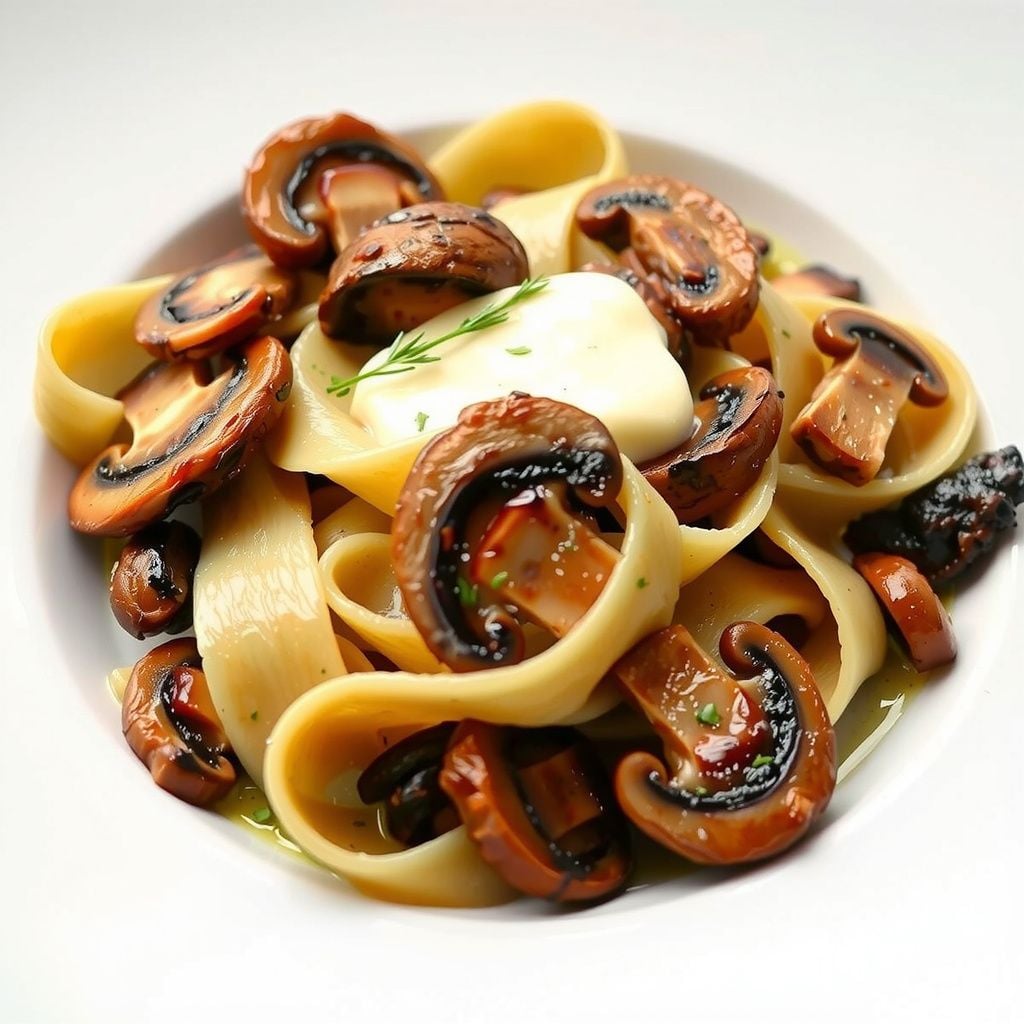
Water-Seared Mushroom Pappardelle with Garlic and Thyme Cream
40min
4
View Full Recipe →
Ready to simplify your meal planning?
Let OttoChef AI create personalized meal plans for your family — free to use, no credit card.