
Vietnamese Cooking: Mastering Fresh, Balanced Flavors at Home
Learn the essential techniques and flavor principles behind Vietnamese cuisine. Discover how to balance sweet, salty, sour, and spicy in your cooking.
James Okonkwo
Food Writer
March 19, 2026
8 min read
12 views
When you bite into a properly made Vietnamese dish, you experience something most Western cooking doesn't prioritize: perfect balance. Not just "tastes good" balance, but a deliberate harmony of sweet, salty, sour, bitter, and spicy that hits every part of your palate simultaneously. This isn't accidental. Vietnamese cuisine operates on principles that home cooks can learn and apply to elevate their everyday cooking.
Unlike French cuisine's reliance on butter and cream, or Italian cooking's celebration of olive oil and cheese, Vietnamese food builds complexity through fresh herbs, fish sauce, lime, and aromatics. The techniques are accessible, the ingredients increasingly available, and the results are dishes that feel light yet deeply satisfying.
The Foundation: Understanding Nước Chấm
Before you cook a single Vietnamese dish, you need to understand nước chấm—the dipping sauce that appears at nearly every Vietnamese meal. This isn't just condiment; it's a masterclass in flavor balancing that will change how you think about seasoning.
The Five-Flavor Philosophy
Vietnamese cooking traditionally balances five flavors: sweet (ngọt), salty (mặn), sour (chua), bitter (đắng), and spicy (cay). Every dish aims to incorporate several of these elements, creating complexity without heaviness.
A basic nước chấm combines fish sauce (salty, umami), lime juice (sour), sugar (sweet), water (to balance intensity), and chili (spicy). But the ratio matters enormously. Too much fish sauce and it's overwhelming. Too much sugar and it tastes like dessert. The traditional ratio is roughly 1:1:1:3 (fish sauce:lime juice:sugar:water), but Vietnamese cooks adjust constantly based on what they're serving.
Taste Your Fish Sauce First
Fish sauce brands vary wildly in saltiness and funk. Before making any sauce, taste your fish sauce straight. Red Boat and Three Crabs are less aggressively salty than some brands, so you may need to adjust ratios accordingly.
Build Your Base
Mix fish sauce, fresh lime juice, and sugar with warm water. The warmth helps dissolve the sugar quickly. Start conservative with fish sauce—you can always add more.
Adjust and Balance
Taste constantly. Too salty? Add more lime and sugar. Too sour? Add sugar and a splash of fish sauce. This iterative tasting is how Vietnamese cooks develop their palates.
"The goal isn't to taste fish sauce, lime, or sugar individually. You should taste all of them at once, none dominating."
Andrea Nguyen, Vietnamese food authorityHerb Handling: The Difference Between Fresh and Wilted
Walk into any Vietnamese home kitchen and you'll find bundles of fresh herbs: Thai basil, cilantro, mint, perilla, sawtooth coriander. These aren't garnishes added for color—they're structural ingredients that provide aromatic complexity and textural contrast.
Western cooking typically treats herbs as finishing touches, added at the end in small quantities. Vietnamese cooking uses them by the handful, often raw, added at the table so each person controls their own flavor intensity.
Keeping Herbs Fresh
Treat herbs like flowers. Trim stems, place in a glass of water, cover loosely with a plastic bag, and refrigerate. Change water daily. Properly stored, cilantro and mint last 7-10 days instead of wilting in 2-3.
The key technique: Vietnamese cooks don't chop delicate herbs in advance. Chopping releases aromatic oils that oxidize and turn bitter. Instead, leaves are torn or left whole and added just before serving. This preserves the bright, clean flavors that define the cuisine.
For sturdier herbs like Thai basil, tearing releases oils in a controlled way that enhances flavor without the metallic bitterness a knife can create. Try it side-by-side: chop half your basil, tear the other half, and taste them after 10 minutes. The torn herbs retain their vibrancy.
The Aromatics Triangle: Garlic, Shallots, and Lemongrass
Vietnamese cooking builds depth through a specific aromatic foundation that differs from the mirepoix of French cooking or the sofrito of Spanish cuisine. Understanding this base unlocks dozens of dishes.
Why Shallots, Not Onions?
Shallots have a more delicate, slightly sweet flavor than yellow onions. They also have less water content, which means they caramelize beautifully without becoming mushy. In Vietnamese cooking, this matters for achieving the right texture in stir-fries and braises.
Lemongrass requires specific handling. The outer layers are too tough to eat, and the upper green portions are fibrous. You want the lower 4-6 inches of the pale, tender inner stalk.
For marinades and pastes, slice lemongrass into thin coins, then pound or process it. For broths and braises where you'll remove it later, bruise the stalks with the back of your knife to release oils, then add them whole. The bruising technique—smashing the stalk to create cracks without cutting through—releases aromatic oils while keeping pieces large enough to fish out easily.
The Lemongrass Mistake
Never add lemongrass without either pounding it thoroughly or removing it before serving. Biting into a fibrous chunk of lemongrass is unpleasant and marks you as someone who doesn't understand the ingredient.
Rice and Noodles: The Textural Backbone
Vietnamese meals are built around rice or rice noodles, but the approach differs fundamentally from other Asian cuisines. The rice isn't fried or heavily seasoned—it's a neutral canvas that lets other flavors shine.
For everyday jasmine rice, the key is getting the water ratio right and leaving it alone. Vietnamese cooks use 1:1 water to rice (by volume) for jasmine rice, slightly less than the 1.5:1 ratio common in American cooking. This produces grains that are tender but distinct, not mushy.
Rice noodles are more temperamental. Fresh bánh phở (the wide, flat noodles) should be slippery and tender with a slight chew. Dried noodles need careful soaking—too long and they fall apart when cooked, too short and they're crunchy in the center.
The Soak-Then-Boil Method
For dried rice noodles, soak in room temperature water for 30-45 minutes until pliable but not soft. Then boil for just 1-2 minutes. This two-step process gives you better texture control than boiling from dry.
Building Layers Without Heavy Sauces
Where Western cooking often builds richness through fats and reduction, Vietnamese cooking layers flavor through technique and timing. A classic example is caramel sauce (nước màu)—not the dessert kind, but a savory base made from sugar cooked until deeply amber, then deglazed with fish sauce.
This technique appears in everything from braised pork to clay pot fish. The caramelized sugar provides color, a subtle bitterness that balances sweetness, and a glossy coating that clings to proteins without heavy cream or butter.
The process requires attention: heat sugar in a dry pan over medium heat, swirling (not stirring) as it melts. When it reaches a deep amber—just before it smells burnt—remove from heat and carefully add fish sauce. It will sputter violently, so stand back. This is your flavor base.
Caramel Timing Is Everything
Take your caramel too far and the bitter, burnt flavor will ruin your dish. Stop when it smells nutty and looks like dark honey. It will continue cooking briefly off heat, so err on the side of lighter.
The Gentle Touch: Cooking Proteins
Vietnamese cooking doesn't worship the hard sear or char the way Western grilling does. Proteins are typically cooked gently to preserve tenderness, then paired with fresh herbs and bright sauces for contrast.
For fish, steaming or gentle pan-frying in moderate oil is standard. The goal is moist, tender flesh that flakes easily—not a crispy crust. This makes sense when you consider the fish will be eaten with pungent herbs, tangy sauce, and rice. The protein provides clean flavor and texture, not aggressive seasoning.
Chicken and pork are often poached or braised rather than roasted. Poaching in seasoned broth keeps meat incredibly moist while infusing subtle flavor. The technique is simple: bring your poaching liquid (water, aromatics, salt) to a bare simmer, add protein, cover, and turn off heat. Let it sit for 30-40 minutes. The residual heat cooks gently without toughening.
The Chopstick Test
To check if poached chicken is done, insert a chopstick into the thickest part. If the juices run clear (not pink), it's ready. This preserves the moist texture better than cutting the meat open repeatedly.
Bringing It Together: The Bowl Philosophy
Vietnamese meals are often served as composed bowls—rice or noodles as the base, protein, fresh vegetables and herbs, and sauce on the side. This structure gives each diner control over their flavor balance and teaches an important lesson: let people customize.
When you serve food this way, you're not just following tradition—you're acknowledging that palates differ. Some want more herbs, others want more sauce. By providing components rather than a pre-mixed dish, you ensure everyone gets exactly what they want.
This approach also keeps ingredients at their best. Herbs stay crisp, noodles don't get soggy in sauce, and everything tastes fresh rather than wilted or overdressed.
Your Vietnamese Cooking Toolkit
You don't need specialty equipment, but a few items make Vietnamese cooking easier:
- A mortar and pestle for pounding aromatics (releases oils better than a food processor)
- A spider strainer for blanching vegetables and handling noodles
- Small prep bowls for organizing herbs and aromatics (mise en place matters when cooking moves quickly)
- A good vegetable peeler for creating ribbons of vegetables
The most important tool is your palate. Vietnamese cooking demands constant tasting and adjusting. Make your nước chấm, taste it, adjust it. Add herbs to your bowl, taste, add more. This iterative approach is how you develop the instinct for balance that defines the cuisine.
Start with one element—maybe perfect your nước chấm or learn to handle lemongrass properly. Build from there. Vietnamese cooking isn't about mastering complex techniques; it's about understanding how fresh ingredients, proper balance, and gentle cooking create food that satisfies without weighing you down. Once you grasp those principles, you'll find yourself applying them far beyond Vietnamese dishes.
Try This Recipe
Now that you've learned about vietnamese cooking: fresh, light, and flavorful, put your knowledge into practice with this recipe:
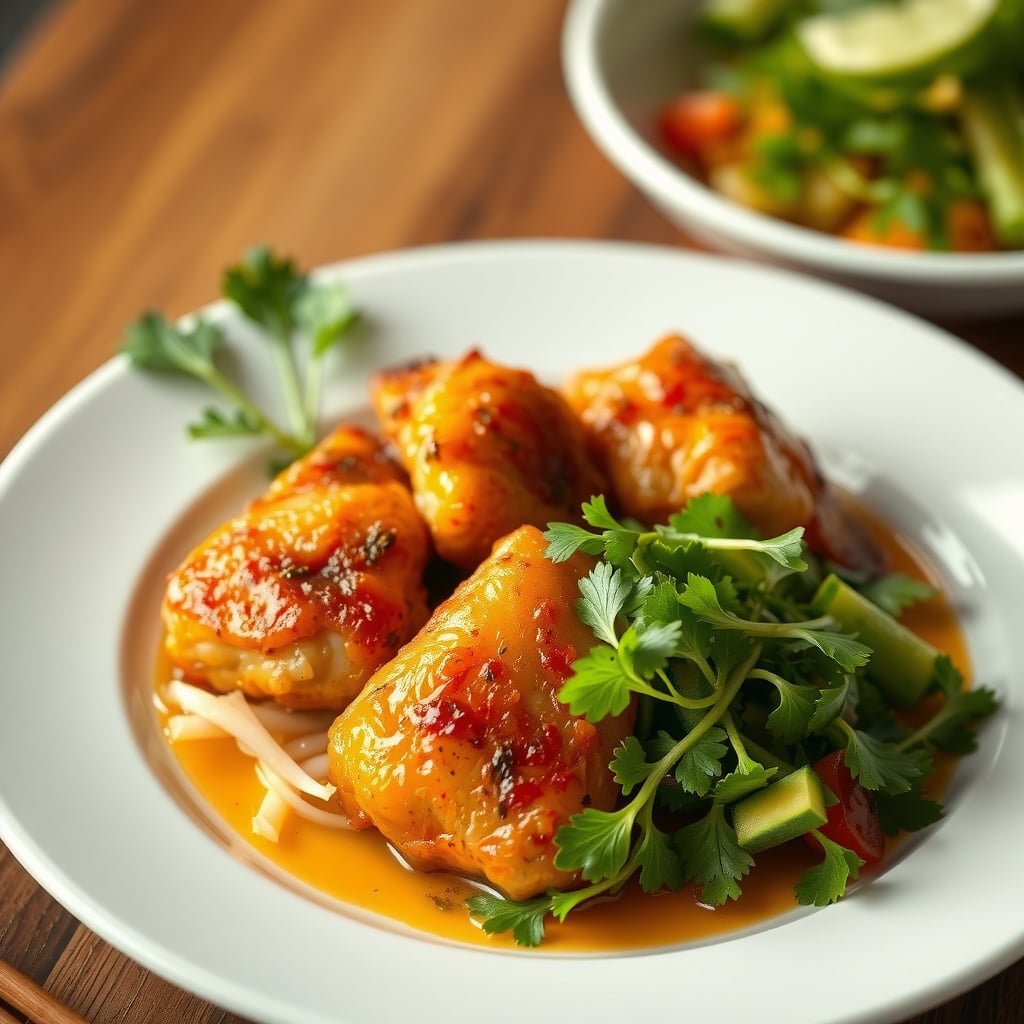
Caramelized Lemongrass Chicken with Fresh Herb Salad
55min
4
View Full Recipe →
Ready to simplify your meal planning?
Let OttoChef AI create personalized meal plans for your family in seconds.