
The Science of Walnut Emulsions: Mastering Georgian Satsivi
Learn the culinary science behind walnut emulsions to master Satsivi, Georgia's iconic spiced walnut sauce. Discover tips for perfect texture and flavor.
Emma Chen
Recipe Developer
September 19, 2026
6 min read
4 views
Many home cooks struggle with nut-based sauces. They often turn out gritty, separated, or unpleasantly greasy. In the culinary traditions of the Republic of Georgia, walnuts are treated with the same reverence and technical precision that French chefs apply to butter and cream. The pinnacle of this walnut mastery is Satsivi—a cold dish of poultry bathed in a thick, highly aromatic spiced walnut sauce. Understanding the science of how walnuts emulsify allows you to transform humble nuts into a velvet-textured, stable sauce that holds its structure beautifully.
Unlike dairy-based sauces that rely on milk proteins, or mayonnaise which relies on egg yolks, a walnut emulsion must be built entirely from the structural components of the nut itself. By manipulating temperature, particle size, and acidity, you can create a luxurious suspension that highlights the complex flavors of Georgian spices.
The Anatomy of a Walnut Emulsion
To master Satsivi, you must first understand what happens at a molecular level when you grind and hydrate walnuts. Walnuts are composed of roughly 65% fat (mostly polyunsaturated oils), 15% protein, and 14% carbohydrates (including dietary fiber).
An emulsion is a mixture of two immiscible liquids—in this case, walnut oil and water-based poultry broth. To keep these two elements from separating, we need an emulsifier. Fortunately, walnuts carry their own emulsifying agents in the form of proteins and natural lecithin-like compounds. When walnuts are ground into an extremely fine paste, these proteins are released. When we gradually whisk in warm broth, the hydrophobic (water-repelling) ends of the proteins bind to the walnut oil droplets, while the hydrophilic (water-attracting) ends bind to the water in the broth. This forms a stable network that prevents the oil droplets from coalescing and separating.
The Science of Walnut Oil
Because walnut oil is rich in polyunsaturated fatty acids, it has a very low melting point. This means it remains liquid even when chilled, which is precisely why Satsivi can be served cold without the fat solidifying or turning chalky, unlike sauces made with butter or animal fats.
Particle Size and the Grinding Process
The success of your emulsion depends heavily on the mechanical breakdown of the walnuts. If the walnuts are coarsely ground, the cellular walls remain intact, trapping the oils and proteins inside. The result is a gritty, watery sauce with pools of oil floating on top.
To release enough protein to act as an emulsifier, the walnuts must be reduced to an ultra-fine, paste-like consistency. Historically, Georgian home cooks achieved this by passing the nuts multiple times through a heavy metal meat grinder or crushing them painstakingly in a large stone mortar. In a modern kitchen, a high-powered food processor or high-speed blender can achieve this in seconds—but it requires care.
Friction and Overheating
When grinding walnuts in a food processor, the high-speed blades generate friction and heat. If the paste gets too hot, the proteins will denature (cook) before they can emulsify, causing the oil to leak out and split the paste. Use short, pulsing bursts and keep the nuts cool.
“In Georgian cuisine, walnuts are not merely a garnish or an afterthought; they are the foundation of flavor, texture, and culinary identity.”
Chef Tamara LomidzeStructural Steps to Building Satsivi Sauce
Creating a stable walnut emulsion is a deliberate, step-by-step process. Here is how to execute the technique flawlessly to ensure a perfectly smooth finish.
Dry Grind with Aromatics
Grind raw, high-quality walnuts alongside garlic, dry spices, and salt. The abrasive texture of the salt and spices helps break down the nut fibers more efficiently, while the walnut oils absorb the fat-soluble compounds in the spices, blooming their flavors instantly.
Extract the Oil (Optional but Traditional)
Squeeze the ground walnut paste firmly through cheesecloth or press it against a fine-mesh sieve. This coaxes out a small amount of pure, spiced walnut oil. Reserve this bright golden oil to drizzle over the finished dish just before serving.
Gradual Tempering and Hydration
Slowly ladle warm poultry stock (around 120°F to 140°F) into the walnut paste while whisking constantly. Do not use boiling stock, as extreme heat will break the delicate emulsion. The gradual introduction of liquid allows the proteins to slowly surround the microscopic oil droplets.
Gently Heat to Bind
Warm the mixture over low heat, stirring continuously. The starch and fibers in the walnuts will absorb the water and swell, thickening the sauce to a spoon-coating consistency. Remove from the heat immediately once it reaches a gentle simmer.
The Sieve Secret
For an ultra-luxurious, velvet texture that rivals fine restaurant execution, pass your finished walnut paste through a fine-mesh drum sieve (tamis) before adding any liquid. This filters out any remaining skin fragments that could disrupt the emulsion.
Flavor Chemistry and the Role of Acid
While emulsification provides the texture, the classic flavor profile of Satsivi relies on a specific chemical balance. Authentic Satsivi features a blend of blue fenugreek, dried marigold petals (often called Imeretian saffron), coriander, garlic, and cayenne pepper.
What is Blue Fenugreek?
Unlike common fenugreek, blue fenugreek (Trigonella caerulea) is milder, sweeter, and imparts a distinct herbaceous, nutty aroma essential to Georgian cuisine. If you cannot find it, a mix of yellow fenugreek and sweet paprika can serve as a substitute, though the original is unmatched.
Crucially, the rich, fatty profile of the walnut emulsion requires acidity to cut through the density. Traditionally, white wine vinegar or fresh pomegranate juice is stirred into the sauce at the very end. Beyond balance of flavor, acid plays a physical role in the emulsion. The introduction of acid alters the pH of the sauce, which changes the electrical charge on the walnut proteins. This change helps the proteins repel one another slightly, preventing them from clumping together and causing the sauce to curdle.
Troubleshooting a Broken Walnut Sauce
If your sauce splits and oily slicks form on the surface, do not panic. Because walnut emulsions are physical suspensions, they can be coaxed back together.
If the sauce separates during cooking, remove it from the heat immediately. Whisk in a tablespoon of ice-cold water. The sudden drop in temperature can shock the fats back into suspension. If that fails, place a fresh tablespoon of ground walnut paste in a clean bowl, and slowly whisk the broken sauce into it, drop by drop, rebuilding the emulsion from scratch.
Mastering the science of walnut emulsions unlocks a wide world of culinary possibilities. Once you understand how to harness the natural fats and proteins of nuts, you can apply this technique to almonds, hazelnuts, and pistachios, creating rich, savory sauces that bring a unique depth to your home cooking.
Try This Recipe
Now that you've learned about the science of walnut emulsions: mastering georgian satsivi sauce, put your knowledge into practice with this recipe:
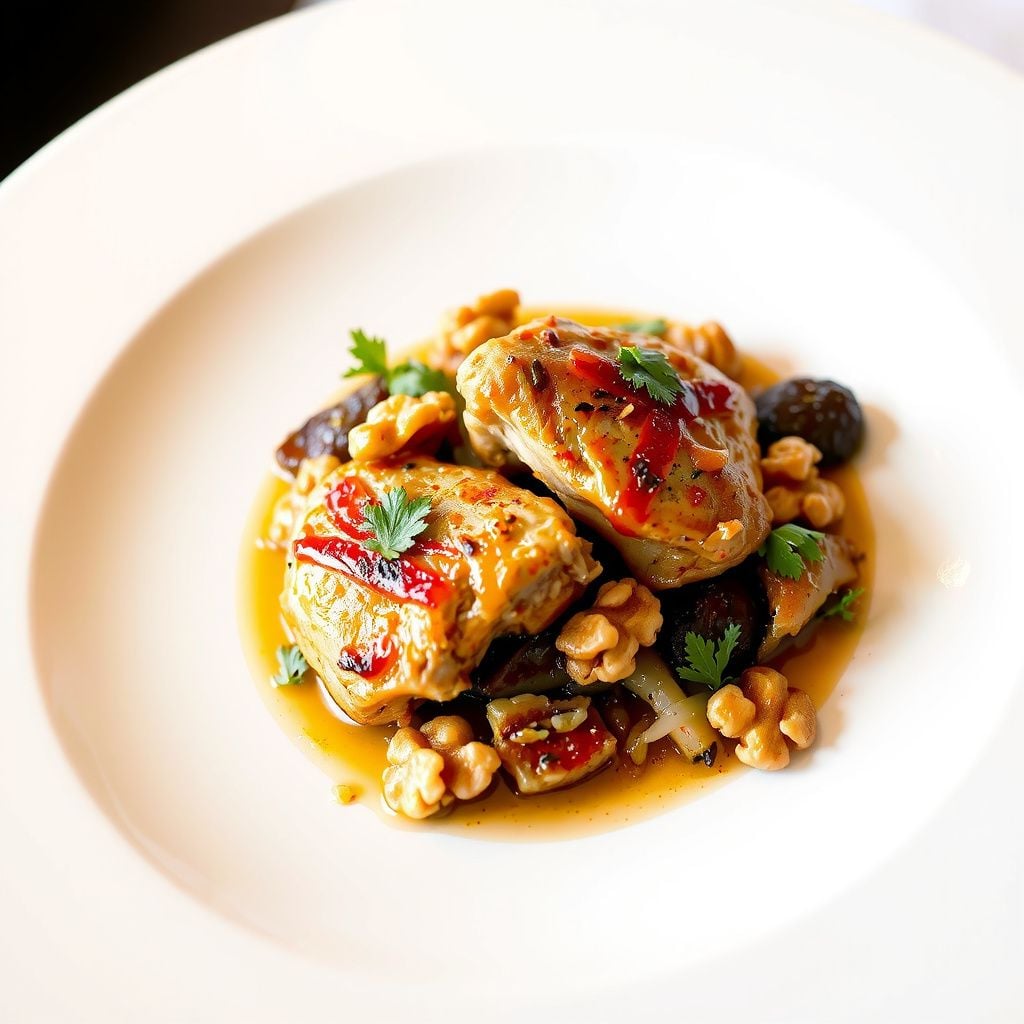
Authentic Georgian Chicken Satsivi
60min
4
View Full Recipe →
Ready to simplify your meal planning?
Let OttoChef AI create personalized meal plans for your family — free to use, no credit card.