
The Science of Tannins: How to Tame Astringent Hachiya Persimmons
Learn how protein binding neutralizes mouth-drying tannins in Hachiya persimmons using food science, traditional techniques, and simple kitchen hacks.
Sofia Rossi
Kitchen Editor
October 10, 2026
5 min read
4 views
Biting into an unripened Hachiya persimmon is an unforgettable mistake. Within seconds, your mouth feels instantly desiccated, as if all moisture has been vacuumed away, leaving behind a rough, chalky texture. This dramatic sensation isn't a flavor—it is astringency, a tactile response triggered by high concentrations of soluble tannins.
While non-astringent varieties like the squat Fuyu persimmon can be eaten firm like a crisp autumn apple, acorn-shaped Hachiya persimmons require respect for culinary chemistry. Understanding how tannins interact with proteins gives you full control over this vibrant fall fruit, allowing you to transform a mouth-puckering bite into a silky, sweet delicacy.
The Molecular Culprit: Soluble Tannins
Tannins are polyphenolic compounds found throughout the plant kingdom, serving as a defense mechanism against insects and herbivores before seeds mature. In an unripened Hachiya persimmon, these tannins exist in a soluble form, meaning they dissolve readily in liquids—including your saliva.
When you chew raw Hachiya flesh, soluble tannins rapidly bind to proline-rich proteins naturally present in your saliva. This binding causes the salivary proteins to aggregate and precipitate out of solution. Without those lubricating proteins floating freely in your mouth, friction increases between your tongue and palate, creating that characteristic dry, sandpaper feeling.
Soluble vs. Insoluble Tannins
Soluble tannins dissolve in saliva and bind to human proteins, causing intense mouth dryness. Insoluble tannins are polymerized into long chains that pass over the tongue without binding to saliva, letting natural sugars dominate the palate.
Neutralizing Tannins Through External Protein Binding
If tannins cause astringency by binding to salivary proteins in your mouth, what happens if you introduce other proteins first?
This is where food science becomes a practical tool in the kitchen. When soluble tannins encounter dietary proteins—such as casein in milk, whey in yogurt, or egg albumin—they bind to those food proteins instead. Once the tannin molecules are bound to an external protein source, their active binding sites are occupied. They can no longer react with the lubricating proteins in your saliva when you swallow.
“Astringency is not a taste, but a tactile sensation caused by tannins precipitating the lubricating proteins in your saliva.”
OttoChef Kitchen ScienceThis chemical interaction explains why traditional culinary pairings work so well. Serving slightly under-ripe persimmons alongside rich dairy components effectively neutralizes residual astringency.
The Dairy Buffer
If a persimmon puree retains a subtle astringent edge, whisk in full-fat Greek yogurt, mascarpone, or heavy cream. The dairy proteins bind free tannins instantly, smoothing out the texture and eliminating the dry finish.
Polymerization: How Ripening Naturally Insolubilizes Tannins
Protein binding is a clever shortcut, but nature's primary method for neutralizing persimmon tannins is polymerization. As a Hachiya persimmon ripens, small acetaldehyde molecules accumulate within the fruit tissue. These micro-molecules act as a chemical cross-linker, causing individual soluble tannin monomers to chain together into massive, insoluble polymers.
Once tannins become giant, insoluble polymers, they lose their ability to dissolve in saliva. The fruit can remain packed with tannins, but because they are chemically locked in an insoluble state, your taste receptors and salivary proteins never detect them. At this stage, the fruit's high sugar content takes over, yielding an intensely sweet, jam-like pulp.
Don't Mix Up Your Persimmons
Fuyu persimmons are low in soluble tannins and can be sliced crisp. Hachiya persimmons contain high concentrations of soluble tannins and must be completely soft to the touch—feeling almost like a water balloon—unless processed to force polymerization.
Cultural Techniques and Modern Kitchen Hacks
Around the world, cooks have developed brilliant ways to force tannin polymerization without waiting weeks for counter-ripening.
In Japan, the art of hoshigaki involves peeling astringent persimmons and hanging them to air-dry over several weeks while gently massaging them daily. The combination of gentle dehydration, warmth, and physical stress triggers internal ethanol production, rapidly polymerizing tannins while concentrating natural fructose.
In modern home kitchens, temperature manipulation offers a fast, foolproof alternative using your freezer.
Freeze Firm Hachiyas
Place firm, astringent Hachiya persimmons whole in the freezer for 24 hours until frozen solid.
Thaw at Room Temperature
Remove the fruit and allow it to thaw completely on the counter. The extreme cold ruptures the plant's cell walls, releasing intracellular enzymes.
Enjoy the Custard Texture
As the cells break down during thawing, ethanol and acetaldehyde form rapidly, polymerizing soluble tannins within hours. The result is sweet, smooth, and ready to scoop with a spoon.
Another classical technique involves sealing firm Hachiyas in an airtight container with high-proof alcohol (like sake or vodka) or ethylene-releasing fruits like ripe apples. The alcohol vapor triggers anaerobic respiration within the persimmon, producing the exact acetaldehyde needed to render tannins insoluble while keeping the fruit firm enough to slice.
Understanding the molecular balance between tannins and proteins removes the guesswork from handling Hachiya persimmons. Whether you leverage dairy proteins in a dessert sauce or use freezing to force natural polymerization, you have the science needed to master this rich seasonal fruit.
Try This Recipe
Now that you've learned about how protein binding neutralizes mouth-drying tannins in astringent hachiya persimmons, put your knowledge into practice with this recipe:
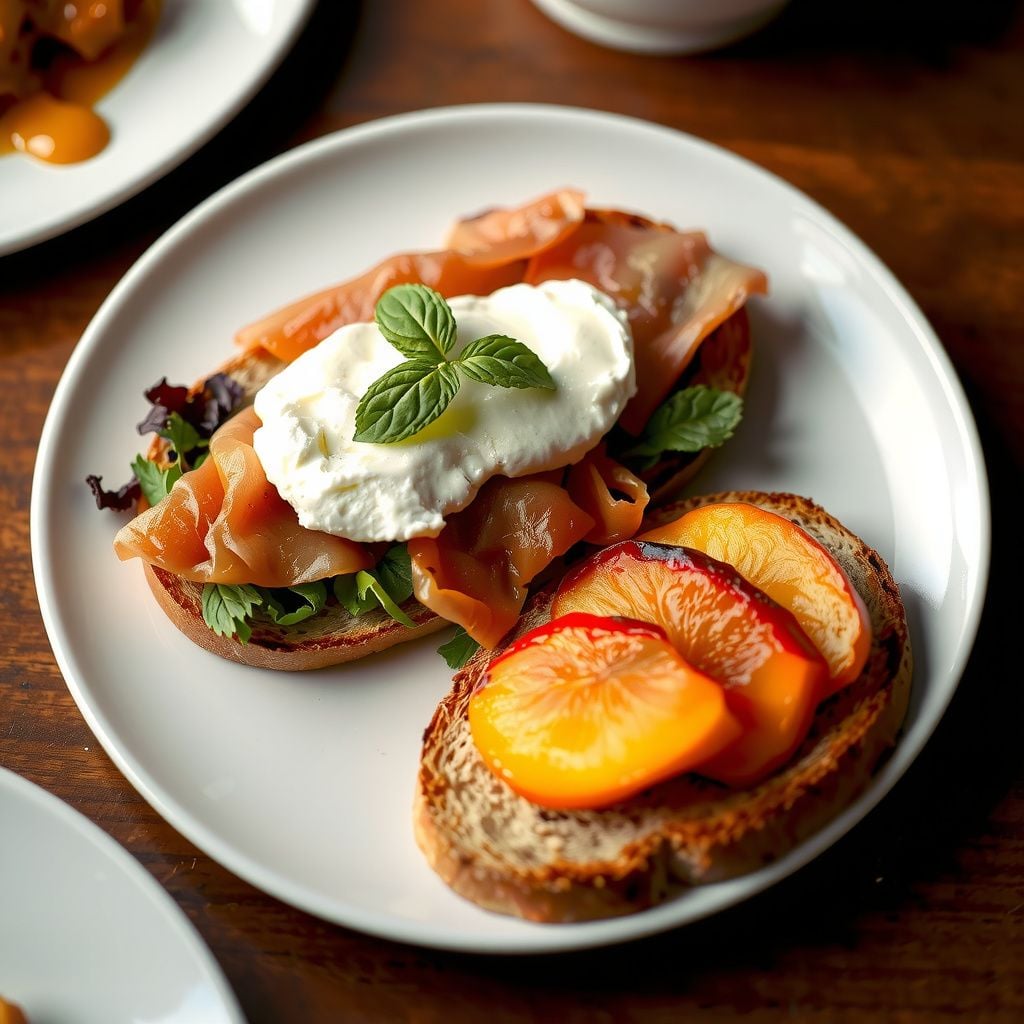
Whipped Burrata and Hachiya Persimmon Toast with Crispy Prosciutto
25min
4
View Full Recipe →
Ready to simplify your meal planning?
Let OttoChef AI create personalized meal plans for your family — free to use, no credit card.