
The Science of Mustard: How Temperature Controls the Heat
Discover the kitchen science behind mustard's pungency. Learn how liquid temperature and acidity allow you to control the spice levels of homemade condiments.
Daniel Park
Culinary Contributor
September 30, 2026
5 min read
4 views
Open a jar of yellow mustard, and you get a mild, tangy condiment. Order a side of Chinese hot mustard, and a tiny dab can clear your sinuses instantly. Yet both condiments originate from the seeds of the exact same plant family. The dramatic difference in heat isn't just about the variety of seed used; it is a direct result of temperature chemistry and molecular biology.
For home cooks, understanding how liquid temperature affects mustard seeds unlocks the ability to customize condiments with mathematical precision. You can control whether a mustard rub for a pork shoulder remains sweet and aromatic or develops a sharp, fiery kick.
The Molecular Self-Defense System
Dry mustard powder has no heat. If you taste a pinch of dry ground mustard seeds, you will find it bitter, dusty, and thoroughly uninspiring. The pungent spice we associate with mustard only exists when the plant's cells are damaged and hydrated.
This phenomenon is actually a biological defense mechanism. Mustard seeds contain organic compounds called glucosinolates (specifically sinigrin in brown and black seeds, and sinalbin in white and yellow seeds). In separate compartments of the plant cells lies an enzyme called myrosinase.
When you crush the seeds and add liquid, the cell walls break, allowing the myrosinase enzyme to mix with the glucosinolates in the presence of water. This reaction creates a volatile compound called allyl isothiocyanate (AITC). This compound is responsible for the sharp, nasal-burning sensation we associate with hot mustard, horseradish, and wasabi.
The Defensive Plant
Mustard plants evolved this rapid chemical reaction to deter insects and herbivores from eating their seeds. The plant only releases its chemical weapon when its tissue is actively chewed or crushed.
The Role of Temperature
The myrosinase enzyme is highly sensitive to temperature. Like most proteins, it denatures—meaning its molecular structure breaks down and it loses its functionality—when exposed to high heat.
If you mix dry mustard powder with boiling water, you instantly destroy the myrosinase enzymes. Without the enzyme to catalyze the reaction, the glucosinolates cannot convert into allyl isothiocyanate. The result is a highly bitter, flat-tasting paste with zero heat.
Conversely, if you mix dry mustard with ice-cold water, the enzyme remains fully intact and active, working at peak efficiency to produce the maximum possible amount of pungent AITC.
Boiling Water Blunders
Using boiling water doesn't just make mustard mild; it permanently deactivates the enzymes. If you want a milder mustard, do not use boiling water. Instead, use a controlled warm temperature or rely on acid to regulate the heat, otherwise your mustard will taste unpleasantly bitter and metallic.
Controlling the Flame: A Temperature Guide
By adjusting the temperature of the liquid you introduce to your mustard powder, you can dial in the exact level of heat you want:
- Ice-Cold Liquid (35°F–40°F / 1°C–4°C): This maximizes enzyme activity and prevents the volatile AITC from evaporating. This is the secret to preparing traditional English or Chinese hot mustards.
- Room Temperature Liquid (68°F–72°F / 20°C–22°C): This yields a balanced, moderately spicy mustard with a pleasant kick and complex herbal undertones.
- Warm Liquid (120°F–130°F / 49°C–54°C): This partially denatures the enzymes, resulting in a distinctly mild mustard. This is ideal when you want the aromatic, earthy flavor of the seeds to shine without any nasal burn.
“Understanding the thermal sensitivity of myrosinase allows a cook to manipulate mustard from a fiery condiment to a sweet, complex glaze with absolute precision.”
OttoChef Culinary LabThe Vital Role of Acidic Stabilization
Temperature is not the only variable in this chemical equation. Time and acidity play crucial supporting roles.
Once the enzyme reaction is triggered by cold or cool water, the spiciness of the mixture peaks after about 10 to 15 minutes. However, allyl isothiocyanate is highly volatile and unstable. Left to its own devices, the heat will rapidly evaporate into the air. Within a few hours, a fiery fresh mustard left on the counter will lose its punch and become bland.
To lock in the heat, you must introduce an acid, such as vinegar, wine, or citrus juice. Acid lowers the pH of the mixture, which halts the enzyme reaction and stabilizes the volatile AITC molecules, preserving the level of spiciness at that exact moment.
If you add vinegar immediately during the mixing phase, you stunt the reaction early, producing a very mild mustard. If you wait 15 minutes for the heat to peak before stirring in the vinegar, you lock in a high level of spiciness.
The 15-Minute Rule
When making homemade mustard, always mix the mustard powder with water first. Wait exactly 15 minutes to let the heat build to its maximum potential, then stir in your vinegar or wine to freeze that chemical state in place.
Step-by-Step: Crafting Your Custom Mustard
Here is how to apply this chemical knowledge to create a custom condiment tailored to your exact taste preferences.
Select Your Seeds and Powder
Yellow mustard seeds are mildest, brown seeds are moderately hot, and black seeds contain the highest concentration of heat-producing compounds. Grind them to your desired texture.
Choose Your Target Temperature
For a sharp, sinus-clearing condiment, measure out ice-cold water. For a smooth, versatile table mustard, use lukewarm water.
The Hydration Phase
Whisk the ground mustard and water together. Let the paste sit undisturbed at room temperature for 10 to 15 minutes to allow the enzyme reaction to build.
Lock and Season
Whisk in an acid (like white wine vinegar or apple cider vinegar) to stabilize the reaction. Add salt, honey, herbs, or spices to finish your custom creation.
Time Mellows the Bite
Freshly made mustard often has a harsh, metallic bitterness alongside its heat. Store your finished mustard in the refrigerator for 48 hours before using. This aging process allows the harsh elements to mellow, leaving a smooth, complex flavor profile.
By treating mustard not just as a condiment, but as an active chemical reaction, you gain complete control over your flavor profiles. Experiment with different liquids, temperatures, and timing to find your perfect signature blend.
Try This Recipe
Now that you've learned about the temperature chemistry of mustard: how liquid heat controls spiciness, put your knowledge into practice with this recipe:
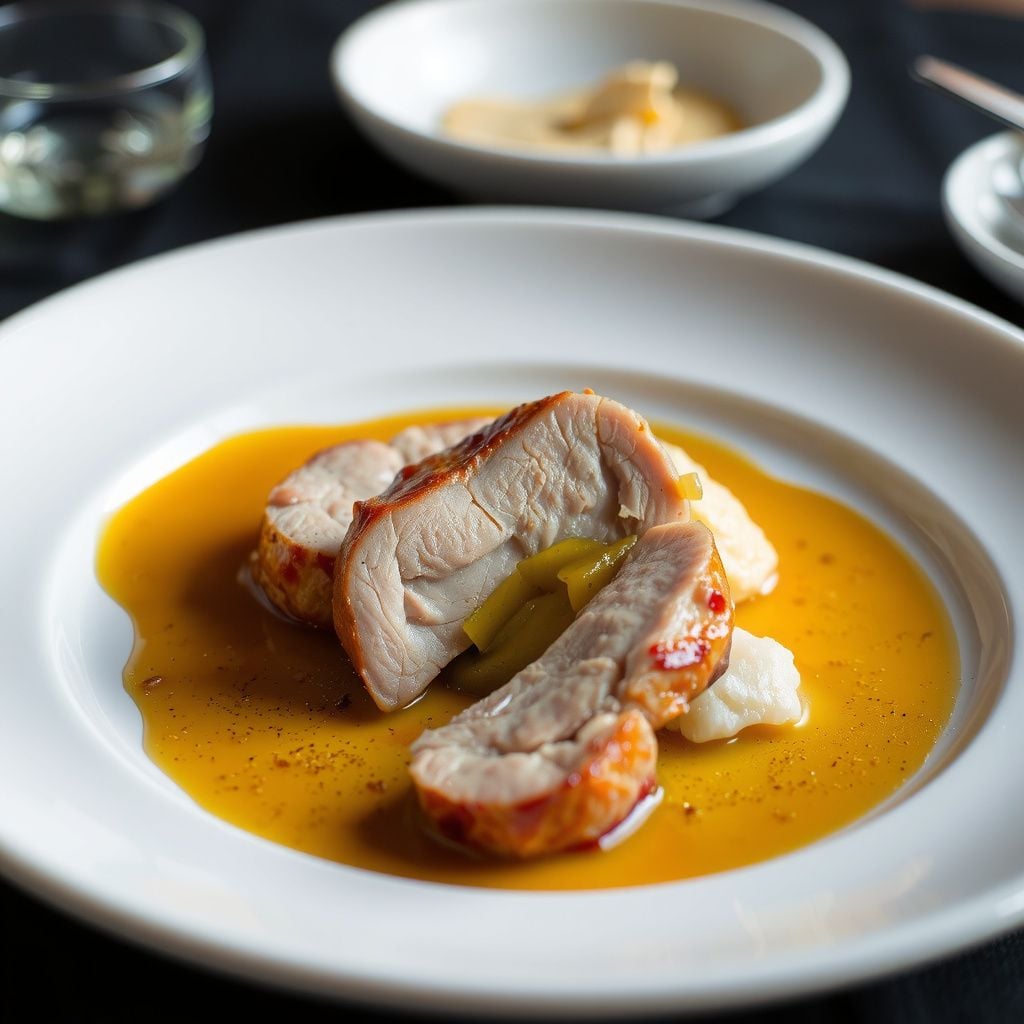
Cold-Activated Hot Mustard Glazed Pork Tenderloin
45min
4
View Full Recipe →
Ready to simplify your meal planning?
Let OttoChef AI create personalized meal plans for your family — free to use, no credit card.