
The Science of Keeping Homemade Green Sauces Bright Emerald
Learn how thermal blanching and acid control prevent oxidation so your prepped pesto, chimichurri, and salsa verde stay vibrant green for days.
Sofia Rossi
Kitchen Editor
October 22, 2026
5 min read
Few things in meal preparation are as disappointing as opening your refrigerator to find that yesterday's brilliant emerald pesto has transformed into a drab, muddy brown paste. You used fresh herbs, quality olive oil, and followed every step, yet oxidation took over overnight. This discoloration is not just an aesthetic issue—it often signals a loss of fresh, peppery herb flavors as well.
Understanding why fresh herb sauces darken allows you to control the reaction using two simple culinary principles: thermal blanching and strategic acid timing. By applying these techniques to your weekly batch cooking, you can prep vibrant green sauces that maintain their stunning color and crisp flavor for up to a week.
The Science Behind Dull Green Sauces
To fix the browning problem, you first need to understand the cellular architecture of fresh leafy herbs like basil, parsley, cilantro, and mint.
Inside plant cells, green pigment comes from chlorophyll molecules. Structurally, chlorophyll features a porphyrin ring with a single magnesium ion trapped at its center. When you slice, chop, or blend fresh herbs, you shatter their cellular walls. This releases two key culprits: oxygen and natural plant enzymes known as polyphenol oxidase and chlorophyllase.
When polyphenol oxidase interacts with oxygen, it oxidizes the plant compounds, creating brown pigments similar to what happens when you cut open an apple. Meanwhile, if chlorophyll loses its central magnesium ion—either through enzymatic action, excess heat, or prolonged exposure to acid—it transforms into pheophytin, a pigment with a dull olive-drab hue.
The Magnesium Swap
Chlorophyll turns into pheophytin when its central magnesium atom is replaced by hydrogen atoms. This structural change alters how light reflects off the pigment, shifting the visual color from bright green to army olive.
Technique 1: Thermal Blanching to Deactivate Enzymes
Thermal blanching is the single most effective tool for locking in a sauce's bright green hue. Blanching involves plunging fresh herbs into boiling water for a brief moment, followed immediately by an ice bath.
Heat deactivates polyphenol oxidase and chlorophyllase enzymes instantly. Once these enzymes are denatured by high heat, they can no longer trigger the chemical cascade that causes browning. Furthermore, brief boiling expels microscopic air pockets trapped within the leaf cells, which actually intensifies the green visual profile.
Prepare an Ice Bath
Fill a large bowl with cold water and ice cubes before heating your water. The ice bath must be ready to stop the cooking process instantaneously.
Quick Boiling Flash
Submerge tender herbs in rapidly boiling water for 5 to 10 seconds—just long enough for the leaves to shift to a vivid emerald color. Do not overcook, or thermal damage will degrade the chlorophyll itself.
Shock and Press
Remove herbs with a slotted spoon and plunge them directly into the ice bath for 30 seconds. Once cooled, drain them and squeeze out excess moisture using a clean kitchen towel.
Dry Herbs Completely
Excess water dilutes flavor and creates an unstable emulsion in oil-based sauces. Squeeze blanched herbs thoroughly in a clean lint-free towel until completely dry before blending.
“Blanching herbs isn't about cooking them—it's an insurance policy that deactivates browning enzymes while locking in peak visual vibrancy.”
OttoChef Culinary Science TeamTechnique 2: Acid Fixation and Timing
While acid adds essential flavor balance to sauces like chimichurri, chermoula, and salsa verde, it is also a double-edged sword. Acidic ingredients like lemon juice, lime juice, or red wine vinegar introduce abundant hydrogen ions into the sauce. Over time, these hydrogen ions displace the magnesium in chlorophyll, accelerating the transition to pheophytin.
To combat acid-driven browning, you have two primary strategies depending on your meal prep goals:
Strategy A: Emulsification and Fat Barriers
Fat acts as a protective barrier around microscopic acid droplets and herb particles. Blending herbs thoroughly with high-quality olive oil helps shield pigment molecules from direct, concentrated contact with acids.
Strategy B: Delayed Acid Addition
If you are prepping sauces for 4 to 7 days of storage, blend your blanched herbs, aromatics, and oils first, but hold back the fresh citrus juice or vinegar. Stir the acid into individual portions right before serving.
Avoid Early Acid in Unblanched Sauces
Adding vinegar or citrus juice to raw, unblanched herb blends days before serving guarantees an olive-drab color change by day two. Always delay acid or blanch your herbs first.
Mastering Sauce Preservation for Batch Cooking
Applying these science-backed steps transforms your weekly meal prep flow. Here is how to handle specific sauce styles for maximum longevity:
- Pesto Style (Basil, Spinach, Arugula): Basil is exceptionally prone to oxidation. Blanch basil leaves for 5 seconds before processing with garlic, toasted nuts, cheese, and olive oil.
- Salsa Verde & Chimichurri (Parsley, Cilantro, Oregano): These coarse sauces benefit from blanching robust greens like parsley. Delicate herbs like cilantro can be blanched for just 3 seconds or blended fresh if consumed within 48 hours.
- Herb Coulis & Purees: Blanch herbs thoroughly, process with oil until silky smooth, and pass through a fine-mesh sieve for ultra-vibrant plated accents.
The Oil Seal Trick
When storing prepped green sauces in airtight containers, smooth the top surface with a spoon and pour a thin layer of olive oil over the top. This oil barrier blocks atmospheric oxygen from touching the surface.
By combining a 5-second blanch with smart acid application and an oil seal, your homemade green sauces will retain their eye-catching emerald brilliance and fresh garden flavor throughout the entire week.
Try This Recipe
Now that you've learned about how thermal blanching and acid fixation keep green sauces vibrant for days, put your knowledge into practice with this recipe:
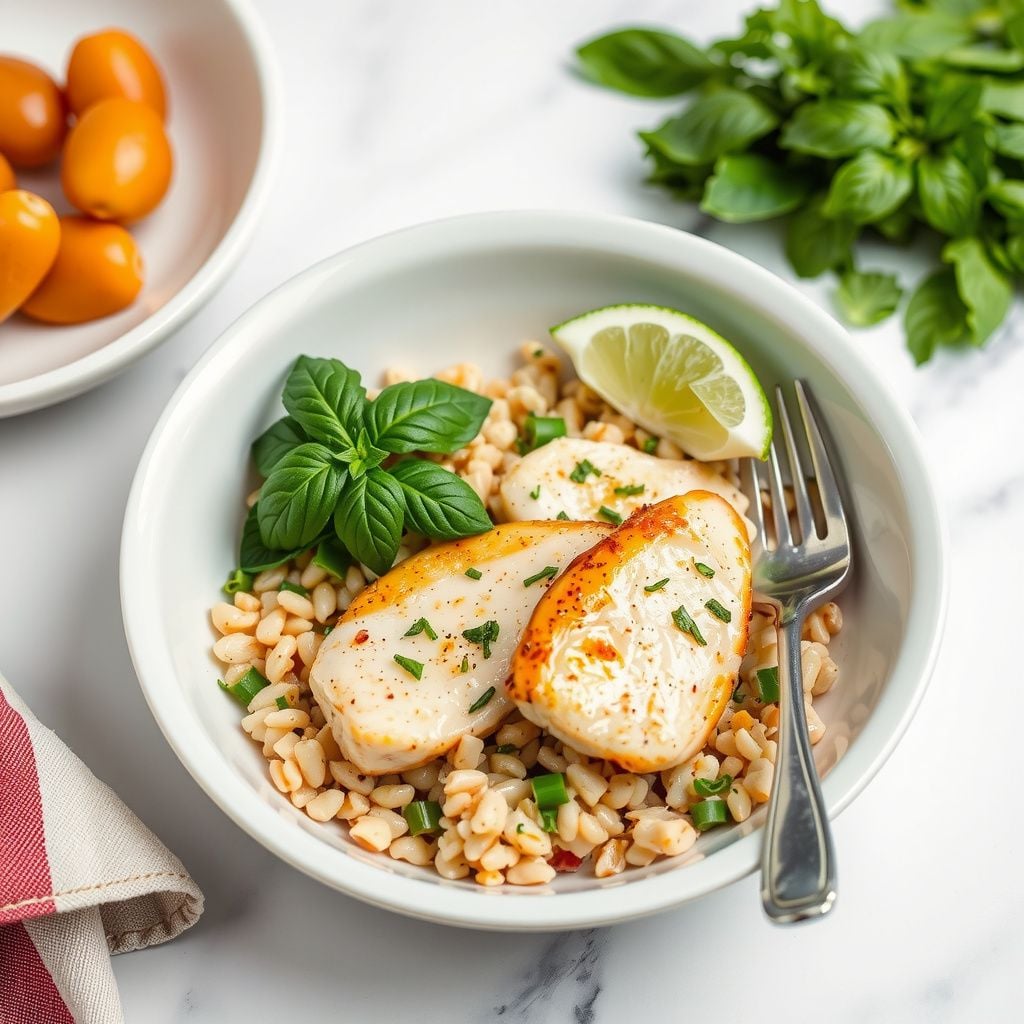
Blanched Herb Green Goddess Chicken & Farro Bowl
45min
4
View Full Recipe →
Ready to simplify your meal planning?
Let OttoChef AI create personalized meal plans for your family — free to use, no credit card.