
The Science of Egusi: How Melon Seed Proteins Thicken Stews
Discover the food science of egusi seeds. Learn how protein coagulation and fat emulsification build rich, velvety West African stews without starch.
Marcus Rivera
Culinary Editor
October 18, 2026
5 min read
If you have ever tasted a properly cooked West African egusi stew, you know its defining characteristic is a rich, satisfying body that is unlike anything produced by a traditional starch slurry or flour roux. Rather than a glossy, viscous gravy, egusi offers a tender, curd-like texture that clings beautifully to meats, leafy greens, and staple swallow foods like pounded yam or fufu. Achieving this iconic mouthfeel relies on a fundamental principle of food science: plant-based protein coagulation and lipid emulsification.
Understanding how ground melon seeds interact with heat, water, and oil allows home cooks to master this foundational West African culinary technique and apply its principles to modern plant-based kitchen science.
What Exactly Is Egusi?
Egusi refers to the fat- and protein-rich seeds of specific wild melon species native to West Africa, predominantly Citrullus mucosospermus and Cucumeropsis mannii. While these fruits resemble small watermelons externally, their flesh is dry, bitter, and inedible. Instead, the plant is cultivated exclusively for its nutrient-dense seeds.
Botanical Precision
Although egusi is sometimes translated as "pumpkin seed" in western grocery stores, true egusi comes from wild bitter melons. While pumpkin seeds (pepitas) can be used as a substitute in a pinch, egusi seeds contain a higher concentration of specialized globulin proteins and distinct lipid profiles that yield a much finer curd structure.
Nutritionally, an egusi seed is a powerhouse consisting of roughly 50% lipids and 30% protein. It is precisely this proportion of fats to proteins that makes ground egusi such an exceptional culinary structuring agent.
The Science of Coagulation: Why Egusi Thickens Differently
To understand how egusi thickens a soup, we must contrast it with standard kitchen thickeners. Common thickeners like wheat flour, tapioca, or cornstarch rely on starch gelatinization. When starch granules absorb water and heat up, they swell until they burst, releasing amylose and amylopectin molecules into the liquid to form a viscous gel.
Egusi contains very little starch. Its thickening mechanism is driven by protein denaturation and aggregation—the exact chemical process that occurs when you scramble an egg or curdle milk to make fresh cheese.
“Unlike starch slurries that create a smooth, viscous liquid, egusi thickens through heat-induced protein cross-linking, creating a tender curd-like structure that locks in fat and flavor.”
OttoChef Culinary Science TeamWhen egusi seeds are ground into a fine powder, their cellular walls break open, exposing seed proteins called globulins and albumins. In their raw state, these protein molecules are tightly folded spheres suspended in native oils. When introduced to heat, two distinct chemical transformations take place:
- Denaturation: Thermal energy breaks the weak hydrogen bonds holding the protein chains in their compact shapes, causing the spherical molecules to unravel.
- Coagulation (Cross-Linking): The uncoiled protein strands expose hydrophobic (water-repelling) regions. Seeking to escape the surrounding broth, these regions link together, forming a semi-solid three-dimensional network.
This matrix traps moisture, broth, and suspended oil droplets within its spaces, transforming a thin broth into a rich, substantial stew.
Controlling Texture: Smooth Slurry vs. Savory Curds
Depending on regional variations and cook preference, egusi stew can range from a smooth, uniform broth to large, savory chunks resembling ricotta or egg curds. Controlling this texture comes down to moisture management and mechanical agitation during the initial cooking phase.
Hydrate the Ground Seeds
Combine ground egusi with a small amount of warm liquid, such as onion puree or stock, to form a thick, cohesive paste. Hydrating the proteins before heating ensures they bind into distinct blocks rather than dispersing instantly.
Introduce Controlled Heat
Drop small paste dumplings into heated palm oil or gently lower them into simmering stock. The direct heat immediately denatures the outer layer of proteins, setting the shape of the curd.
Rest Before Agitation
Allow the egusi paste to cook undisturbed for 3 to 5 minutes. Resist the urge to stir immediately; premature stirring tears the fragile protein networks apart before they can fully bind.
The Risk of Premature Stirring
Stirring egusi immediately after adding it to liquid breaks the delicate protein bonds before coagulation finishes. This results in a grainy, washed-out stew where the oil separates completely from the liquid.
The Role of Lipids and Emulsification
Because egusi is rich in natural oils and is traditionally cooked alongside red palm oil or broth, managing oily separation is crucial. This is where egusi’s amphiphilic properties shine. Proteins are naturally amphiphilic—meaning individual amino acid chains contain both water-attracting (hydrophilic) and oil-attracting (hydrophobic) zones.
As the egusi proteins denature, they align along the boundary between the cooking oil and water, acting as a natural emulsifier. This prevents the stew's oil from pooling separated on top. Instead, the fat is suspended within the protein curd matrix, giving every bite a luscious, rich mouthfeel without feeling greasy.
The Onion Paste Advantage
Mixing ground egusi with finely pureed onions before cooking introduces additional natural moisture and soluble sugars. This creates tighter protein aggregates, resulting in firmer, more flavor-packed curds.
Applying Egusi Science in Your Kitchen
Understanding seed-based protein coagulation unlocks broader culinary potential beyond traditional West African cooking. The structural principles of egusi can inspire plant-based thickeners across various cuisines:
- Nut and Seed Curds: Similar protein-rich seeds, such as sunflower or raw pumpkin seeds, can be hydrated, ground, and coagulated to add body to grain-free soups.
- Roux-Free Emulsification: Using protein-fat seed pastes allows you to thicken stocks without gluten or dairy cream, producing stable, full-bodied sauces.
- Flavor Absorption: Because egusi curds form a porous protein network, adding your spices, ground crayfish, or aromatics directly into the seed paste early ensures deep flavor integration throughout the final dish.
By approaching egusi not just as an ingredient, but as a dynamic system of proteins and fats, you can appreciate the profound culinary science embedded in West African gastronomy.
Try This Recipe
Now that you've learned about the science of egusi: how grinded melon seed proteins coagulate to thicken west african stews, put your knowledge into practice with this recipe:
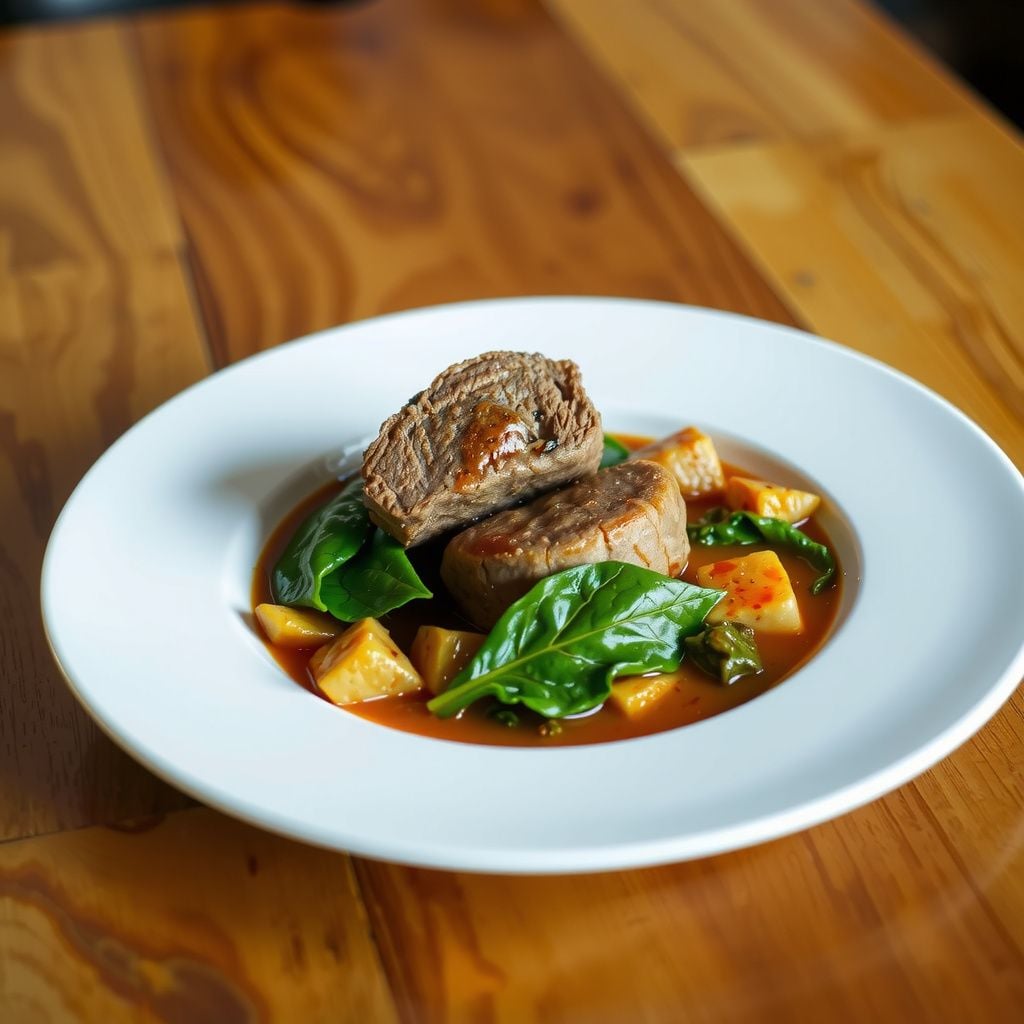
Traditional West African Egusi Stew with Tender Beef and Spinach
65min
4
View Full Recipe →
Ready to simplify your meal planning?
Let OttoChef AI create personalized meal plans for your family — free to use, no credit card.