
The Physics of Lebanese Toum: Master the Garlic Emulsion
Discover the science behind authentic Lebanese toum. Learn how to create a fluffy, egg-free garlic emulsion using food science and proper culinary technique.
Emma Chen
Recipe Developer
August 9, 2026
5 min read
6 views
Many home cooks have experienced the frustration of a broken mayonnaise or hollandaise. But there is an even more impressive emulsification feat in the culinary world: Lebanese toum. This traditional garlic sauce is incredibly thick, fluffy, and cloud-like, yet it contains absolutely no egg whites or yolks. It relies entirely on the chemical properties of garlic, oil, lemon juice, and salt.
Understanding the physics of how these simple ingredients transform into a stable, creamy sauce is the key to mastering this staple of Levantine cuisine. By applying a few scientific principles, you can consistently create perfect, pillowy toum without the risk of separation.
The Chemistry of an Egg-Free Emulsion
An emulsion is a mixture of two liquids that are normally immiscible, such as oil and water. To keep them from separating, you need an emulsifier—a molecule that has both a hydrophilic (water-loving) end and a lipophilic (fat-loving) end. In mayonnaise, the lecithin in egg yolk performs this role. In toum, garlic is the star.
Garlic contains natural emulsifying agents, specifically mucilage (complex carbohydrates) and soluble proteins. When garlic is mechanically crushed, these compounds are released. They coat the tiny droplets of oil as they are introduced, preventing them from merging back together.
However, garlic's emulsifying power is much weaker than that of egg yolks. This is why the method of introduction and the temperature of your ingredients are so critical to success.
The Role of Garlic's Mucilage
Garlic contains mucilaginous compounds that swell in water, creating a viscous network that physically traps oil droplets. This is why dry garlic powder cannot be used to make toum—the fresh, cellular structure of the garlic cloves must be mechanically ruptured to release these active compounds.
The Critical Variables: Garlic, Oil, and Acid
To achieve the perfect emulsion, you must control three main variables: the quality of the garlic, the type of oil, and the balance of acid.
First, the garlic must be fresh. Old garlic cloves develop a bitter green germ in the center. This germ not only ruins the flavor profile of the toum, but it also contains compounds that can destabilize the emulsion.
Second, choose a neutral oil with a high smoke point, such as canola, safflower, or grapeseed oil. Extra virgin olive oil is too heavy and contains bitter polyphenols that are intensified when sheared at high speeds.
Third, lemon juice provides both the water phase necessary for the emulsion and the acidity needed to balance the intense heat of the raw garlic.
Avoid Olive Oil in High-Speed Blenders
High-speed blades shear the polyphenols in extra virgin olive oil, releasing an intense, unpleasant bitterness. Stick to neutral oils with mild flavors for the best texture and taste.
The Step-by-Step Technique to Perfect Toum
Creating toum requires patience and mechanical force. A food processor is the ideal tool for this job, as its flat blades continuously shear the garlic and oil at a consistent speed.
Prep the Garlic
Peel your fresh garlic cloves and slice them in half lengthwise. Pop out and discard any green germs running through the center of the cloves to ensure a clean, sweet garlic flavor.
The Initial Puree
Place the garlic and kosher salt into the bowl of a food processor. Pulse until finely minced, then scrape down the sides. The coarse salt acts as an abrasive, helping the blades break open the garlic cells to release their natural emulsifying agents.
The Slow Drizzle
With the food processor running continuously, slowly drizzle in a thin stream of neutral oil—literally drop by drop initially. This slow introduction allows the released garlic proteins to thoroughly coat the tiny oil droplets before more fat is introduced.
Alternate the Liquids
Once the mixture begins to look like a thick, pale paste, alternate adding small splashes of freshly squeezed lemon juice and a steady stream of oil. The acid cuts the fat and provides the necessary water molecules to keep the emulsion growing.
“Toum is a lesson in patience and mechanical force. You are forcing two hostile elements—water and oil—to coexist through the physical intervention of garlic proteins.”
OttoChef Culinary Science TeamThe Physics of Shear Force and Temperature
Why does toum sometimes split into a greasy, separated mess? The answer lies in shear force and temperature.
Shear force is the mechanical action of the food processor blades cutting the oil into microscopic droplets. If you pour the oil in too quickly, the blades cannot keep up, and the oil droplets will pool together faster than the garlic proteins can coat them. This causes the emulsion to break.
Furthermore, the friction generated by food processor blades creates heat. Warm oil is less viscous, meaning the oil droplets move faster and collide with greater energy, making them more likely to merge and break the emulsion. Keeping your ingredients cool can make a significant difference.
The Garlic-to-Oil Ratio
A safe starting ratio for home cooks is 1 cup of peeled garlic cloves to 3 to 4 cups of oil, and 1/2 cup of fresh lemon juice. Altering this ratio too drastically in favor of oil can overwhelm the garlic's limited emulsifying capabilities.
Troubleshooting: How to Save a Split Toum
If your toum splits, do not throw it away. You can rescue the emulsion using a simple food science trick.
The Ice Water Rescue
If your toum separates into oil and liquid, empty the food processor. Add one tablespoon of ice-cold water (or a fresh egg white, if you do not mind deviating from the traditional vegan recipe) to the clean bowl. Turn the processor on and slowly drizzle the broken mixture back into the spinning blades. The cold temperature and fresh liquid phase will help re-establish the emulsion.
Mastering toum is a rite of passage for home cooks. By understanding the physical forces at play, you can confidently whip up this creamy, pungent sauce to elevate grilled meats, roasted vegetables, and flatbreads in your weekly meal rotation.
Try This Recipe
Now that you've learned about the physics of lebanese toum: creating a fluffy garlic emulsion without eggs, put your knowledge into practice with this recipe:
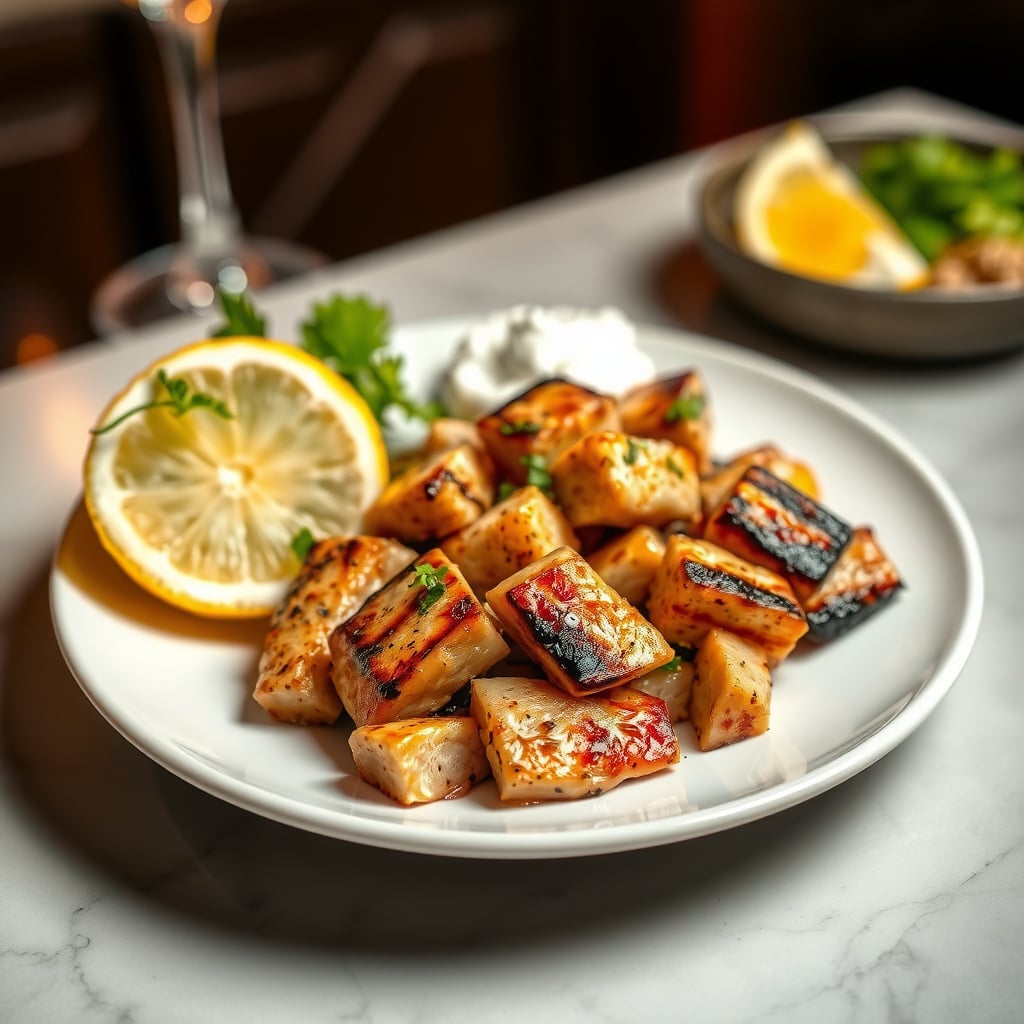
Lebanese Shish Taouk with Fluffy Garlic Toum
50min
4
View Full Recipe →
Ready to simplify your meal planning?
Let OttoChef AI create personalized meal plans for your family — free to use, no credit card.