
The Georgian Satsivi Method: Thicken Sauces with Walnut Paste
Discover the traditional Georgian technique of using emulsified walnut paste to create rich, creamy, dairy-free sauces without flour or starch.
Alex Thompson
Food Editor
July 24, 2026
5 min read
8 views
Achieving a thick, luxurious sauce usually means reaching for butter, heavy cream, or a flour-based roux. While these methods are effective, they can sometimes mask the bright, delicate flavors of your main ingredients. In the Republic of Georgia, home cooks have spent centuries perfecting an alternative approach: using finely ground walnut paste to build body, emulsify liquids, and introduce a complex, savory depth. This technique, central to the classic Georgian dish known as satsivi, offers modern cooks a powerful, naturally gluten-free and dairy-free tool for sauce-making.
By mastering the walnut paste method, you can create sauces with a velvety mouthfeel and an incredibly rich profile, all while relying on the natural fats and proteins of the nut itself. Let us explore the kitchen science behind this technique and how you can apply it to your everyday culinary repertoire.
The Science of Walnut Emulsification
Walnuts are uniquely suited for sauce-making due to their high oil content (primarily polyunsaturated fats) and significant protein structure. When you grind walnuts into a fine paste, you rupture their cellular walls, releasing these oils and proteins.
When warm liquid is slowly introduced to this paste under agitation—such as whisking or blending—the walnut proteins and fibers act as natural emulsifiers. They surround the tiny oil droplets, keeping them suspended throughout the liquid instead of separating. This creates a stable emulsion similar to a mayonnaise or a classic tahini sauce, resulting in a rich, creamy texture without a single drop of dairy.
The Georgian Spice Pantry
Blue fenugreek (*utskho suneli*) and dried marigold (*imeretian saffron*) are crucial to authentic Georgian flavor profiles. They provide earthy, nutty, and slightly floral notes that complement the richness of the walnuts perfectly.
The Satsivi Method Step-by-Step
To successfully use walnuts as a thickener, you must follow a specific sequence. Simply throwing chopped walnuts into a simmering broth will yield a gritty, separated soup. The goal is to transform the nuts into a cohesive paste before introducing liquid.
Prep the Walnuts
Start with fresh, high-quality walnuts. Lightly toast them in a dry skillet over medium-low heat for 3 to 5 minutes until fragrant. Transfer them to a clean kitchen towel and rub them vigorously to remove any loose, bitter skins.
Grind to a Fine Paste
Process the walnuts in a food processor or grind them using a mortar and pestle. You must grind them past the "chopped" stage until they release their oils and form a dense, uniform paste resembling natural almond butter.
Incorporate Aromatics and Spices
Add minced garlic, salt, a splash of white wine vinegar, and your dry spices directly to the paste. Processing them together allows the fat-soluble compounds in the spices to dissolve into the walnut oils, intensifying their flavor.
Slowly Emulsify with Warm Liquid
With your processor running, or while whisking vigorously in a bowl, slowly drizzle in warm broth or water. The mixture will initially tighten up, then gradually loosen into a smooth, creamy, opaque sauce.
Watch the Heat
Never boil a walnut-based sauce after the paste has been incorporated. High heat will break the emulsion, causing the walnut oils to separate and pool at the top, leaving a grainy texture below. Keep the sauce at a gentle bare simmer.
Building Flavor Balance
Because walnuts are naturally rich and slightly bitter, a successful walnut sauce requires careful balancing. Traditional Georgian cooks achieve this balance by incorporating key acidic and aromatic elements:
- Acidity: A splash of white wine vinegar, pomegranate juice, or lemon juice is essential. The acid cuts through the heavy lipids of the walnut, brightening the entire dish.
- Aromatics: Raw garlic is traditionally crushed directly into the paste. The heat of the warm broth cooks the garlic just enough to take away its harsh bite while preserving its punchy aroma.
- Spices: Ground coriander, blue fenugreek, and a pinch of cayenne or marigold provide warmth and complexity that prevent the sauce from tasting flat.
“In Georgian cuisine, walnuts are not merely a garnish or an afterthought; they are the foundation of structure, flavor, and texture in the pan.”
Clara Jane, Culinary HistorianApplying the Technique Beyond Georgian Classics
Once you master the basic emulsification of walnut paste, you can apply this method to a wide variety of dishes in your kitchen. It is an excellent technique for creating plant-based alternatives to traditional cream sauces.
- Modern Vegan Gravies: Use vegetable broth and roasted mushrooms blended with walnut paste for a deeply savory, rich holiday gravy.
- Enriched Pan Sauces: After searing chicken or pork, deglaze the pan with stock or cider, then whisk in a tablespoon of seasoned walnut paste off the heat to create an instant, velvety pan sauce.
- Roasted Vegetable Dressings: Thin the walnut paste out with extra lemon juice and warm water to create a creamy dressing for roasted carrots, beets, or cauliflower.
Preventing Oil Separation
If your walnut sauce begins to break or leak oil during preparation, immediately whisk in a tablespoon of ice-cold water or broth. The sudden temperature drop and extra moisture will help re-stabilize the emulsion.
By embracing the Georgian satsivi method, you expand your culinary toolkit with a versatile, natural technique that elevates simple ingredients into complex, satisfying meals. Next time you want to add body to a sauce, bypass the heavy cream and let the humble walnut do the work.
Try This Recipe
Now that you've learned about the georgian satsivi method: thicken sauces and build richness using walnut paste, put your knowledge into practice with this recipe:
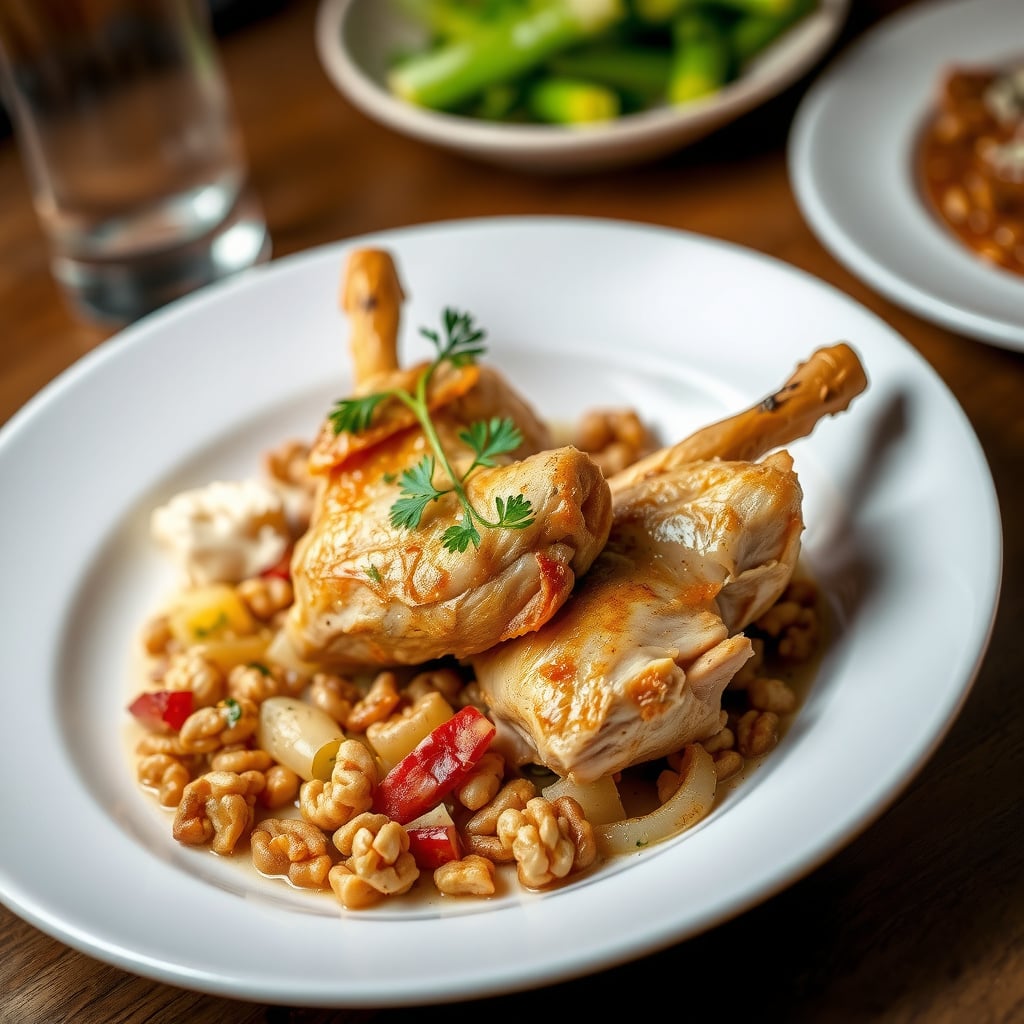
Classic Georgian Chicken Satsivi
60min
4
View Full Recipe →
Ready to simplify your meal planning?
Let OttoChef AI create personalized meal plans for your family — free to use, no credit card.