
The Culinary Chemistry of Rhubarb: Harnessing Oxalic Acid
Unlock the culinary science of savory rhubarb. Learn how to harness oxalic acid to balance rich fats, build complex stews, and master Persian braising techniques.
Emma Chen
Recipe Developer
August 21, 2026
5 min read
1 view
Mention rhubarb to most home cooks, and their minds immediately drift to strawberry-filled pies, sweet crumbles, and summer preserves. In Western pastry kitchens, this vibrant red stalk is treated almost exclusively as a fruit. Botanically, however, rhubarb is a herbaceous perennial vegetable, a cousin of sorrel and buckwheat. When we limit it to sweet desserts, we miss out on one of the most potent, complex souring agents available to the modern kitchen.
In savory cooking, balancing richness with acidity is fundamental to building deep, complex flavors. While we often rely on citrus juices, vinegared pickles, or wine to provide this brightness, rhubarb offers a unique chemical profile that transforms rich, slow-cooked stews. By understanding the science of rhubarb’s characteristic tartness, you can use it to cut through heavy fats and elevate your savory culinary repertoire.
The Chemistry of Tartness: Understanding Oxalic Acid
The defining feature of rhubarb is its bracing, electric sourness. This sharp flavor profile is driven primarily by organic acids, most notably malic acid (which also gives green apples their tart kick) and oxalic acid.
Oxalic acid ($H_2C_2O_4$) is a naturally occurring compound found in many leafy greens, beets, and cacao, but it is exceptionally concentrated in rhubarb. In the mouth, oxalic acid does more than register as sour on our taste buds; it physically interacts with our biology.
The Tooth-Chalk Phenomenon
That dry, gritty feeling on your teeth after eating rhubarb is caused by oxalic acid binding with calcium in your saliva to form insoluble calcium oxalate crystals. It is completely harmless, but pairing rhubarb with dairy or fats can mitigate this physical sensation by binding the acid before it reaches your teeth.
Because of its high acid concentration, raw rhubarb is incredibly astringent. However, when subjected to heat, the cell walls of the stalk rupture, releasing these acids into the cooking liquid. When used in a long, slow braise, this acidity acts as a chemical tenderizer, helping to break down tough collagen fibers in meats while balancing the heavy lipids that can make a stew feel overly weighted.
Discard the Leaves
While rhubarb stalks are delicious and safe, the broad green leaves contain dangerously high concentrations of oxalic acid and soluble oxalates. Always discard them completely and wash the stalks thoroughly before cooking.
The Art of Balancing Fat and Acid
In classical culinary theory, acid is used to cleanse the palate. Heavy proteins—such as lamb shoulder, pork belly, duck, or beef short ribs—are rich in saturated fats. These fats coat the tongue, which can dull our ability to taste more delicate flavor notes over the course of a meal. Acid cuts through this fatty barrier, resetting our taste receptors with every bite.
“Acid is the culinary volume knob. Where lemon juice or vinegar provides a sharp, instant spike of sourness, rhubarb offers a slow, fruity swell that integrates deeply into braising liquids.”
OttoChef Culinary Research LabWhat makes rhubarb particularly valuable in savory stews is that it does not just bring acidity; it also brings pectin. Pectin is a structural polysaccharide that acts as a natural gelling agent. As the rhubarb breaks down in a simmering stew, it simultaneously sour-tones the broth and naturally thickens it, creating a glossy, emulsified sauce without the need for heavy starches or flour.
Culinary Technique: Integrating Rhubarb into Stews
To successfully use rhubarb in savory applications, you must control its physical breakdown and balance its intense acidity. Left to cook indefinitely, rhubarb will completely dissolve. Depending on your culinary goal, you can leverage this property or take steps to prevent it.
Sizing the Cut
Slice rhubarb into thick 1-to-1.5-inch pieces if you want them to retain some structural integrity in the finished dish. For a smooth, integrated sauce where the rhubarb dissolves completely to act as a thickener, mince or grate the stalks finely.
The Timing Strategy
To preserve the visual appeal and texture of the stalks, add them during the final 15 to 20 minutes of simmering. If your goal is to dissolve the rhubarb entirely into a rich, sour gravy, add it at the very beginning of the braise alongside your aromatics.
The Flavor Balance
Taste the cooking liquid after the rhubarb has softened. Balance the intense tartness by introducing a small amount of sweetness (such as honey, pomegranate molasses, or dried fruits) and a pinch of warming spices like cinnamon, cumin, or coriander to round out the sharp edges.
The Salt Factor
Acidity enhances our perception of salt. When adding rhubarb to a stew, hold back slightly on your initial seasoning. Taste and adjust the salt level only after the rhubarb has fully cooked and integrated into the sauce to avoid over-salting.
Global Inspiration: The Persian Masterpiece
To see this chemistry utilized to its full potential, we can look to the rich culinary traditions of Iran. Persian cuisine is celebrated for its masterful use of sour flavor profiles, balancing fresh herbs with souring agents like dried limes (limoo amani), sour grapes (ghooreh), and fresh summer rhubarb.
Khoresh-e Rivas is a traditional Persian rhubarb stew that perfectly demonstrates how to handle this ingredient. The dish pairs pieces of tender lamb shoulder or beef with a massive quantity of sautéed fresh herbs—predominantly parsley and mint. The earthiness of the herbs and the deep richness of the slow-cooked meat create a heavy canvas. The rhubarb is added toward the end of the cooking process, cutting through the oil and lamb fat with an elegant, sharp brightness that lifts the entire dish.
When experimenting with savory rhubarb at home, use this template: pair it with rich meats, counter it with earthy herbs (like rosemary, thyme, or mint), and soften the bite with a subtle sweet element. By stepping away from the dessert plate, you open up a world of complex, balanced, and deeply satisfying savory flavors.
Try This Recipe
Now that you've learned about the culinary chemistry of rhubarb: harnessing oxalic acid for savory stews, put your knowledge into practice with this recipe:
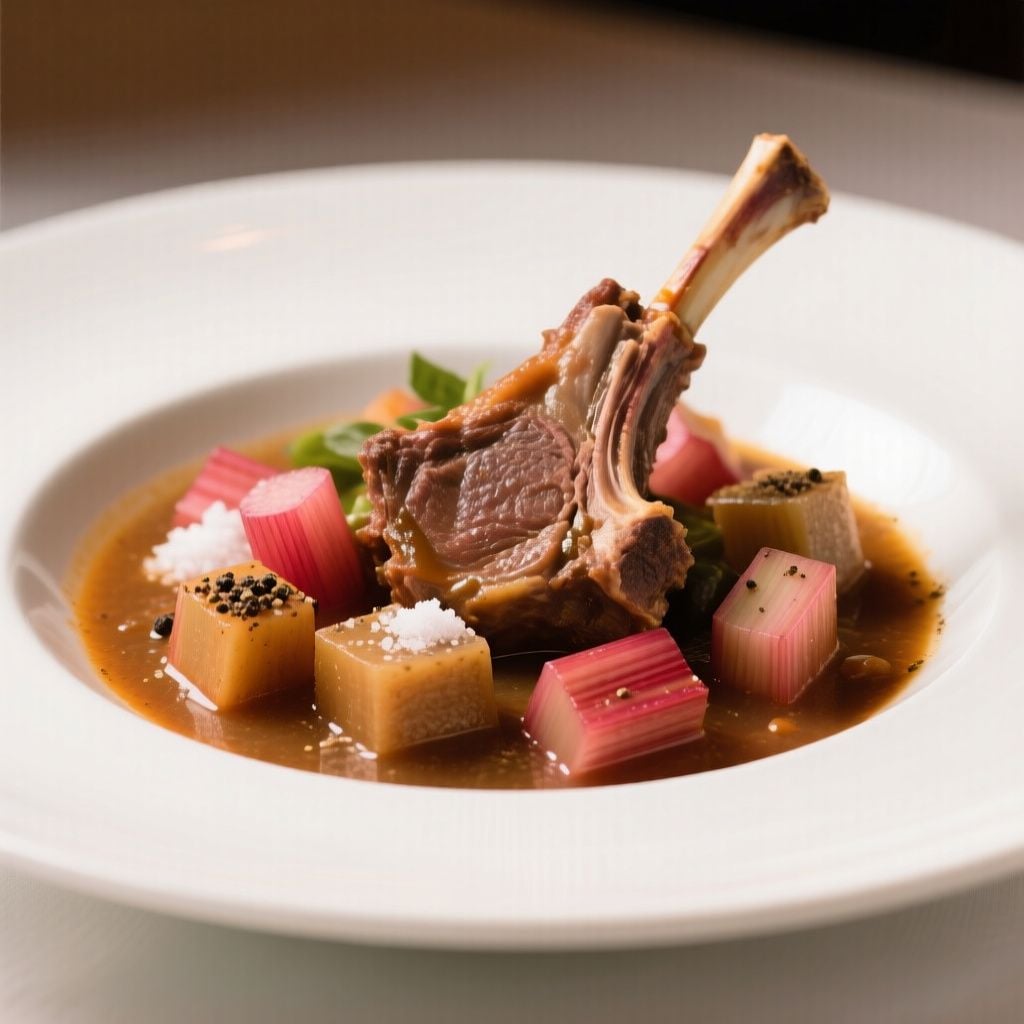
Persian-Style Braised Lamb Stew with Fresh Rhubarb
175min
4
View Full Recipe →
Ready to simplify your meal planning?
Let OttoChef AI create personalized meal plans for your family — free to use, no credit card.