
The Chemistry of Lye-Dipped Pretzels: Mastering the Maillard Reaction
Discover the science behind the deep brown crust and unique chew of authentic Bavarian pretzels. Learn how to use food-grade lye safely in your home kitchen.
Lily Nakamura
Recipe Editor
September 20, 2026
5 min read
7 views
Achieving that deep mahogany crust, glossy sheen, and distinct alkaline flavor on a homemade pretzel can feel elusive. Many home bakers turn to boiling baking soda baths, only to end up with something resembling a pale, pretzel-shaped dinner roll. The secret to an authentic Bavarian pretzel lies not in the flour or the yeast, but in a chemical reaction catalyzed by a highly alkaline bath of food-grade lye.
To understand why this process is indispensable for traditional pretzels, we must look at the fundamental chemistry of baking. By understanding how pH levels affect the surface of dough, you can master the Maillard reaction and elevate your home baking to a professional standard.
The Science of the Maillard Reaction
The Maillard reaction is a chemical reaction between amino acids and reducing sugars that gives browned foods their desirable flavor. It is what makes seared steaks taste savory, roasted coffee beans taste complex, and bread crusts taste toasted.
While the Maillard reaction occurs naturally under heat, its speed and intensity are highly dependent on the environment. Specifically, the reaction thrives in alkaline (high pH) environments. Alkaline substances strip protons from amino groups on the food's surface, making them far more reactive to sugars.
When you dip pretzel dough into an alkaline solution before baking, you dramatically increase the surface pH. When the dough hits the hot oven, the Maillard reaction occurs at an accelerated rate, creating a dark, flavorful crust in a fraction of the time it takes for standard bread to brown.
The pH Scale of Browning
Pure water has a neutral pH of 7. Standard baking soda raises water's pH to about 9. Baking your baking soda in the oven before dissolving it can push its pH to around 11. However, food-grade lye (sodium hydroxide) creates a solution with a pH of 13 to 14, providing the ultimate environment for rapid, intense Maillard browning.
Why Baking Soda Falls Short
Many recipes substitute baking soda for lye because it is readily available and less intimidating to handle. While baking soda does increase the pH of the dough's surface, it cannot achieve the necessary alkalinity to produce a true Bavarian-style crust.
Pretzels boiled in baking soda often end up with a dull, matte, yellowish-brown finish and a metallic aftertaste. Lye, on the other hand, reacts completely with the carbon dioxide in the oven during the baking process, converting the caustic sodium hydroxide into harmless, flavorful sodium carbonate. This chemical transformation is what yields the characteristic glossy sheen and deep, clean, soapy-salty flavor unique to authentic Laugengebäck (lye-dipped baked goods).
“Understanding the chemistry of your ingredients transforms baking from a series of rigid instructions into a predictable, controllable craft.”
Harold McGee, Food Science WriterSafety First: Handling Food-Grade Lye
Because sodium hydroxide is a strong base, it must be handled with care and respect. It is caustic in its raw crystal form and in highly concentrated solutions. However, using food-grade lye at home is entirely safe when you follow basic laboratory safety protocols.
Lye Safety Protocols
Always wear safety goggles and heavy-duty gloves when working with lye. Use only glass, stainless steel, or heavy-duty plastic bowls. Never use aluminum, as lye chemically reacts with aluminum to release dangerous hydrogen gas. Always add lye crystals to water, never water to lye, to prevent splashing.
Keep a bottle of white vinegar nearby when working. If any lye solution splashes onto your skin, the acid in the vinegar will instantly neutralize the base. Once the pretzels are baked, the lye is fully carbonated by the oven's heat and is completely safe to consume.
The Cold Dipping Method
Unlike bagel dough, which is boiled in a water bath to gelatinize the starches, traditional pretzels are dipped in a cold or room-temperature lye solution. This cold dip preserves the integrity of the yeast dough, preventing it from over-expanding or losing its shape before it hits the oven.
The Cold Dip Advantage
Chilling your shaped pretzels in the refrigerator for at least two hours (or up to overnight) before dipping is crucial. Cold dough is much easier to handle, holds its shape during the dip, and develops a thin, dry skin that absorbs the lye solution more evenly.
Here is how to safely execute the dipping technique at home:
Prepare the Solution
Wearing your safety goggles and gloves, measure cold water into a stainless steel or glass bowl. Carefully stir in the food-grade lye crystals to create a 3% to 4% solution (typically about 30 grams of lye per 1 liter of water). Stir slowly until the crystals are completely dissolved.
The Dip
Gently submerge each chilled pretzel into the room-temperature lye bath for exactly 10 to 15 seconds. Use a stainless steel slotted spoon or skimmer to flip the pretzel halfway through, ensuring even coverage.
Drain and Score
Lift the pretzel from the bath, letting the excess liquid drain off completely back into the bowl. Place the dipped pretzel onto a baking sheet lined with heavy-duty parchment paper. Using a sharp lame or razor blade, make a deep horizontal cut across the thickest part of the pretzel, then immediately sprinkle with coarse pretzel salt.
Baking to Perfection
Once dipped and scored, the pretzels must go immediately into a preheated oven (ideally around 425°F to 450°F / 218°C to 232°C). The intense heat activates the Maillard reaction instantly on the lye-coated surface.
As the pretzel bakes, the starch on the surface gelatinizes, locking in moisture and creating that signature chewy, thin crust. Within ten to twelve minutes, you will watch the dough transform from a pale, wet shape into a deep, glossy mahogany masterpiece.
By mastering the chemistry of the lye bath, you move past approximation and step into the realm of authentic, bakery-quality German baking. The resulting crust, with its unique texture and complex flavor, is a testament to the power of food science in the home kitchen.
Try This Recipe
Now that you've learned about the chemistry of lye-dipped pretzels: mastering the ultimate maillard reaction, put your knowledge into practice with this recipe:
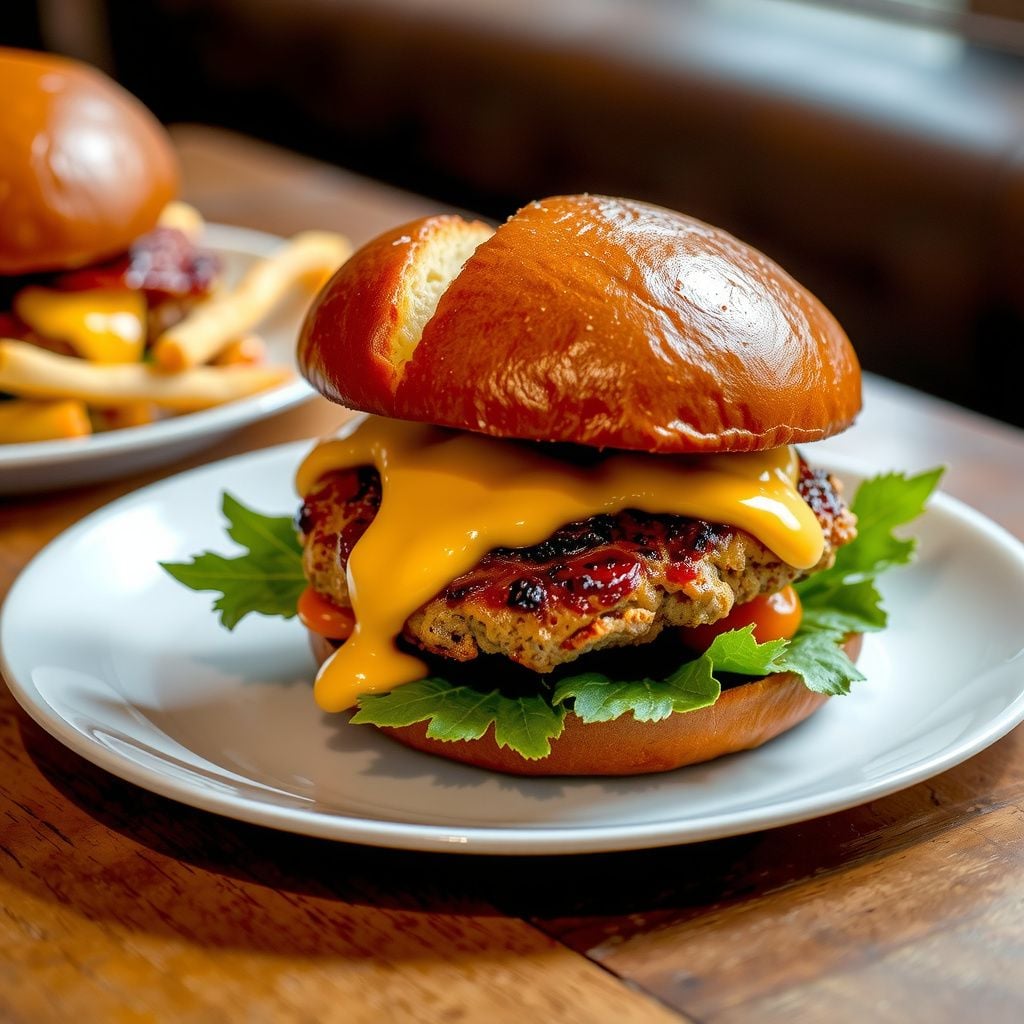
Bavarian Laugen-Burger (Lye-Dipped Pretzel Burgers with Obatzda)
115min
4
View Full Recipe →
Ready to simplify your meal planning?
Let OttoChef AI create personalized meal plans for your family — free to use, no credit card.