
Setting Up Your Kitchen for Efficient Meal Prep: A Complete Guide
Transform your kitchen into a meal prep powerhouse with strategic organization, essential tools, and workflow optimization. Expert tips for home cooks.
Sarah Mitchell
Test Kitchen Director
February 15, 2026
7 min read
30 views
You open your refrigerator Sunday evening and smile. Five perfectly portioned meals sit ready for the week ahead, each container holding a balanced, delicious dinner that took you just two hours to prepare. This isn't a fantasy—it's what happens when your kitchen is properly set up for meal prep success.
Most home cooks struggle with meal prep not because they lack cooking skills, but because their kitchen layout and organization work against them. The difference between a frustrating three-hour marathon and an efficient, even enjoyable prep session often comes down to how your workspace is configured.
The Foundation: Kitchen Zones
Professional kitchens operate on a zone system, and your home kitchen should too. The concept is simple: group tools and ingredients by task to minimize movement and maximize efficiency.
Your prep zone should be your largest clear counter space, ideally near the sink. This is where cutting boards live, along with your knife block, mixing bowls, and measuring tools. Keep a large bowl or your compost bin nearby for scraps—you'll generate plenty during meal prep.
The Mise en Place Station
Before you start cooking, set up a small tray or cutting board with small prep bowls. This "everything in its place" approach lets you measure and chop all ingredients first, making the actual cooking seamless and stress-free.
Your cooking zone centers around the stove and oven. Within arm's reach, you want cooking utensils (wooden spoons, spatulas, tongs), oils, salt, pepper, and your most-used spices. A utensil crock next to the stove beats digging through drawers every time you need to stir something.
The plating and storage zone needs to be near your refrigerator. Stack your meal prep containers here, along with labels, permanent markers, and portion control tools like measuring cups or a kitchen scale. This dedicated space prevents the common scenario of hunting for lids while your carefully cooked food goes cold.
Essential Tools That Actually Matter
You don't need every gadget in the Williams-Sonoma catalog, but certain tools dramatically accelerate meal prep. A sharp chef's knife is non-negotiable—a dull knife is both dangerous and slow. If you can only afford one quality knife, make it an 8-inch chef's knife and learn to use it properly.
The Three-Knife Truth
Professional cooks rely on just three knives for 95% of tasks: a chef's knife for general cutting, a paring knife for detail work, and a serrated knife for bread and tomatoes. Master these before considering specialty blades.
A food processor transforms tedious tasks. Slicing two pounds of onions by hand takes 15 minutes and tears; a food processor does it in 90 seconds. The same applies to shredding vegetables, making sauces, or grinding nuts. Choose a model with at least a 10-cup capacity—smaller ones require too many batches.
Sheet pans are meal prep workhorses. Invest in heavy-gauge aluminum half-sheet pans (18x13 inches)—the same ones professional kitchens use. You can roast four different vegetables simultaneously, each in its own section, or cook multiple proteins at once. Buy at least three.
"The quality of your tools directly impacts your efficiency. A $100 knife that lasts 20 years is cheaper than replacing a $20 knife every year."
Chef Jacques PépinMixing bowls in graduated sizes (small, medium, large, extra-large) let you prep multiple components without washing between tasks. Stainless steel bowls are durable, nest for storage, and can double as double-boiler tops.
Strategic Storage Solutions
Your meal prep containers deserve serious consideration. Glass containers with snap-lock lids are ideal—they're microwave-safe, don't stain, and last for years. The upfront cost seems high, but cheap plastic containers that warp and stain become expensive when you constantly replace them.
Standardize your container sizes. Choose 2-3 sizes that work for your typical portions and buy multiples of each. This makes stacking in the refrigerator efficient and ensures lids are always interchangeable. A common setup includes 3-cup containers for full meals, 2-cup containers for sides or lunches, and 1-cup containers for sauces and snacks.
The Lid Problem
Mismatched containers and lids create meal prep chaos. Store containers with their lids attached, even when empty, or use a dedicated drawer organizer that keeps lids upright and sorted by size. The 30 seconds you save not hunting for lids adds up quickly.
Clear containers let you see contents at a glance, but if you use opaque ones, invest in a label maker or good quality labels. Date everything—"chicken and rice" means nothing when you have three similar containers and can't remember which is from Sunday versus Wednesday.
Workflow Optimization
The order you prep and cook matters enormously. Start with items that take longest to cook or can sit while you work on other things. If you're roasting vegetables, get them in the oven first. While they roast, prep your proteins. While proteins cook, portion your grains or prepare your sauces.
Clean As You Go
Fill your sink with hot, soapy water before you start. As soon as you finish with a cutting board, knife, or bowl, it goes in the water. Wash items during natural pauses—while water boils, while things roast, while timers count down.
Batch Similar Tasks
Cut all your vegetables at once, then all your proteins. This "task batching" is faster than switching between different types of prep. Your brain works more efficiently when it's not constantly shifting gears.
Use Simultaneous Cooking Methods
Master the art of using multiple heat sources: something in the oven, something on the stovetop, something in a slow cooker or Instant Pot. This parallel processing is how you prep five meals in two hours instead of five.
Consider your refrigerator organization as part of your prep system. Designate specific shelves for prepped meals versus ingredients versus leftovers. A well-organized fridge means you actually eat what you prep instead of discovering science experiments two weeks later.
The Power of Prep Stations
Create dedicated prep stations for recurring tasks. A grain station might include your rice cooker, a container of rice, quinoa, and other grains, plus measuring cups. When it's time to cook grains, everything you need is in one spot.
A sauce and dressing station—a small tray or lazy Susan with oils, vinegars, soy sauce, hot sauce, and other flavor builders—lives near your prep zone. This prevents the constant back-and-forth to the pantry that fragments your workflow and kills efficiency.
The Protein Prep Shortcut
Dedicate one cutting board exclusively to raw proteins and keep it separate from your vegetable board. This prevents cross-contamination and means you don't need to wash and sanitize between every task. Color-coded boards (red for meat, green for vegetables) make this system foolproof.
Maintaining Your System
The best meal prep setup in the world fails if you don't maintain it. Schedule a 15-minute kitchen reset each week—sharpen knives, wipe down containers, reorganize zones that have gotten messy. This small investment prevents the gradual entropy that makes meal prep increasingly frustrating.
Replace tools before they fail. A worn-out spatula or warped sheet pan might seem fine, but these small inefficiencies compound. When you notice something isn't working optimally, add it to a replacement list. Quality tools maintained properly last for years, even decades.
Your meal prep setup should evolve with your needs. As you develop your routine, you'll discover which tools you reach for constantly and which gather dust. Don't be afraid to reorganize or invest in new solutions when you identify bottlenecks in your process.
Starting Your Transformation
You don't need to implement everything at once. Start with one zone—most people benefit from organizing their prep zone first. Get your knives sharp, clear the counter space, and establish your mise en place station. Once that feels natural, move to the next zone.
The goal isn't a picture-perfect kitchen worthy of Instagram. The goal is a workspace that supports your meal prep ambitions instead of fighting them. When your Sunday prep session flows smoothly, when you're not hunting for tools or containers, when cleanup takes minutes instead of an hour—that's when you know your kitchen setup is working.
Efficient meal prep isn't about cooking faster; it's about removing friction from the process. A well-organized kitchen does exactly that, transforming meal prep from a dreaded chore into a manageable, even meditative routine that sets you up for a week of great eating.
Try This Recipe
Now that you've learned about setting up your kitchen for efficient meal prep, put your knowledge into practice with this recipe:
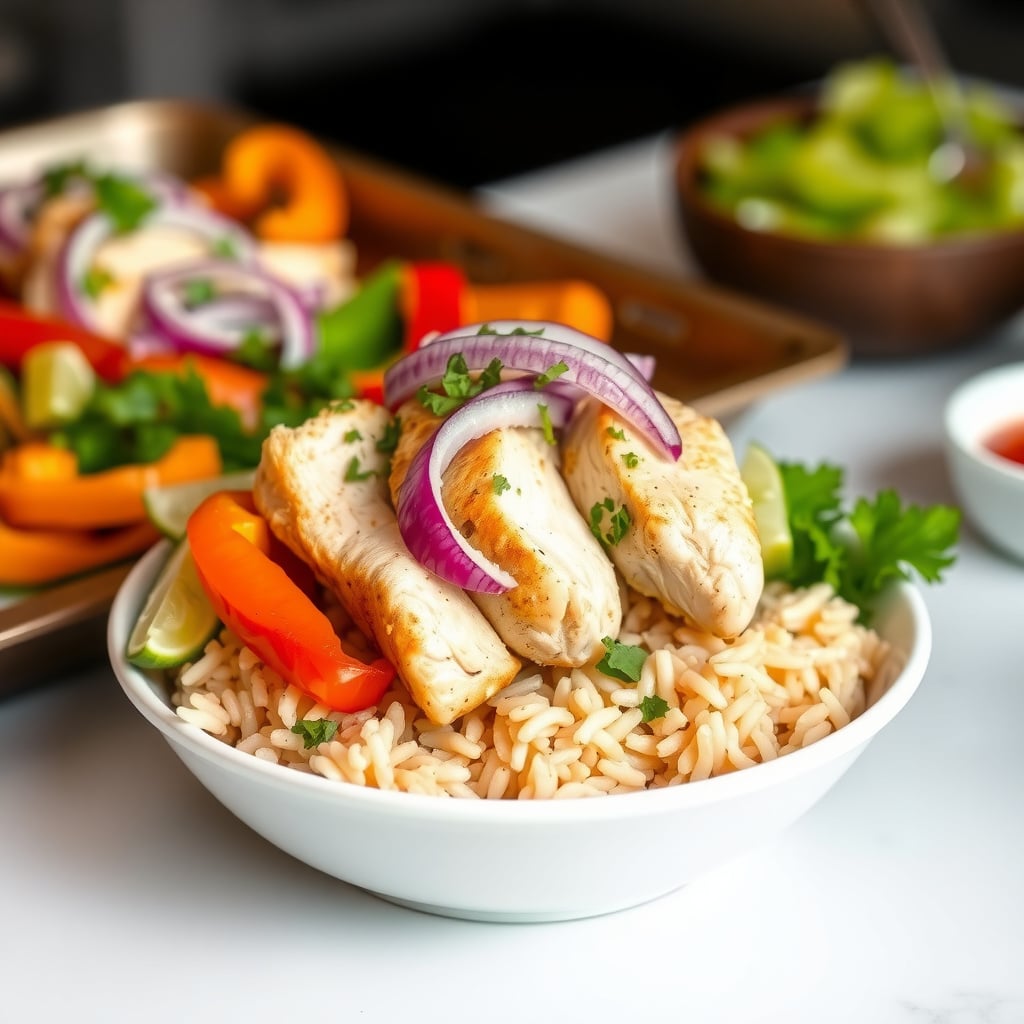
Sheet Pan Chicken Burrito Bowls with Cilantro-Lime Rice
50min
4
View Full Recipe →
Ready to simplify your meal planning?
Let OttoChef AI create personalized meal plans for your family in seconds.