
Scaling Recipes Up: The Math and Science of Batch Cooking
Master the art of batch cooking with our guide on the math and science of scaling recipes. Learn why simple multiplication fails and how to adjust for flavor.
Emma Chen
Recipe Developer
June 27, 2026
5 min read
Preparing a meal for four people is a standard kitchen task, but doubling, tripling, or even quadrupling that same recipe for a week of meal prep or a large gathering often leads to unexpected results. Many home cooks assume that scaling up is a matter of simple multiplication: if one cup of water is needed for four servings, then four cups must be right for sixteen. However, professional chefs know that culinary math is rarely linear. When you increase the volume of ingredients, you change the thermodynamics of the pan, the rate of evaporation, and the intensity of seasonings. Mastering the science of batch cooking requires moving beyond basic arithmetic and understanding how physics affects your food.
The Square-Cube Law
In physics, the square-cube law explains that as an object grows in size, its volume grows much faster than its surface area. In cooking, this means if you double a recipe, you have twice the volume but not necessarily twice the surface area for evaporation or browning.
One of the most common mistakes in batch cooking is relying on volumetric measurements like cups and tablespoons. When you are measuring a single cup of flour, a small margin of error is negligible. When you scale that up ten times, those small errors compound into a significant discrepancy that can ruin the texture of baked goods or the consistency of a sauce. This is why professional kitchens operate almost exclusively in weights. Using a digital scale to measure ingredients in grams ensures that your ratios remain identical whether you are making a single portion or a massive batch.
The Ratio Method
Instead of memorizing quantities, learn the ratios of your favorite components. For example, a standard vinaigrette is 3 parts oil to 1 part acid. This ratio holds true whether you are making 100 milliliters or 5 liters.
Seasoning is where linear multiplication most frequently fails. While the bulk components of a dish—like proteins, grains, and vegetables—scale predictably, aromatics and spices do not. Capsaicin (the heat in chilies), salt, and pungent spices like cloves or star anise can become overwhelming if simply multiplied by four or five. This happens because the surface area of the cooking vessel doesn't increase at the same rate as the food volume, leading to different extraction rates.
The Salt Trap
Salt does not scale linearly. When doubling a recipe, start with 1.5 times the salt rather than 2 times. You can always add more at the end, but you cannot easily remove it once it is integrated into a large batch.
"Scaling a recipe is not an act of multiplication; it is an act of recalibration. You are managing the relationship between heat, time, and surface area."
Chef Julian VanceSurface area and evaporation play a massive role in how a dish develops flavor. If you scale up a braise but use the same size pot, the liquid will be deeper, and less of it will be in contact with the air. This slows down evaporation, meaning your sauce won't thicken as quickly or concentrate its flavors as effectively as the original small-batch version. Conversely, if you move to a much wider pot to accommodate the volume, you might find the liquid evaporates too quickly, leaving your protein dry before it is tender. When batch cooking, you must choose a vessel that maintains a similar depth-to-surface-area ratio as your original smaller pan.
Convert to Weight
Before you begin, convert all volumetric measurements (cups, spoons) into grams. This eliminates the 'packing' variable of ingredients like brown sugar or flour.
Calculate the Scaling Factor
Divide your desired yield by the original yield. If the recipe serves 4 and you want to serve 12, your scaling factor is 3. Multiply your base weights by this number, but keep a separate note for 'aggressive' seasonings like salt, chili, and dried herbs.
Adjust the Vessel
Select a pot or pan that allows the food to sit at roughly the same depth as the original recipe. Crowding a pan by doubling the height of the ingredients will lead to steaming rather than searing.
The Mid-Point Seasoning Check
Halfway through the cooking process, taste your dish. Because flavors concentrate differently in large batches, you should only add the final third of your seasoning after the volume has reduced to its near-final state.
Temperature control is the final hurdle in the science of scaling. A cold, five-pound roast will drop the temperature of your pan significantly more than a one-pound steak. This is known as thermal mass. When batch cooking, you often need to increase your initial heat to compensate for the massive influx of cold ingredients, or better yet, work in smaller batches for the searing phase before combining everything for the long simmer. If you crowd the pan with too much meat at once, the temperature will drop below the point where the Maillard reaction (browning) occurs, resulting in grey, boiled-looking protein instead of a rich, caramelized crust.
The Maillard Reaction
This chemical reaction between amino acids and reducing sugars gives browned food its distinctive flavor. It requires temperatures between 280°F and 330°F. In large batches, excess moisture often prevents the food from reaching these temperatures.
By approaching batch cooking as a scientific adjustment rather than a math problem, you ensure that your meal prep efforts result in food that is just as high-quality as a single-serving dinner. Pay attention to your ratios, respect the weight of your ingredients, and always trust your palate over the calculator when it comes to the final seasoning.
Try This Recipe
Now that you've learned about scaling recipes up: the math and science of batch cooking, put your knowledge into practice with this recipe:
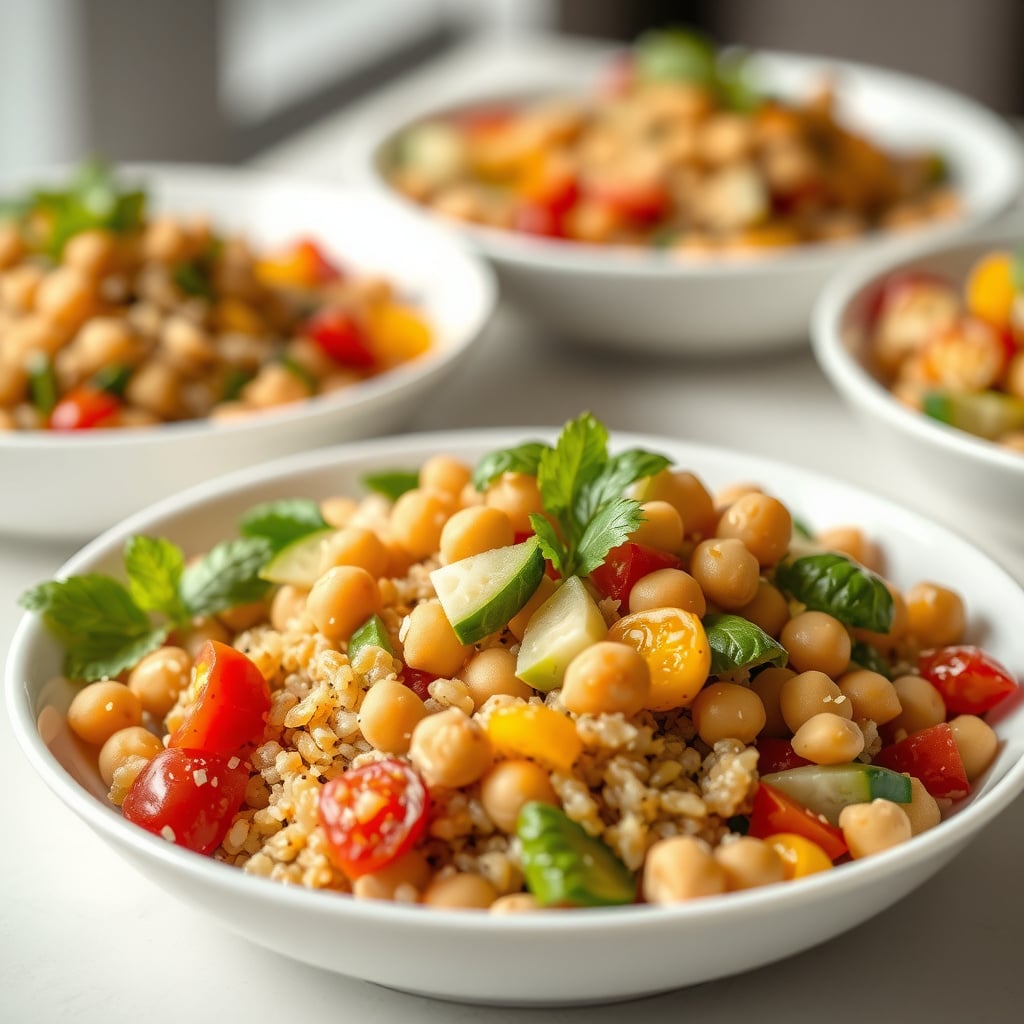
Precision-Scaled Mediterranean Quinoa Bowls
40min
4
View Full Recipe →
Ready to simplify your meal planning?
Let OttoChef AI create personalized meal plans for your family in seconds.