
Recreating Tandoori Heat: The Inverted Cast-Iron Skillet Method
Learn how to replicate a 900-degree clay tandoor oven at home using an inverted cast-iron skillet to make perfect, bubbly, blistered naan.
Daniel Park
Culinary Contributor
July 30, 2026
4 min read
4 views
Many home cooks who attempt to make naan at home encounter the same disappointing result: a flat, dense flatbread that resembles a dry pita rather than the pillowy, blistered, smoky masterpiece served at Indian restaurants. The obstacle isn't your dough recipe. The true barrier is thermodynamics.
A traditional clay tandoor oven operates at temperatures exceeding 900°F (480°C). The naan dough is slapped directly onto the scorching clay wall, where conductive heat rapidly transfers to the dough, vaporizing moisture instantly to create giant steam pockets. Simultaneously, radiant heat from the glowing coals cooks the exposed side, resulting in those iconic charred spots.
The Tandoor Legacy
Traditional tandoor ovens are cylindrical clay pots insulated with mud or concrete. The high-heat environment cooks flatbreads in under 60 seconds, trapping moisture inside for a characteristic soft, chewy texture.
To replicate this intense environment in a standard home kitchen, we must turn to the ultimate heat reservoir in your cabinet: the cast-iron skillet. By inverting the skillet over a gas burner, we can mimic the vertical cooking surface of a tandoor wall.
The Science of the Stick
The most critical aspect of tandoor cooking is adhesion. When the baker slaps dough onto the clay wall, gravity should pull it down, but the wet dough sticks to the porous clay. As it cooks, steam forms inside, puffing the dough outward while the base remains anchored.
To recreate this on cast iron, we use a clever liquid barrier. Brushing one side of the rolled dough with water creates a temporary glue when it contacts the hot metal. This allows you to flip the entire skillet upside down directly over an open flame without the bread falling into the burner.
Skip the Oil
Do not oil your cast-iron skillet or the dough before using this method. Grease prevents the wet dough from adhering to the pan, causing your naan to slide off directly onto your stove when you invert the skillet.
Engineering the Perfect Heat
Cast iron is prized not because it heats evenly, but because it holds an immense amount of thermal energy. Once fully preheated, it acts as a heat battery, dumping energy rapidly into the dough upon contact.
“The secret to the perfect bubble lies in the sudden phase change of water to steam. Without high conductive heat, the steam escapes slowly, leaving the bread flat and tough.”
OttoChef Culinary TeamHere is the step-by-step breakdown of how to execute this technique safely and effectively in your home kitchen.
Preheat the Skillet
Place your cast-iron skillet right-side up over medium-high heat on a gas range for 5 to 7 minutes. The pan must be thoroughly heated through before you begin.
Shape and Hydrate
Roll your leavened naan dough into an oblong teardrop shape. Just before cooking, generously brush one side of the dough with room-temperature water. Ensure the entire surface is damp but not dripping.
The First Contact
Carefully drape the dough, wet-side down, onto the hot skillet. It should sizzle immediately and begin to balloon with large bubbles within 15 seconds. Press down gently on any areas that lift too quickly to ensure good contact with the pan.
The Inversion
Once the bottom has set (about 30 seconds), grab the skillet handle using a heavy-duty oven mitt. Lift the pan, flip it completely upside down, and hold it 2 to 3 inches above the open flame. Move the pan in a slow circular motion to evenly char the top of the naan with radiant heat from the flame.
Release and Finish
Flip the skillet back over. Use a metal spatula to gently pry the naan from the pan—it should release easily once cooked through. Brush immediately with melted ghee or butter.
Troubleshooting Your Bake
If your naan falls off the pan during the flip, one of three things happened: the pan was not hot enough to instantly cook and bond the dough, you used too much water (making it slippery), or your pan has a modern non-stick coating. Traditional, well-seasoned cast iron is essential.
Temperature Check
If your naan burns before it puffs, lower the burner heat slightly but increase the preheat time. Steady, deep heat throughout the metal is better than a scorching surface with a cold core.
With a bit of practice, this inverted skillet method will transform your flatbreads, giving you that authentic charred, bubbly texture that makes fresh naan so irresistible. Experiment with different flour hydrations and fermentation times to find your perfect balance of chew and tenderness.
Try This Recipe
Now that you've learned about recreating tandoori heat: the inverted cast-iron skillet method for fluffy naan, put your knowledge into practice with this recipe:
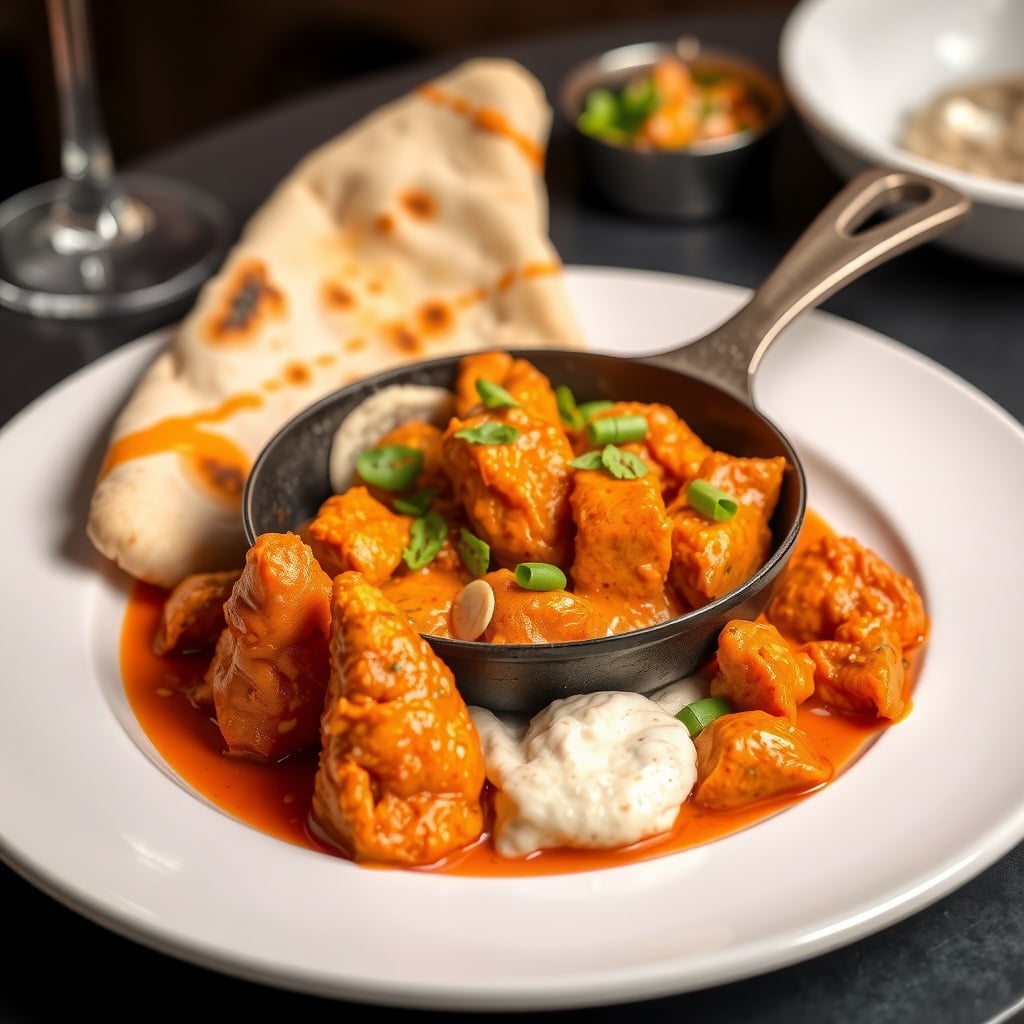
Tandoori-Style Butter Chicken with Inverted-Skillet Garlic Naan
80min
4
View Full Recipe →
Ready to simplify your meal planning?
Let OttoChef AI create personalized meal plans for your family — free to use, no credit card.