
Portuguese Seafood Traditions: Mastering Salt, Spice, and Sea
Discover Portugal's centuries-old seafood cooking techniques, from perfect bacalhau preparation to piri-piri heat balance. Learn traditions that transform simple fish into extraordinary meals.
Emma Chen
Recipe Developer
March 10, 2026
7 min read
10 views
Portuguese cuisine stands as one of Europe's most underappreciated culinary traditions, built on a foundation of Atlantic bounty and spice routes that once connected Lisbon to the world. Unlike the butter-heavy French or olive oil-centric Italian approaches, Portuguese cooking achieves depth through strategic salt preservation, judicious spicing, and techniques that honor—rather than mask—the ocean's flavors.
The Portuguese relationship with seafood isn't merely about eating fish; it's a sophisticated culinary philosophy developed over centuries of maritime exploration. Understanding these principles transforms how you approach any seafood in your kitchen, whether you're working with cod from the North Atlantic or sardines from your local market.
The Foundation: Salt as Preservation and Flavor Builder
Portugal's most iconic ingredient isn't technically fresh at all. Bacalhau—salt cod—represents a preservation technique refined over 500 years. The Portuguese consume more dried, salted cod per capita than any nation on earth, despite having limited cod in their own waters. This paradox reveals something crucial about Portuguese cooking: transformation through patience.
The Bacalhau Tradition
Portugal has over 365 documented ways to prepare salt cod—supposedly one for each day of the year. This dried fish became a staple because it could survive long ocean voyages and feed families through lean winters.
The salting process does more than preserve; it fundamentally changes the protein structure, creating a firmer texture and concentrated flavor that fresh cod cannot replicate. When you properly desalt bacalhau (a 24-48 hour process with multiple water changes), you're left with fish that holds its shape during cooking while absorbing surrounding flavors like a culinary sponge.
Desalting Technique
Submerge salt cod in cold water, skin-side up, changing the water every 6-8 hours. Taste a small piece after 24 hours—it should taste pleasantly briny but not aggressively salty. The exact timing depends on the thickness and salt concentration.
This principle extends beyond bacalhau. Portuguese cooks understand that strategic salting—whether through dry brining fresh fish for 30 minutes or using coarse salt as a cooking vessel—enhances rather than overwhelms. The goal is always to intensify the natural flavors, not to create a salt-forward dish.
Spice Routes and Restrained Heat
Portuguese exploration in the 15th and 16th centuries brought African piri-piri chilies, Indian spices, and Asian aromatics back to Lisbon's kitchens. Yet Portuguese cuisine never became fiery like Thai or intensely spiced like Indian food. Instead, it developed a sophisticated restraint—spices accent rather than dominate.
"Portuguese cooking teaches us that heat should enhance sweetness in seafood, not compete with it"
Traditional Portuguese cooking wisdomPiri-piri (also spelled peri-peri) represents this philosophy perfectly. These small, potent African chilies pack serious heat, but Portuguese cooks deploy them with precision. A piri-piri sauce for grilled prawns might contain six chilies, garlic, lemon, and olive oil—enough to create warmth and complexity without numbing your palate.
The key is building layered heat rather than aggressive spice. Start with aromatics (garlic, bay leaves, sometimes coriander seed), add measured chili, then balance with acid (lemon, wine, or vinegar). This creates what Portuguese cooks call "temperado"—a well-tempered flavor profile where you taste everything, not just heat.
Create Your Base
Sauté garlic in olive oil until fragrant but not brown. This forms the foundation for most Portuguese seafood dishes.
Add Strategic Spice
Introduce your heat element—piri-piri, paprika, or white pepper—blooming it briefly in the oil to release aromatic compounds.
Build Acidity
Add wine, tomato, or citrus to create balance. Portuguese cooking almost always includes an acidic element to cut richness.
Finish with Freshness
Cilantro, parsley, or a final squeeze of lemon added just before serving keeps the dish bright.
Grilling and Charring: Controlled Intensity
Walk through any Portuguese coastal town during summer, and you'll encounter sardinhas assadas—grilled sardines—perfuming the air with smoke and sea. This simple preparation reveals sophisticated technique.
Portuguese grilling differs from American barbecue or Argentine asado in its restraint. The goal isn't heavy char or smoke penetration; it's a delicate balance where fire enhances natural oils without overpowering delicate fish flavors. Sardines are grilled whole, scales and all, over very hot coals for just 3-4 minutes per side.
The Whole Fish Advantage
Grilling fish whole (with head, skin, and bones) protects the delicate flesh from drying out and adds flavor. The skin becomes a natural barrier, while bones conduct heat evenly. Scale the fish but leave everything else intact.
The Portuguese approach to grilling teaches us about heat management. They use extremely hot fires for small fish (sardines, mackerel) to create quick surface char while keeping interiors moist. For larger fish or octopus, they employ medium heat and longer cooking times, sometimes pre-cooking tougher proteins like polvo (octopus) before finishing on the grill.
Coarse salt applied just before grilling creates a crust that seasons while drawing out moisture for better browning. After grilling, a generous drizzle of quality olive oil and lemon juice—never before, which would cause flare-ups—adds richness and brightness.
The Cataplana: Steaming with Purpose
The cataplana—a hinged copper clam-shell pot—represents Portuguese ingenuity in seafood cookery. This vessel creates a sealed environment where seafood steams in its own juices, mingled with wine, aromatics, and tomatoes. The technique produces incredibly tender shellfish and fish while creating a concentrated, flavorful broth.
You don't need a traditional cataplana to apply this principle. A heavy pot with a tight-fitting lid works similarly. The key is building your base (onions, garlic, tomatoes, wine), bringing it to a simmer, then adding seafood and immediately covering. The trapped steam cooks gently and evenly.
Layering for Even Cooking
Add ingredients in stages based on cooking time. Start with firmer fish or larger clams, then add delicate shrimp or mussels in the final 3-4 minutes. Everything finishes together without overcooking.
This method excels with mixed seafood—combining clams, prawns, monkfish, and squid in one pot. The different proteins release their unique flavors into the shared liquid, creating complexity impossible to achieve with a single ingredient.
Rice: The Underappreciated Canvas
Portuguese rice dishes (arroz) deserve recognition alongside Spanish paella or Italian risotto. The Portuguese technique differs from both: rice is cooked more like a thick soup, with a consistency described as "malandrinho"—slightly loose and creamy, but not soupy.
Seafood rice begins with a rich base—sofrito of onions, tomatoes, and garlic—then builds flavor with fish stock or shellfish cooking liquid. The rice absorbs these flavors while releasing starch, creating natural creaminess without cream or butter.
The Carolino Advantage
Portuguese cooks prefer short-grain carolino rice varieties that release starch while maintaining structure. Arborio or other risotto rice makes an acceptable substitute, but avoid long-grain rice, which won't create the desired creamy texture.
Unlike risotto's constant stirring, Portuguese rice is stirred initially, then left largely undisturbed. This creates a different texture—individual grains suspended in flavorful liquid rather than a unified creamy mass. Seafood gets added near the end, cooking gently in the rice rather than separately.
Applying Portuguese Principles at Home
You don't need Portuguese ingredients to cook with Portuguese sensibility. The principles translate to any seafood:
Respect the protein: Use techniques that enhance rather than mask natural flavors. Simple preparations with quality ingredients trump complex sauces.
Build layered seasoning: Salt at multiple stages, add aromatics early, introduce acid for balance, finish with fresh herbs.
Control your heat: Whether grilling or stewing, match heat intensity to the ingredient. Delicate fish needs gentle treatment; robust octopus can handle more intensity.
Embrace simplicity: Portuguese cuisine proves that extraordinary results come from ordinary ingredients treated with care and technique.
Start with This
Try grilling whole fish (branzino, snapper, or mackerel) with nothing but coarse salt and olive oil. Master this simplicity before adding complexity. You'll learn more about heat control and timing than from any elaborate recipe.
The Portuguese approach to seafood offers modern cooks a masterclass in restraint and respect for ingredients. In an era of fusion and complexity, these time-tested techniques remind us that the ocean provides extraordinary flavors—our job is simply not to ruin them. Whether you're working with humble sardines or expensive monkfish, Portuguese principles of salt, measured spice, and appropriate heat will elevate your seafood cooking.
Start with one technique—perhaps grilling whole fish or making a simple cataplana-style seafood stew. Pay attention to how salt enhances, how acid balances, how heat transforms. These lessons extend far beyond Portuguese cuisine, informing how you approach seafood from any tradition.
Try This Recipe
Now that you've learned about portuguese cuisine: seafood and spice traditions, put your knowledge into practice with this recipe:
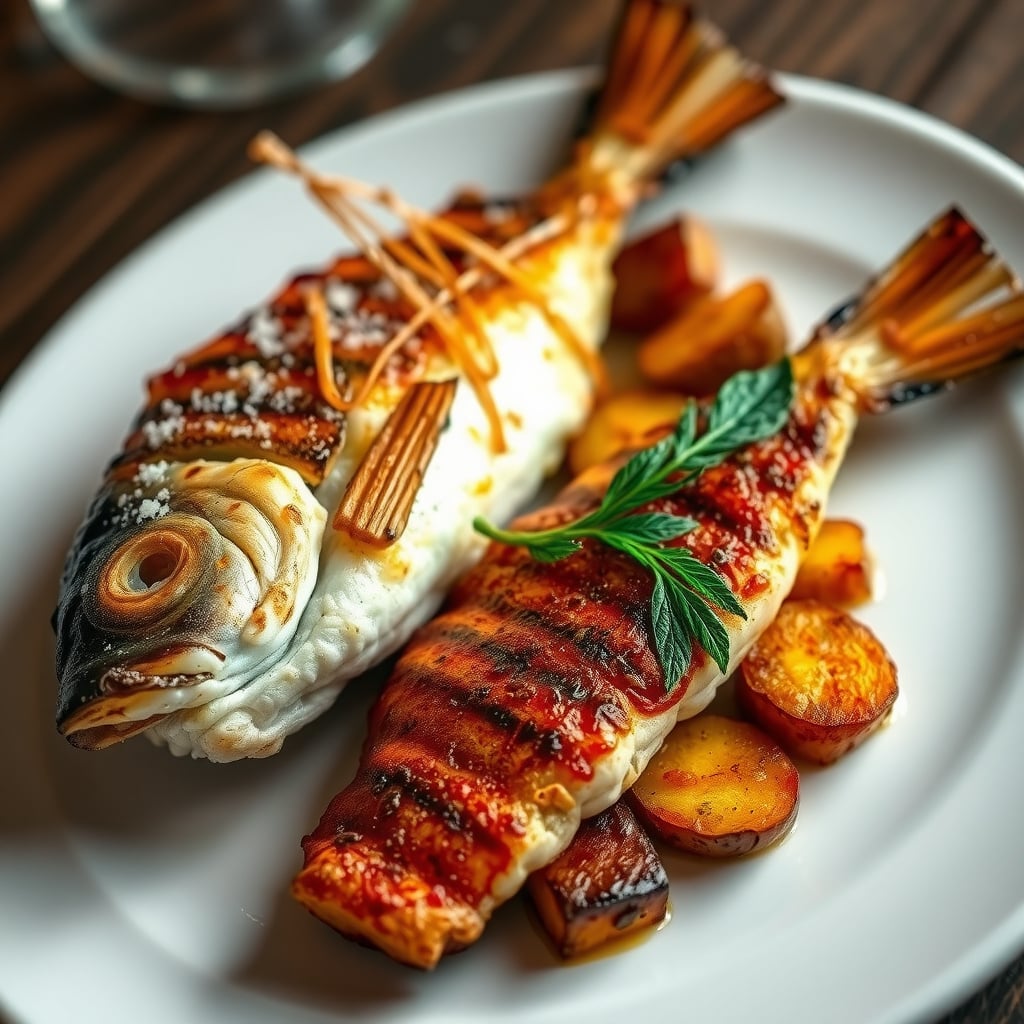
Piri-Piri Grilled Sea Bass with Herb-Roasted Potatoes
80min
4
View Full Recipe →
Ready to simplify your meal planning?
Let OttoChef AI create personalized meal plans for your family in seconds.