
Maximizing Meat: How Asian Culinary Traditions Stretch Your Budget
Learn how to use less meat without sacrificing flavor by adopting techniques from Asian cuisines, including velvetting, thin slicing, and umami building.
Sofia Rossi
Kitchen Editor
June 28, 2026
5 min read
For many home cooks, the centerpiece of a meal is often a large, expensive cut of protein. Whether it is a whole chicken breast, a thick steak, or a pork chop, this approach places a significant burden on your grocery budget. In contrast, many Asian culinary traditions have spent centuries perfecting the art of stretching small amounts of meat to feed entire families. By shifting the focus from meat as a soloist to meat as part of an ensemble, you can significantly reduce your food costs while actually increasing the complexity and satisfaction of your dishes.
This approach is not about deprivation; it is about efficiency and flavor distribution. When you cut meat into smaller pieces, you increase its surface area. More surface area means more opportunities for the Maillard reaction—that savory browning that happens when proteins hit high heat—and more surface for sauces and spices to cling to. Instead of one large piece of meat that is seasoned only on the outside, you get dozens of small pieces that are packed with flavor throughout.
The Concept of Fan and Cai
In Chinese culinary philosophy, a meal is often balanced between 'fan' (grains and starches) and 'cai' (vegetables and proteins). The 'fan' provides the bulk and energy, while the 'cai' provides the flavor and nutrition. In this system, meat is rarely the main event but rather a flavorful accompaniment that makes the grain more palatable.
One of the most effective ways to stretch a small amount of protein is through precision knife work. By slicing meat thinly across the grain, you accomplish two things: you make tough cuts easier to chew, and you make a single four-ounce portion of beef look like a mountain of food once it is tossed with aromatics and vegetables.
Partial Freezing
Place your meat in the freezer for 20 to 30 minutes before slicing. This firms up the proteins, making it much easier to achieve paper-thin, uniform slices without the meat sliding under your knife.
Identify the Grain
Look for the long muscle fibers running through the meat. Always position your knife perpendicular to these fibers. Slicing 'across the grain' shortens the fibers, ensuring that even lean or budget-friendly cuts remain tender after a quick sear.
Angle the Blade
Use a slight bias (slant) when cutting. This increases the surface area of each slice even further, allowing the meat to cook in seconds and soak up whatever marinade or sauce you are using.
Once the meat is sliced, Asian cuisines often employ a technique known as 'velvetting.' This is a foundational method in Chinese stir-frying that involves coating the meat in a mixture of cornstarch, egg white, and often a splash of rice wine or oil. This coating acts as a protective barrier, preventing the moisture from escaping when the meat hits the intense heat of a wok or skillet. The result is meat that is incredibly tender and silky, even if it is a leaner, cheaper cut.
The Cornstarch Secret
Even if you don't do a full velvetting process, tossing your sliced meat in a tablespoon of cornstarch and a teaspoon of soy sauce 15 minutes before cooking creates a 'slurry' that thickens into a glossy sauce instantly in the pan.
"When meat is treated as a seasoning rather than a centerpiece, a single chicken breast can feed a family of four while delivering more flavor than a whole roast."
OttoChef Culinary TeamBeyond knife skills and textures, stretching meat requires a strategic use of 'fillers' that complement the protein. In many Southeast Asian and East Asian dishes, vegetables are not just a side dish; they are integrated into the main protein component. Sturdy vegetables like bok choy, snap peas, bell peppers, and broccoli stems provide a structural contrast to the tender meat. Mushrooms are particularly valuable here; their earthy, savory profile mimics the texture of meat, allowing you to swap out half the beef or pork for sliced shiitakes or cremini without a noticeable loss in satisfaction.
Don't Crowd the Pan
When cooking small amounts of meat to maximize flavor, never overcrowd your skillet. If the pieces are touching or layered, they will steam in their own juices rather than searing. Cook the meat in small batches to ensure it gets that crucial brown crust.
Another pillar of this budget-friendly strategy is the use of fermented ingredients to provide 'umami'—the fifth taste that we associate with savoriness and meatiness. Ingredients like miso paste, fish sauce, soy sauce, and fermented bean pastes are essentially concentrated flavor bombs. By using these ingredients, you can trick the palate into feeling satisfied with less actual animal protein. A tablespoon of oyster sauce or a splash of fish sauce provides a deep, savory backbone that makes a stir-fry with two ounces of pork feel as hearty as a full steak dinner.
Tofu as a Partner, Not a Substitute
In many Asian cultures, tofu is not seen as a 'fake meat' for vegetarians, but as a delicious protein in its own right that happens to pair beautifully with small amounts of ground pork or beef. This 'hybrid' approach is a fantastic way to lower costs while keeping the flavor profile familiar.
Finally, consider the format of the meal itself. Dishes that incorporate noodles, rice, or broths are naturally better at stretching ingredients than the 'meat and two veg' plate common in Western cooking. When you serve a small amount of highly seasoned, thinly sliced meat over a bed of steamed jasmine rice or tucked into a bowl of aromatic noodle soup, the starches absorb the juices and fats from the meat, ensuring that not a single drop of flavor is wasted.
By adopting these techniques—precision slicing, velvetting, vegetable integration, and umami-rich seasoning—you can transform the way you shop and cook. You will find that your grocery bills decrease as your repertoire of textures and flavors expands, proving that you don't need a massive portion of protein to create a truly luxurious meal.
Try This Recipe
Now that you've learned about how asian cuisines stretch small amounts of meat, put your knowledge into practice with this recipe:
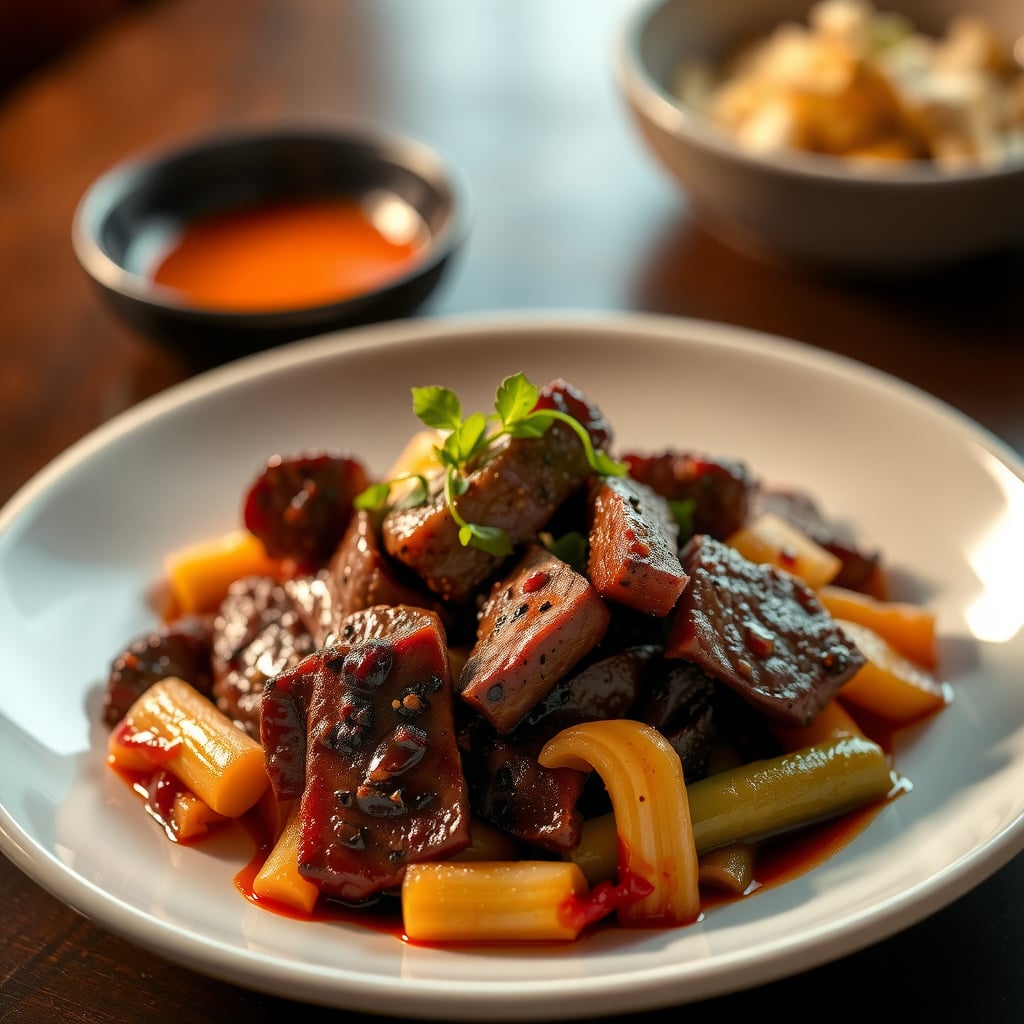
Velveted Black Pepper Beef Stir-Fry
40min
4
View Full Recipe →
Ready to simplify your meal planning?
Let OttoChef AI create personalized meal plans for your family in seconds.