
Mastering the Tangzhong Method for Pillow-Soft Bread
Learn the science behind the Tangzhong method. Gelatinize starches to make your homemade bread incredibly soft, fluffy, and fresh for days.
Daniel Park
Culinary Contributor
September 1, 2026
5 min read
7 views
Few home bakers haven't experienced the disappointment of a homemade loaf of bread turning dry and stale within twenty-four hours of leaving the oven. While commercial bakeries rely on chemical dough conditioners to keep their products soft, home cooks have a cleaner, science-backed alternative: the Tangzhong method. Originating in Asia, this simple technique yields incredibly soft, pillowy bread that stays fresh for days longer than standard loaves.
Understanding how this technique works—and how to apply it to your favorite recipes—will fundamentally change your home baking results.
What Is the Tangzhong Method?
Tangzhong is a technique that involves cooking a small portion of a bread recipe's flour and liquid into a thick slurry before mixing it with the remaining ingredients. This pre-cooking step gelatinizes the starches in the flour, allowing them to absorb much more liquid than cold or room-temperature flour ever could.
The Origins of Tangzhong
While popularized by Taiwanese cookbook author Yvonne Chen in her 2007 book "The 65°C Bread Doctor," the technique is rooted in the traditional Japanese "yudane" method. While Yudane uses a 1:1 ratio of boiling water to flour, Tangzhong typically uses a 1:5 ratio of flour to liquid cooked on a stovetop.
When you make a standard bread dough, the flour absorbs water slowly. During baking, some of this water evaporates, leaving the bread vulnerable to drying out. Tangzhong binds the water securely within the starch structure, locking that moisture in even as the bread bakes.
The Science of Starch Gelatinization
To understand why this works, we have to look at the molecular level. Wheat flour is packed with starch granules. At room temperature, these granules are insoluble and absorb only a limited amount of water. However, when heated in the presence of liquid, those starch granules begin to swell.
At around 65°C (149°F), the hydrogen bonds holding the starch structure together break, allowing water to rush inside. The starch granules swell to their maximum capacity and burst, releasing amylose and amylopectin. This process is called starch gelatinization.
“By pre-gelatinizing a small portion of the flour, we lock in moisture that would otherwise evaporate during baking, resulting in a crumb that stays fresh for days without artificial preservatives.”
Yvonne Chen, Author of The 65°C Bread DoctorThis gelatinized paste behaves differently in dough:
- Higher Hydration: Gelatinized starch can hold up to twice as much water as raw starch. This allows you to create a high-hydration dough that is still easy to handle and knead.
- Increased Oven Rise: Because the water is trapped in the gel, it turns to steam more slowly during baking, giving the yeast more time to push the dough upward before the crust sets.
- Delayed Staling: Bread goes stale due to retrogradation—the process where starch molecules recrystallize and expel water. Because gelatinized starch holds onto water molecules so tightly, retrogradation is significantly delayed.
The 65°C Rule
The ideal temperature for starch gelatinization is 65°C (149°F). If you do not have an instant-read thermometer, cook the mixture until it thickens into a shiny, pudding-like paste and leaves clear tracks when you drag a spatula through it.
How to Make Tangzhong: Step-by-Step
Adding this technique to your baking routine is simple and adds less than ten minutes to your preparation time.
Calculate the Ratio
For the classic Tangzhong method, use a 1:5 ratio of flour to liquid by weight. For example, use 20 grams of flour and 100 grams of water or milk.
Whisk Until Smooth
Combine the flour and cold liquid in a small saucepan. Whisk vigorously before turning on the heat to ensure there are no lumps remaining.
Cook and Stir
Place the saucepan over medium-low heat. Stir constantly with a heatproof spatula or whisk, scraping the bottom and corners of the pan to prevent scorching.
Identify the Gel Point
Watch for the mixture to thicken. It will transition from a milky liquid to a translucent, gelatinous paste. This takes about 2 to 3 minutes.
Cool Before Using
Transfer the paste to a small bowl. Press a piece of plastic wrap directly onto the surface to prevent a skin from forming. Let it cool to room temperature before adding it to your dough.
Beware of Hot Paste
Never add hot Tangzhong directly to your flour and yeast mixture. The high temperature will kill the yeast cells, preventing your dough from rising.
Converting Your Favorite Recipes
You do not need a specific "Tangzhong recipe" to use this technique. You can adapt almost any yeast bread recipe—from sandwich loaves and dinner rolls to cinnamon buns and brioche—using a simple mathematical formula.
To convert an existing recipe, take 5% to 10% of the total flour weight from the recipe. Multiply that weight by 5 to determine the amount of liquid needed for the Tangzhong. Subtract these amounts of flour and liquid from the main recipe ingredients so your overall ratios remain correct.
Choose the Right Liquid
While water works perfectly, using milk or dairy-free milk alternatives in your Tangzhong adds fat and sugar, which further tenderizes the crumb and contributes to a richer flavor.
For example, if your recipe calls for 500 grams of flour and 350 grams of milk:
- Take 25 grams of flour (5% of 500g) for the Tangzhong. Your remaining flour is now 475 grams.
- Multiply 25 grams by 5 to get 125 grams of milk for the Tangzhong. Your remaining milk is now 225 grams.
- Cook the 25g flour and 125g milk to make your paste, cool it, and proceed with the recipe as normal.
Elevate Your Baking
Understanding the science of starch gelatinization empowers you to control the texture and shelf-life of your baked goods. By taking a few extra minutes to cook a simple paste, you can transform ordinary flour and water into exceptionally soft, tender loaves that rival professional bakeries. Experiment with converting your favorite sandwich bread or dinner roll recipe, and experience the physical difference that food science makes in your kitchen.
Try This Recipe
Now that you've learned about mastering the tangzhong method: the science of gelatinizing starch for pillow-soft bread, put your knowledge into practice with this recipe:
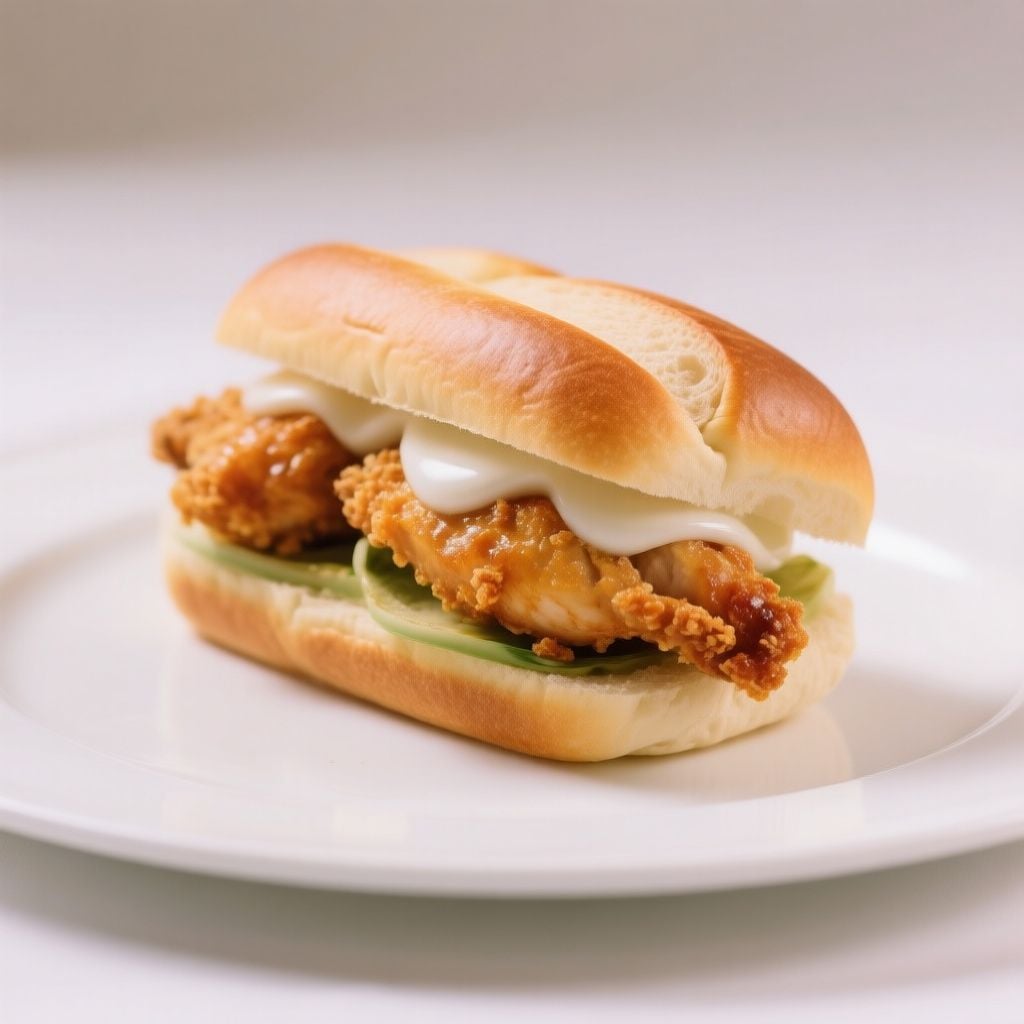
Crispy Hot Honey Chicken Sandwiches on Tangzhong Brioche Buns
150min
4
View Full Recipe →
Ready to simplify your meal planning?
Let OttoChef AI create personalized meal plans for your family — free to use, no credit card.