
Mastering Emulsions: The Science Behind Perfect Sauces
Learn the science and technique behind stable emulsions, from everyday vinaigrettes to elegant hollandaise. Transform your sauce-making skills with expert tips.
Sarah Mitchell
Test Kitchen Director
May 4, 2026
8 min read
6 views
You've whisked oil into vinegar dozens of times, watched it come together beautifully, then returned five minutes later to find it broken and separated in the bowl. Or perhaps you've attempted hollandaise only to end up with scrambled eggs and butter soup. Emulsions are simultaneously one of cooking's most fundamental techniques and one of its most frustrating.
The good news? Once you understand what's actually happening at a molecular level, emulsions become predictable, controllable, and remarkably forgiving. Let's break down the science and technique that will transform your sauce-making.
Understanding Emulsion Science
An emulsion is simply a stable mixture of two liquids that don't naturally want to combine—typically oil and water. Left alone, they separate immediately due to their different molecular structures. Oil molecules are hydrophobic (water-fearing), while water molecules are hydrophilic (water-loving). Getting them to play nicely requires either mechanical force, an emulsifier, or ideally both.
The Molecular Dance
When you whisk an emulsion, you're breaking oil into millions of tiny droplets suspended in the water phase. These droplets want to reunite with each other, but emulsifiers create a protective barrier around each droplet, keeping them separated and the mixture stable.
Emulsifiers are molecules with a split personality—one end loves water, the other loves oil. They position themselves at the boundary between oil droplets and the surrounding liquid, acting as peacekeepers. Common emulsifiers in cooking include egg yolks (lecithin), mustard, honey, and even garlic.
The Two Types of Culinary Emulsions
Emulsions come in two fundamental varieties, each with different characteristics and uses.
Oil-in-water emulsions suspend oil droplets in a water-based liquid. Vinaigrettes and basic pan sauces fall into this category. They're typically lighter, more fluid, and easier to make but also more prone to breaking. The water phase dominates, giving these emulsions a thinner consistency.
Water-in-oil emulsions do the opposite—water droplets suspended in oil. Mayonnaise, aioli, and hollandaise belong here. These are richer, more stable, and have that luxurious, coating texture. Because oil is the continuous phase, they feel heavier on the palate and hold together more stubbornly.
Temperature Matters
Cold ingredients make more stable emulsions initially but are harder to form. Room temperature ingredients emulsify more easily but may be less stable long-term. For vinaigrettes, start cold. For hollandaise and mayonnaise, use room temperature eggs for easier whisking.
Mastering the Basic Vinaigrette
Vinaigrettes are your entry point into emulsion mastery. The classic ratio is three parts oil to one part acid (vinegar or citrus juice), but this is merely a starting point.
Choose Your Emulsifier
Start with a teaspoon of Dijon mustard in your bowl. The mustard provides flavor, but more importantly, its mucilage creates stability. Alternatively, use a small amount of honey, mashed garlic, or even a tiny pinch of xanthan gum.
Add Acid First
Pour your vinegar or lemon juice into the bowl with the emulsifier. Season with salt and pepper now—they dissolve better in the acid than in oil. Whisk until the salt disappears completely.
Drizzle and Whisk
This is where patience pays off. Add oil in a thin, steady stream while whisking vigorously. You're creating millions of tiny oil droplets and coating them with emulsifier. Rush this step, and you'll have a greasy, separated mess. Take your time, and you'll see the mixture thicken and turn creamy.
"The difference between a broken vinaigrette and a stable one often comes down to adding oil slowly enough in the beginning. Once the emulsion is established, you can add oil more quickly."
Jacques PépinThe Breaking Point
Emulsions break when too much oil overwhelms the available emulsifier. If your vinaigrette separates, don't throw it out. Start fresh with a teaspoon of mustard in a clean bowl, then slowly whisk in the broken mixture. You're essentially starting over with more emulsifier.
For everyday use, a jar with a tight lid offers a practical alternative to whisking. Combine all ingredients, seal, and shake vigorously for 30 seconds. The mechanical force temporarily emulsifies the mixture. It will break eventually, but a quick shake before serving brings it back together.
Advancing to Mayonnaise and Aioli
Mayonnaise represents a significant step up in emulsion complexity. You're creating a water-in-oil emulsion that's roughly 75% oil by volume, held together primarily by egg yolk lecithin.
Start with one room-temperature egg yolk in a bowl. Add a teaspoon of Dijon mustard and a tablespoon of lemon juice or vinegar. Whisk until smooth. Now comes the critical part: add oil literally drop by drop while whisking constantly. This isn't hyperbole—those first tablespoons determine success or failure.
As the mixture thickens and turns pale yellow, you've established your emulsion. Now you can add oil in a thin stream, but never stop whisking. If the mayonnaise becomes too thick (it should hold soft peaks), thin it with a few drops of water or lemon juice. The finished product should be thick, glossy, and stable at room temperature for several hours.
Food Processor Shortcut
A food processor makes mayonnaise nearly foolproof. Run the machine with yolk, mustard, and acid, then add oil through the feed tube in a thin stream. The blade's speed creates powerful mechanical force, and you can add oil faster than by hand. It's not cheating—it's efficient.
Aioli follows the same technique but adds garlic pounded to a paste with salt. Traditional Provençal aioli uses only garlic, salt, and olive oil—no egg—relying entirely on the garlic's natural emulsifiers. This version requires exceptional patience and technique, but it's worth attempting once you've mastered egg-based versions.
The Hollandaise Challenge
Hollandaise intimidates even experienced cooks because it combines emulsion technique with precise temperature control. You're creating a warm emulsion where egg yolks must thicken without scrambling—a narrow window between 140°F and 160°F.
The classic technique uses a double boiler. Whisk egg yolks with a small amount of water or lemon juice over simmering water until they thicken slightly and reach about 145°F. Remove from heat and begin adding warm clarified butter drop by drop, whisking constantly. As the emulsion forms, add butter in a thin stream.
Temperature Control is Critical
Too hot, and you'll scramble the eggs. Too cold, and the butter will solidify into lumps. Keep a bowl of ice water nearby. If the mixture starts to scramble, immediately plunge the bottom of your bowl into the ice water while whisking vigorously.
The Blender Method
Modern technique offers a more reliable approach: blend egg yolks with lemon juice and seasoning, then add hot melted butter in a stream while the blender runs. The mechanical force creates a stable emulsion quickly, and the technique is more forgiving of temperature variations.
Hollandaise should coat a spoon and flow like heavy cream. Too thick? Whisk in warm water by the teaspoon. Too thin? You've added butter too quickly or didn't cook the yolks enough initially. Start over with a fresh yolk and slowly whisk in the broken sauce.
Rescuing Broken Emulsions
Even experienced cooks break emulsions. The key is knowing how to fix them.
For vinaigrettes: Start with fresh emulsifier (mustard or another yolk) in a clean bowl. Slowly whisk in the broken mixture.
For mayonnaise: Place a fresh egg yolk in a clean bowl. Whisk in the broken mayonnaise drop by drop, as if making mayonnaise from scratch.
For hollandaise: Whisk a tablespoon of cold water in a clean bowl. Add the broken sauce gradually while whisking. If this fails, start with a fresh egg yolk at the right temperature and slowly incorporate the broken sauce.
Prevention Over Cure
Most emulsions break because oil was added too quickly initially or temperature wasn't controlled. Develop patience in those first few minutes of emulsion formation, and you'll rarely need rescue techniques.
Practical Applications
Understanding emulsions opens up countless possibilities beyond these classic preparations. Pan sauces rely on emulsion principles when you whisk cold butter into reduced wine or stock. Salad dressings become endlessly variable once you understand the oil-acid-emulsifier framework. Compound butters, beurre blanc, and even some dessert sauces follow these same principles.
The confidence that comes from mastering emulsions transforms your cooking. You'll stop following recipes rigidly and start understanding how to adjust textures, fix problems, and create your own variations. That whisked vinaigrette that stays together through dinner service, the hollandaise that holds perfectly for brunch, the aioli you can make without measuring—these become second nature.
Start with simple vinaigrettes until the technique feels natural. Progress to mayonnaise when you're ready for more precision. Tackle hollandaise when you want to combine emulsion skills with temperature control. Each success builds your understanding and confidence. The molecular dance of oil and water, once mysterious and frustrating, becomes a reliable technique you can summon whenever needed.
Try This Recipe
Now that you've learned about mastering emulsions: from vinaigrettes to hollandaise, put your knowledge into practice with this recipe:
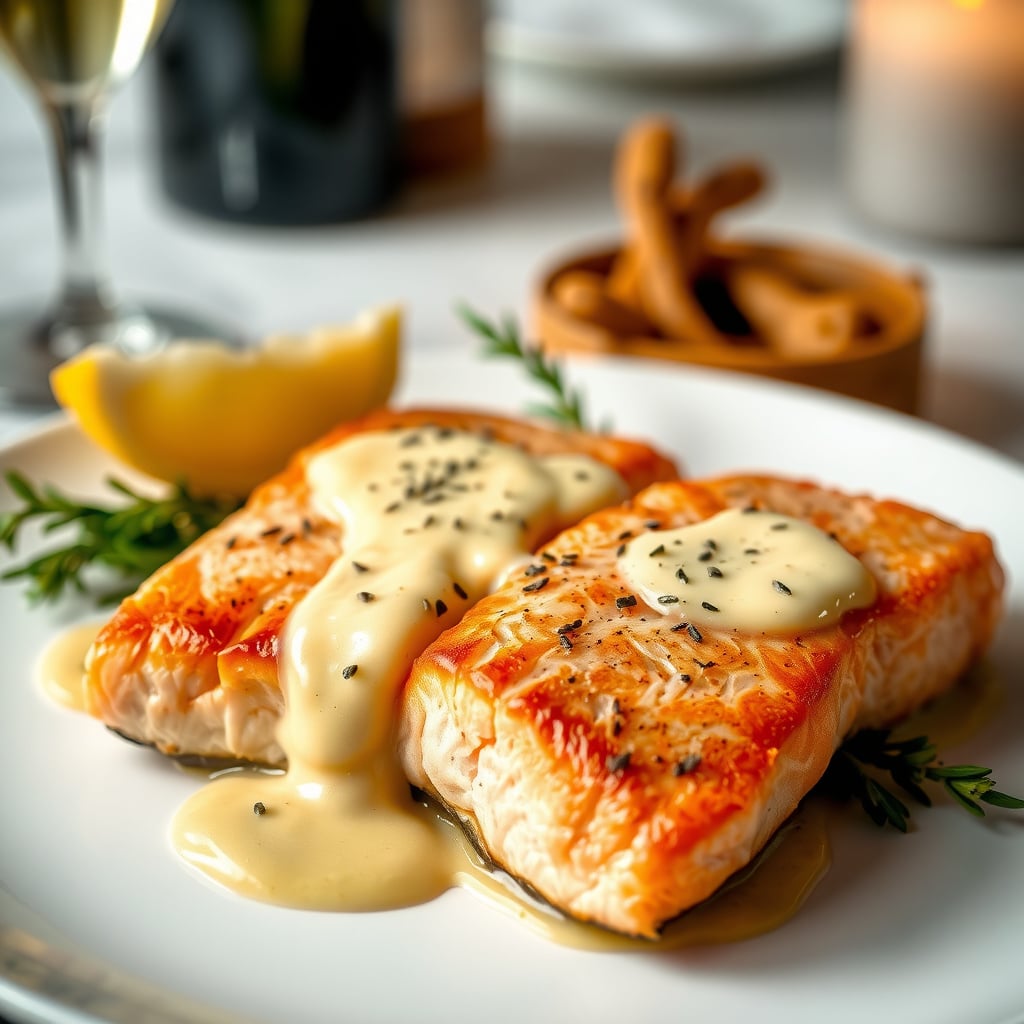
Pan-Seared Salmon with Champagne Beurre Blanc
40min
4
View Full Recipe →
Ready to simplify your meal planning?
Let OttoChef AI create personalized meal plans for your family in seconds.