
Mastering Allergy-Friendly Family Meals: Strategies for Every Home Cook
Learn professional strategies for managing food allergies in a family kitchen. Master modular cooking, cross-contamination prevention, and smart substitutions.
Alex Thompson
Food Editor
May 24, 2026
5 min read
3 views
Navigating the landscape of family dinner becomes significantly more complex when one or more members have food allergies. The challenge lies in providing a cohesive, nutritious meal that feels like a shared experience rather than a collection of separate, specialized plates. Many home cooks find themselves trapped in short-order cook mode, preparing three different versions of the same dish. By shifting your perspective from subtraction to strategic substitution and modular assembly, you can transform your kitchen into a safe, efficient, and inclusive space for everyone. Understanding the mechanics of allergens and how they interact with cooking techniques is the first step in regaining control over the family menu. This approach ensures that the meal remains a time for connection rather than a source of stress.
The Top 9 Allergens
The FDA recognizes milk, eggs, fish, crustacean shellfish, tree nuts, peanuts, wheat, soybeans, and sesame as the major food allergens responsible for most reactions in the United States.
The most effective way to handle multiple dietary needs is the Modular Meal strategy. Instead of cooking a fully integrated dish where every ingredient is mixed from the start, you prepare individual building blocks. Think of this as a deconstructed approach where the starch, protein, and vegetable are seasoned and cooked separately, allowing for customization at the table. For example, rather than a traditional pasta dish with a creamy sauce already tossed in, you might prepare a gluten-free grain, a roasted protein, and a vibrant vegetable medley. This allows you to serve a dairy-free sauce on the side for those who need it, while others use a standard version. This method preserves the integrity of the ingredients and ensures that no one feels like they are eating a 'diet' version of the meal.
"Allergy-friendly cooking isn't about subtraction; it's about mastering the art of substitution and separation."
Chef Marcus HelmanTo execute this safely, you must master the art of preventing cross-contact. This is different from cross-contamination in the bacterial sense; even microscopic amounts of an allergen can trigger a reaction. Implementing a systematic workflow is essential for any household managing serious allergies.
Assess and Purge
Identify all hidden allergens in your pantry and move them to a designated high-risk shelf or remove them entirely to prevent accidental use during the rush of dinner prep.
Color-Code Your Kitchen
Assign specific colors for cutting boards and utensils used for allergen-free preparation. For instance, use a green board and a specific set of tongs exclusively for safe prep.
Sequential Cooking
Always prepare the allergen-free portion of the meal first. This ensures that all tools, surfaces, and your hands are pristine before any allergens are introduced to the workspace.
Beyond organization, successful allergy-friendly cooking requires a deep understanding of ingredient functionality. When you remove eggs, dairy, or wheat, you aren't just removing flavor; you are removing structural components of the dish. Eggs provide binding and leavening; wheat provides structure through gluten; dairy provides fat and emulsification. To substitute effectively, you must replace the function, not just the flavor. For thickening sauces without a traditional flour-based roux, look to starches like arrowroot or potato starch. These create a glossy, stable sauce without the need for gluten. When replacing dairy fats, consider the smoke point and flavor profile of the substitute. Coconut milk offers a rich mouthfeel but carries a distinct flavor, while neutral-flavored oils or avocado can provide fat without altering the taste profile too drastically.
Hidden Gluten in Soy Sauce
Many standard soy sauces contain wheat as a primary ingredient. When cooking for gluten-sensitive family members, always check labels for hidden wheat or use Tamari or coconut aminos as a reliable substitute.
The Power of Parchment
Use parchment paper or silicone mats to create a physical barrier on shared baking sheets. This prevents cross-contact between allergen-free items and the rest of the meal during roasting or baking without requiring multiple sets of pans.
Looking toward international cuisines can also simplify your meal planning. Many Southeast Asian cuisines, such as Thai or Vietnamese, naturally rely on rice-based starches and coconut milk rather than wheat and dairy. These flavor profiles are built on a balance of salty, sweet, sour, and spicy notes that do not depend on common Western allergens for their depth. Similarly, many traditional Mexican dishes utilize corn-based tortillas and beans, providing a robust foundation that is naturally gluten-free. By expanding your culinary repertoire into these areas, you can serve meals that are naturally safe for the whole family without the need for complex substitutions. Ultimately, the goal is to create a kitchen environment where safety is second nature. This involves reading every label, every time, as manufacturers often change formulations without notice. It also means educating the entire family on why certain procedures, like not double-dipping spoons into jars, are vital. As you become more comfortable with these strategies, you will find that allergy-friendly cooking becomes less about restriction and more about discovering new ingredients and techniques that enhance the dining experience for everyone involved.
Try This Recipe
Now that you've learned about allergy-friendly family cooking strategies, put your knowledge into practice with this recipe:
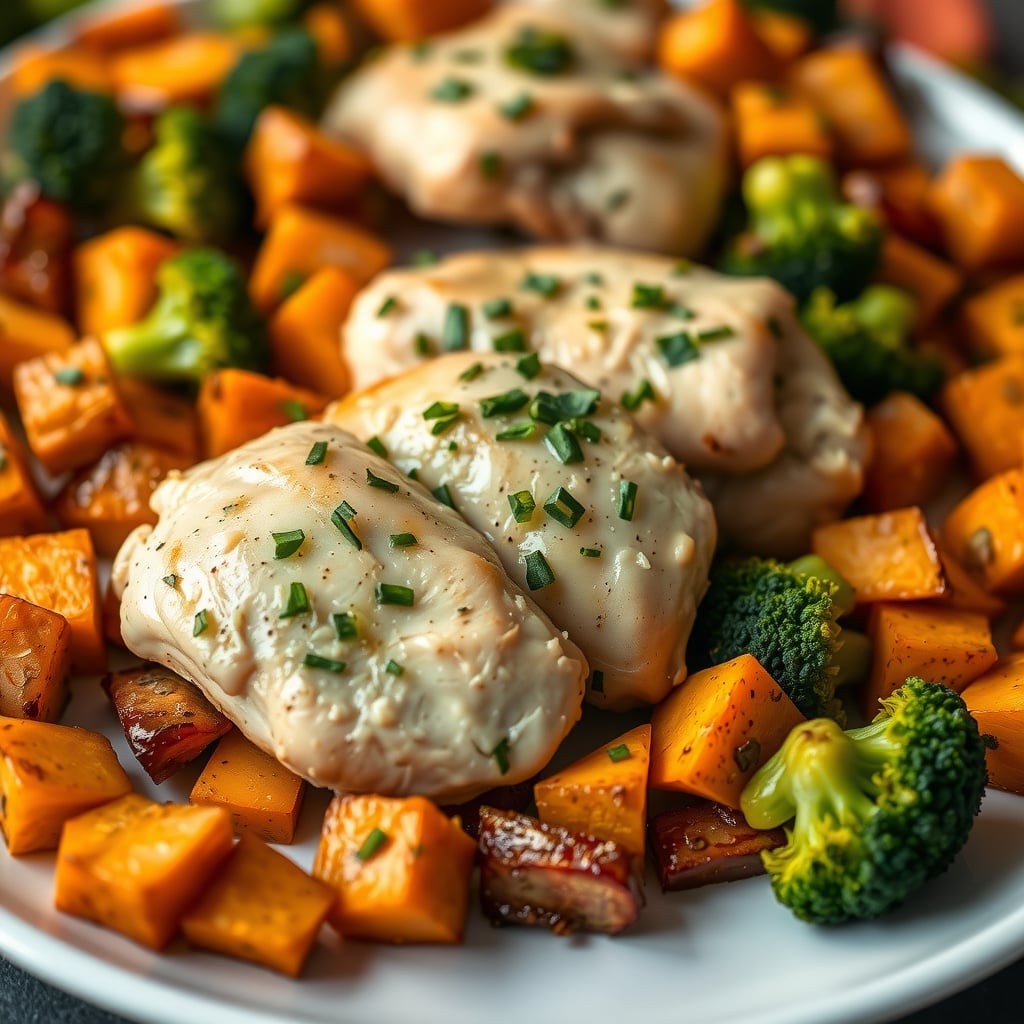
Modular Rainbow Sheet Pan Dinner with Lemon-Herb Vinaigrette
55min
4
View Full Recipe →
Ready to simplify your meal planning?
Let OttoChef AI create personalized meal plans for your family in seconds.