
Master the Starch Slurry Technique for Crispy Lace-Skirt Dumplings
Learn the science, ratio, and step-by-step technique to achieve perfect, crispy lace-skirt dumplings (ice flower gyoza) at home.
Emma Chen
Recipe Developer
August 19, 2026
6 min read
7 views
We have all been there: you pan-fry a batch of home-cooked dumplings, hoping for that satisfying, shatteringly crisp bottom, only to end up with unevenly browned skins or, worse, soggy wrappers. While a standard pan-fry gets the job done, there is a professional technique that elevates the humble dumpling into a visual and textural masterpiece. It is called the starch slurry technique, and it produces what is known as a "lace skirt" or "ice flower" crust.
This technique creates a delicate, web-like lattice that connects the dumplings in the pan. When inverted onto a plate, it creates a stunning presentation and adds an incredible, airy crunch to every single bite. Mastering this method requires understanding a little bit of kitchen science, the correct ingredient ratios, and precise temperature control.
The Origin of the Lace Skirt
To appreciate this technique, it helps to understand its culinary roots.
A Culinary Legacy
Originating in Northern China as "binghua jiaozi" (ice flower dumplings) and popularized in Japan as "hanetsuki gyoza" (winged gyoza), this technique was initially a clever way to utilize leftover dumpling flour and water, preventing the dumplings from sticking to the pan and ensuring they cooked evenly through steam before frying.
Today, chefs around the world use refined starch mixtures to create increasingly intricate and crisp lattices. It is a brilliant combination of steaming and frying occurring in a single pan.
The Science Behind the Slurry
How does a liquid mixture transform into a crisp, paper-thin wafer? The secret lies in starch gelatinization and dehydration.
When you pour a mixture of starch and water into a hot, oiled pan, two things happen simultaneously. First, the high heat causes the starch granules to absorb water, swell, and gelatinize, forming a thin, continuous film around the base of the dumplings. Second, the water gradually evaporates as steam, which cooks the dumplings through.
Once the water has completely evaporated, only the gelatinized starch and the cooking oil remain. The starch then fries in the oil, dehydrating completely and forming a crisp, brittle, lace-like structure.
Choosing Your Starch
For a delicate, shattered-glass texture, use potato starch or cornstarch. For a slightly sturdier, more webbed lace, use wheat starch or a blend of all-purpose flour and cornstarch. Rice flour can also be used for an ultra-light, gluten-free option.
The Golden Ratio for the Slurry
Achieving the perfect lace requires a precise ratio of starch to liquid. If you use too much starch, you will end up with a thick, gummy pancake. If you use too little, the lattice will be too weak to hold together and will break apart when flipped.
An excellent starting ratio for home cooks is 1:10 (starch to water by weight).
To make enough slurry for one standard 10-inch skillet of dumplings, whisk together:
- 10 grams of starch (about 1 tablespoon of cornstarch or potato starch)
- 100 grams of water (about 7 tablespoons)
- 1 teaspoon of neutral cooking oil (this helps the starch fry and release from the pan)
- 1/2 teaspoon of white vinegar (optional, but the acidity helps break down gluten if you are using flour, yielding a crispier texture)
“The secret to a perfect lace skirt isn't just the starch—it's the precise moment the water fully evaporates, leaving behind a delicate matrix of fried starch and oil.”
OttoChef Culinary TeamStep-by-Step Guide to the Perfect Lace Skirt
To execute this technique successfully, you will need a reliable non-stick skillet or a well-seasoned cast-iron pan, along with a tight-fitting lid.
Arrange the Dumplings
Place your dumplings in a cold or slightly warm non-stick skillet with a teaspoon of neutral oil. Arrange them in a circular pattern, leaving about a quarter-inch of space between them so the slurry can flow freely between the gaps.
The Initial Sear
Turn the heat to medium. Fry the dumplings dry for 2 to 3 minutes until the bottoms of the dumplings just begin to turn a very pale, translucent golden color. This establishes a firm base before you introduce moisture.
Whisk and Pour the Slurry
Starch settles quickly at the bottom of liquids. Give your slurry a vigorous whisk immediately before pouring. Pour it directly into the pan, aiming for the empty spaces between the dumplings. The liquid should cover the bottom of the pan and rise about a quarter-way up the sides of the dumplings.
Steam Under Cover
Immediately cover the pan with a tight-fitting lid. Adjust the heat to medium-high. Let the dumplings steam for 6 to 8 minutes. This cooks the dough wrappers and the fillings completely.
The Crisp-Up and Release
Remove the lid. At this point, the liquid will look bubbly and slightly viscous. Reduce the heat to medium. Let the remaining moisture evaporate. As the water disappears, you will see the starch pattern begin to brown, crackle, and pull away from the edges of the pan. Once the entire skirt is golden brown and dry, turn off the heat.
Do Not Rush the Release
Resist the urge to pry the dumplings out of the pan with a spatula while they are still wet. The skirt will naturally release from the surface of a good non-stick pan only when it is fully dehydrated and fried. If it is sticking, it needs another minute of cooking on low heat.
Troubleshooting Common Mistakes
If your first attempt does not yield a picture-perfect skirt, do not worry. This technique is highly sensitive to heat and pan quality. Here is how to fix common issues:
- The skirt is soggy or gummy: This happens when the water has not evaporated completely, or there was too much starch in the ratio. Ensure you cook the dumplings uncovered at the end until all bubbling stops and the bottom is completely dry.
- The skirt is burning in the center but wet on the edges: Your burner size might not match your pan. Rotate the pan occasionally during the uncovered frying stage to ensure even heat distribution.
- The skirt broke apart during flipping: The slurry may have been too thin. Try adding half a teaspoon of all-purpose flour to your starch mixture next time to give the lattice more structural integrity.
The Plate-and-Flip Maneuver
To serve, place a large, flat plate upside down directly over the skillet. Wearing oven mitts, firmly press the plate against the rim of the pan, and quickly invert the pan. Lift the pan away to reveal your beautiful, golden lace-skirt dumplings facing upward.
Mastering the starch slurry technique is an incredibly rewarding milestone for any home cook. It transforms a simple weeknight dumpling dinner into a restaurant-quality experience, proving that a little understanding of food science can yield incredibly delicious results.
Try This Recipe
Now that you've learned about master the starch slurry technique for crispy lace-skirt dumplings, put your knowledge into practice with this recipe:
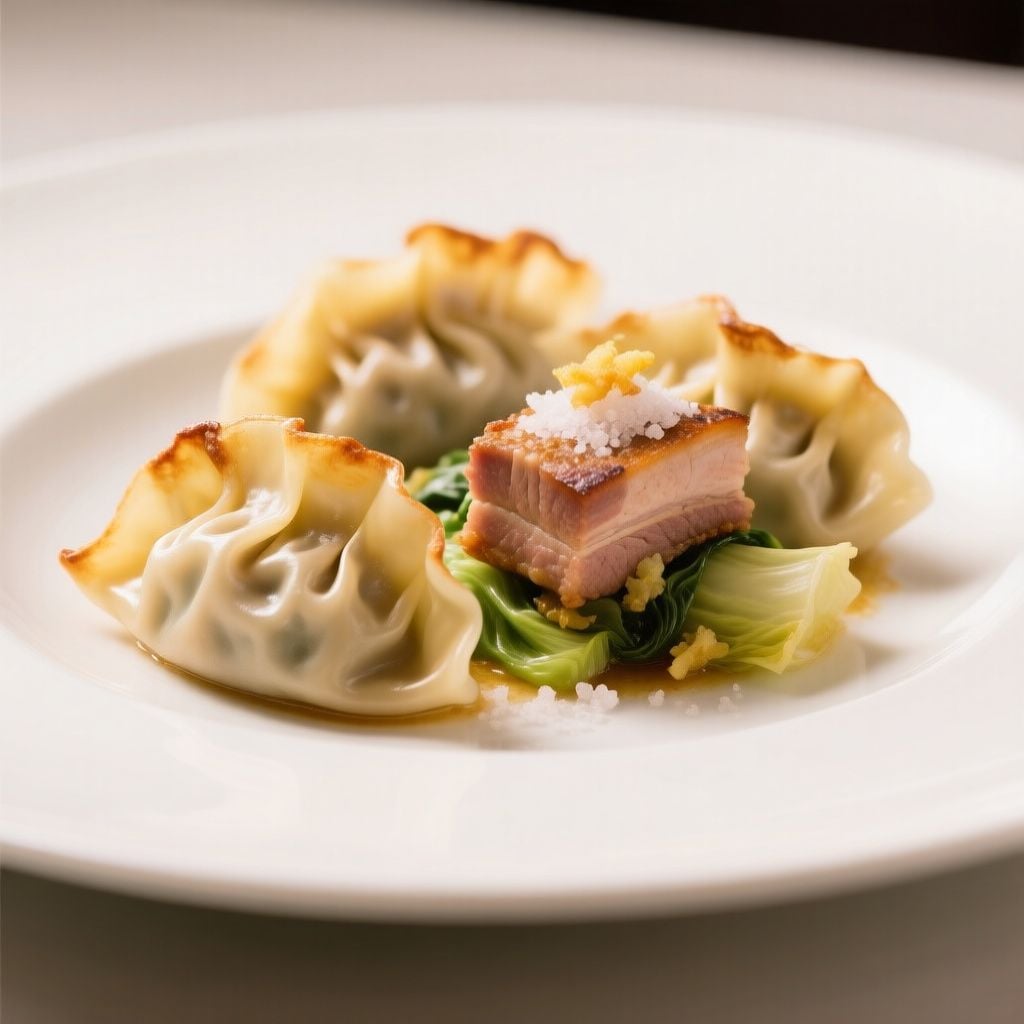
Crispy Lace-Skirt Pork and Ginger Dumplings
65min
4
View Full Recipe →
Ready to simplify your meal planning?
Let OttoChef AI create personalized meal plans for your family — free to use, no credit card.