
Master Portion Sizes Without Scales: Visual Guides for Home Cooking
Learn practical visual cues to portion proteins, grains, and vegetables correctly. No scale needed—just your hands and common objects for healthier, balanced meals.
Marcus Rivera
Culinary Editor
April 6, 2026
8 min read
98 views
You've probably experienced it: standing in your kitchen, holding a bag of pasta or a piece of chicken, wondering if you're cooking too much or too little. Most nutrition advice tells you to measure portions precisely, but who wants to pull out measuring cups and food scales for every meal?
The good news is that your body already carries the most practical portion measurement tool: your hands. Combined with a few common visual references, you can eyeball appropriate portions with surprising accuracy. This skill becomes invaluable whether you're managing your nutrition, reducing food waste, or simply learning to cook for the right number of people.
Understanding Portion vs. Serving Size
Before we dive into visual guides, let's clear up a common confusion. A "serving size" is a standardized amount defined by nutrition labels and dietary guidelines—it's what nutritionists use for consistency. A "portion" is what you actually put on your plate, which might be larger or smaller than the official serving.
The Portion Distortion Effect
Restaurant portions have grown 2-8 times larger than standard servings over the past 40 years. This "portion creep" has recalibrated our expectations of normal amounts, making visual portion guides even more valuable for home cooking.
For home cooking, we're focusing on portions that support balanced nutrition while respecting your individual needs. A marathon runner needs different portions than someone with a sedentary desk job, and that's perfectly fine.
The Hand Method: Your Built-In Measuring Tool
Your hands scale proportionally to your body, making them surprisingly accurate for personalized portions. Here's how to use them:
Proteins: Palm Method
A portion of meat, fish, or poultry should be about the size and thickness of your palm (excluding fingers). This typically equals 3-4 ounces cooked or about 20-30 grams of protein.
Grains and Starches: Cupped Hand
Your cupped hand (one handful) represents a portion of cooked rice, pasta, or other grains—roughly ½ to ¾ cup. For raw pasta, use a fist-sized amount.
Vegetables: Two Hands Cupped
Non-starchy vegetables should fill both hands cupped together. Since vegetables are nutrient-dense and lower in calories, this generous portion provides fiber, vitamins, and volume.
Fats: Thumb Tip
The tip of your thumb (from the knuckle up) equals about one tablespoon of oil, butter, nut butter, or other fats. This small amount packs significant calories but also essential nutrients.
Snacks and Treats: Cupped Palm
For nuts, dried fruit, or chips, a cupped palm (about ¼ cup) provides satisfaction without overdoing calories.
Cooking for Multiple People
Multiply these visual guides by the number of people you're serving. For a family of four, you'll need four palm-sized portions of protein, four fist-sized portions of grains, and so on. This prevents the common mistake of cooking "a little extra" that turns into massive overshooting.
Common Object Comparisons
Sometimes hands aren't the easiest reference, especially when cooking raw ingredients that shrink or expand. These everyday objects provide helpful alternatives:
Proteins:
- Deck of cards = 3 oz cooked meat or fish
- Checkbook = 3 oz fish fillet
- Bar of soap = 3 oz chicken breast
Grains and Starches:
- Tennis ball = ½ cup cooked rice or pasta
- Hockey puck = 1 bagel or English muffin portion
- Computer mouse = medium baked potato
Dairy:
- Four stacked dice = 1½ oz cheese
- Baseball = 1 cup yogurt or milk
Fats:
- Poker chip = 1 tablespoon nut butter
- Postage stamp (thickness and size) = 1 teaspoon oil or butter
The Pasta Paradox
Dry pasta roughly doubles in volume when cooked. That innocent-looking cup of dry penne becomes two cups cooked—enough for 4 servings, not one. Start with ½ cup dry pasta per person (about the size of a tennis ball).
The Plate Method: Building Balanced Meals
Once you understand individual portion sizes, the plate method helps you combine them into balanced meals. Imagine dividing a 9-inch dinner plate:
- Half the plate: Non-starchy vegetables (leafy greens, broccoli, peppers, tomatoes, cauliflower)
- Quarter of the plate: Protein (meat, fish, tofu, legumes, eggs)
- Quarter of the plate: Whole grains or starchy vegetables (rice, quinoa, sweet potato, whole grain bread)
- On the side: A serving of fruit and/or dairy if desired
"The plate method works because it prioritizes nutrient density while naturally controlling portions of calorie-dense foods."
Harvard School of Public HealthThis visual framework adapts to different cuisines beautifully. A Thai curry bowl, Mexican burrito bowl, or Italian pasta dish can all follow this template—you're simply arranging the components differently.
Adjusting for Cooking Methods
Different cooking methods affect how ingredients look and how we should portion them:
Raw to Cooked Conversions:
- Meat loses about 25% of its weight during cooking (shrinkage from moisture loss)
- Vegetables reduce dramatically when cooked—a huge handful of spinach wilts to a few tablespoons
- Grains and legumes expand: ½ cup dry rice becomes 1½ cups cooked
- Pasta doubles in volume
The Batch Cooking Advantage
When meal prepping, cook proteins to your palm size, then refrigerate. Cold cooked meat is easier to portion accurately than hot, just-cooked meat that's releasing steam and juices. You'll waste less and portion more consistently.
Cultural Context: Portion Norms Vary
Portion expectations differ dramatically across cultures, and understanding this helps you cook more authentically:
- Asian cuisines often feature smaller individual protein portions (2-3 oz) with rice or noodles as the foundation, plus multiple vegetable dishes for sharing
- Mediterranean traditions emphasize generous vegetable portions, moderate proteins, and healthy fats from olive oil and nuts
- American portions tend toward larger individual protein servings (6-8 oz) with smaller vegetable portions
None of these is inherently "correct"—they reflect different culinary traditions and agricultural histories. The key is understanding the framework of the cuisine you're cooking and portioning accordingly.
Practical Applications in Your Kitchen
Let's make this concrete with scenarios you'll actually encounter:
Scenario 1: Cooking Pasta for Dinner You're making spaghetti for three people. Take your dry spaghetti bundle and make a circle with your thumb and index finger (about the size of a quarter). That's one portion. You need three of these circles. Add your sauce (½ cup per person—tennis ball size), and you've nailed it without measuring.
Scenario 2: Grilling Chicken Breasts At the grocery store, pick chicken breasts that match your palm size. One breast per person. If you can only find those enormous ones (sadly common), plan to cut them in half after cooking—one breast serves two people.
Scenario 3: Building a Grain Bowl Start with cooked quinoa the size of your fist (½ to ¾ cup). Add vegetables until they fill half your bowl. Top with protein the size of your palm. Drizzle with dressing—one thumb tip of olive oil whisked with vinegar and seasonings.
The Leftover Test
After a few meals, check if you have leftovers. Consistently running out? Increase portions by 25%. Always have leftovers? Reduce by 25%. Your specific needs matter more than generic guidelines.
Teaching Yourself Portion Awareness
Like any cooking skill, portion estimation improves with practice. Try this exercise:
For one week, before serving yourself, estimate the portion using visual guides. Then measure it with cups or a scale. Compare your estimate to the measurement. Most people start off 30-50% inaccurate but improve to within 10-15% after just a few days of conscious practice.
This isn't about obsessive measuring—it's about calibrating your eye so you can eventually eyeball portions confidently without any tools.
Beyond the Numbers
While these visual guides provide structure, remember that portion needs vary based on age, activity level, metabolism, and health goals. An appropriate portion for a growing teenager differs from that of a sedentary adult.
The real value of mastering visual portions isn't rigid adherence to rules—it's developing an intuitive sense of "enough." You'll reduce food waste, cook more efficiently, and build balanced meals without constant measuring. Your kitchen time becomes more fluid and enjoyable, less like a chemistry lab.
Start with one visual guide this week. Maybe it's the palm method for proteins, or the plate method for building meals. Practice it until it becomes automatic, then add another. Before long, you'll portion ingredients as naturally as you season food—by feel, with confidence, and with results that nourish you properly.
A Note on Mindful Eating
Visual portions get food on your plate correctly, but eating slowly and paying attention to hunger cues determines if that portion was right for you today. Some days you need more, some days less. These guides provide a starting point, not a rigid rule.
Try This Recipe
Now that you've learned about portion sizes: visual guides for home cooking, put your knowledge into practice with this recipe:
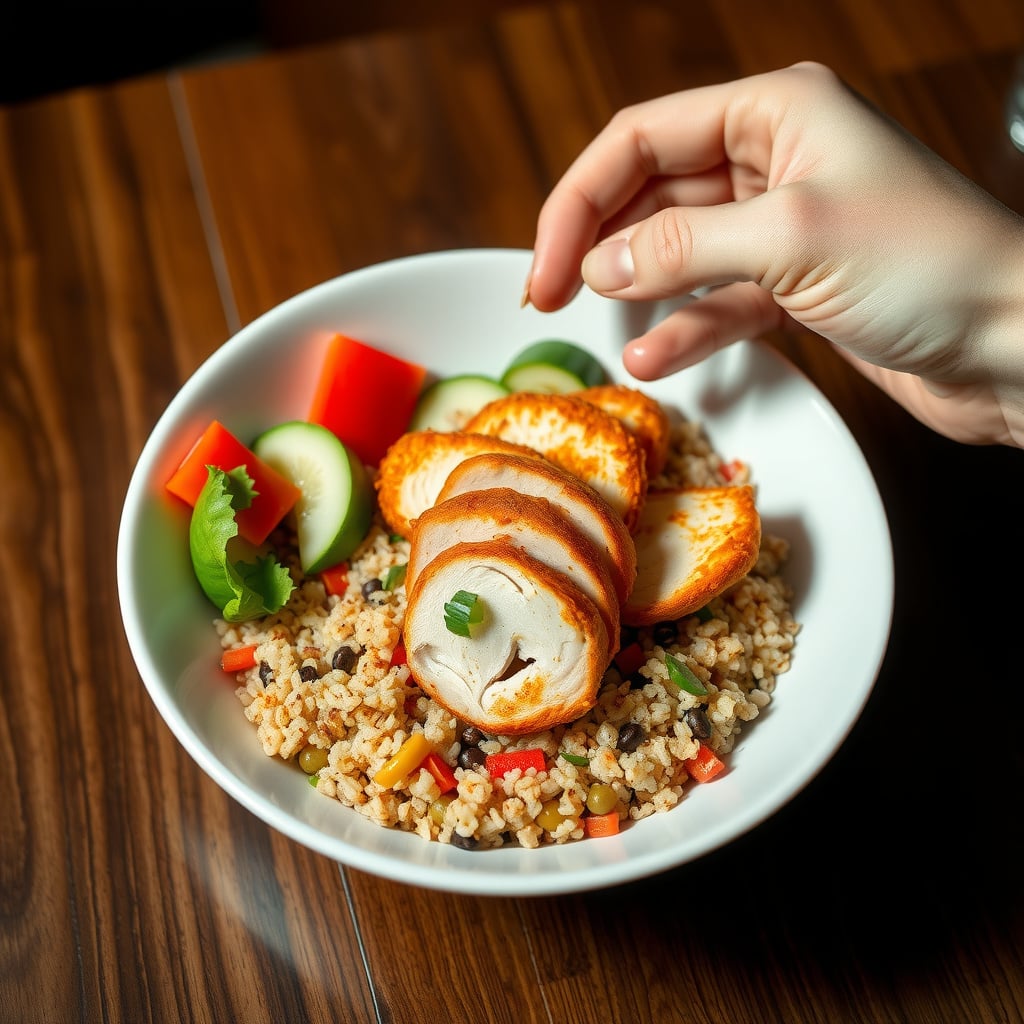
Mediterranean Grain Bowl with Hand-Portioned Ingredients
45min
4
View Full Recipe →
Ready to simplify your meal planning?
Let OttoChef AI create personalized meal plans for your family in seconds.