
How to Master Lebanese Toum: The Science of Garlic Emulsion
Learn the kitchen science behind Lebanese toum. Master this eggless garlic emulsion with our step-by-step guide, troubleshooting tips, and physics.
James Okonkwo
Food Writer
October 6, 2026
5 min read
2 views
Have you ever tried making a garlic sauce only to end up with a puddle of bitter oil and separated garlic paste? You are not alone. Emulsions are notoriously finicky, and Lebanese toum—a fluffy, pungent, cloud-like garlic sauce—is one of the most intimidating to master. Unlike mayonnaise, which relies on egg yolks for stability, authentic toum achieves its structure using only garlic, oil, lemon juice, and salt.
Understanding the physics of this eggless emulsion is the key to mastering it. Once you grasp how these simple ingredients interact on a molecular level, you can reliably create a perfect, spreadable toum every single time.
The Physics of an Eggless Emulsion
At its core, an emulsion is a mixture of two liquids that do not naturally mix, such as oil and water. To keep them combined, you need an emulsifier: a substance containing molecules with both hydrophilic (water-loving) and hydrophobic (oil-loving) ends. In mayonnaise, the lecithin in egg yolks serves this purpose. In toum, garlic itself is the star emulsifier.
Garlic cloves contain complex carbohydrates (mucilages), proteins, and natural compounds that act as surfactants. When you pulverize garlic, you rupture its cell walls, releasing these emulsifying agents along with cellular water. When oil is slowly introduced under high shear force—such as the spinning blades of a food processor—the oil is broken down into microscopic droplets. The garlic molecules coat these droplets, preventing them from coalescing (merging back together) and suspending them in the liquid phase.
The Linguistic Root
The word "toum" (توم) simply translates to "garlic" in Arabic. While it is a staple across the Levant, its texture can range from a dense, pungent paste to a light, whipped spread depending on the region and the specific preparation technique used.
The Crucial Ingredients and Their Roles
Every ingredient in toum serves a precise chemical and structural purpose. Altering them changes the physics of the emulsion.
- Garlic: Freshness is paramount. Young, firm garlic has more active emulsifying proteins and a milder flavor. Old garlic with green sprouts contains compounds that taste incredibly bitter and have degraded emulsifying power.
- Salt: Beyond seasoning, salt acts as an abrasive to help break down the garlic cells into a smooth paste during the initial blending phase. It also helps draw out the garlic's natural moisture.
- Oil: You must use a neutral oil. The oil molecules must be easily suspended without adding heavy flavor compounds that compete with the garlic.
- Lemon Juice: This provides the necessary water phase for the emulsion. The citric acid also lowers the pH, which helps stabilize the garlic proteins and tempers the harsh, raw bite of the garlic.
The Neutral Oil Rule
Always use a neutral oil with a high smoke point, like canola, grapeseed, or safflower oil. Extra virgin olive oil is too heavy and contains bitter polyphenols that turn incredibly astringent when sheared by rapid food processor blades.
Mastering the Technique: Step-by-Step
Traditionally, toum was made using a heavy wooden mortar and pestle (called a jurn), requiring intense physical labor to slowly drip oil while grinding the garlic. Today, a food processor makes this technique accessible, provided you follow the correct sequence.
Prep the Garlic
Peel your garlic cloves and slice them in half lengthwise. If you see a green germ in the center, remove it. This germ is highly bitter and can ruin the flavor profile of your finished sauce.
Create the Paste
Place the garlic and kosher salt into the food processor. Process until finely minced. Scrape down the sides, add a teaspoon of lemon juice, and process again until a completely smooth, uniform paste forms. If you skip this step and leave chunks, your emulsion will lack the structural foundation to hold the oil.
The Slow Drizzle
With the processor running continuously, begin adding your neutral oil in an incredibly slow, steady stream—almost drop by drop at first. This is where patience is tested. If you pour too quickly, the oil droplets will collide and separate, breaking the sauce.
Alternate Acid and Oil
As the mixture begins to thicken and look like cream, alternate adding a splash of lemon juice and a thin stream of oil. The lemon juice thins the mixture slightly, providing more water molecules for the incoming oil to bind with. Continue this alternating pattern until all ingredients are incorporated and the mixture is thick, fluffy, and holds its shape.
“An emulsion is a cooperative peace treaty between two naturally hostile liquids: water and oil. Garlic is the diplomat that makes it happen.”
OttoChef Culinary Science TeamTroubleshooting a Broken Toum
Even seasoned cooks occasionally experience a broken toum, where the oil separates into a greasy pool. This usually happens for two reasons: adding the oil too quickly, or the mixture getting too hot from the friction of the food processor blades.
Watch the Temperature
Friction from food processor blades heats up the ingredients. Warm oil and garlic will cause the emulsion to break down. If the food processor bowl feels warm to the touch, pause the process and let it cool, or use chilled oil and refrigerated lemon juice to keep the temperature low.
If your toum does break, do not throw it away. You can rescue it using a simple scientific reset:
- Empty the broken mixture out of the food processor bowl.
- Add one to two tablespoons of ice-cold water (or a single egg white if you do not mind deviation from the traditional eggless version) to the clean bowl.
- Turn the processor on and slowly drizzle the broken mixture back into the water, just as you did with the oil initially. The fresh water phase will allow the separated oil droplets to re-emulsify with the garlic proteins.
With a bit of patience and respect for kitchen physics, you can master this legendary Levantine condiment, bringing a restaurant-quality garlic whip to your home kitchen.
Try This Recipe
Now that you've learned about the physics of lebanese toum: mastering eggless garlic emulsions, put your knowledge into practice with this recipe:
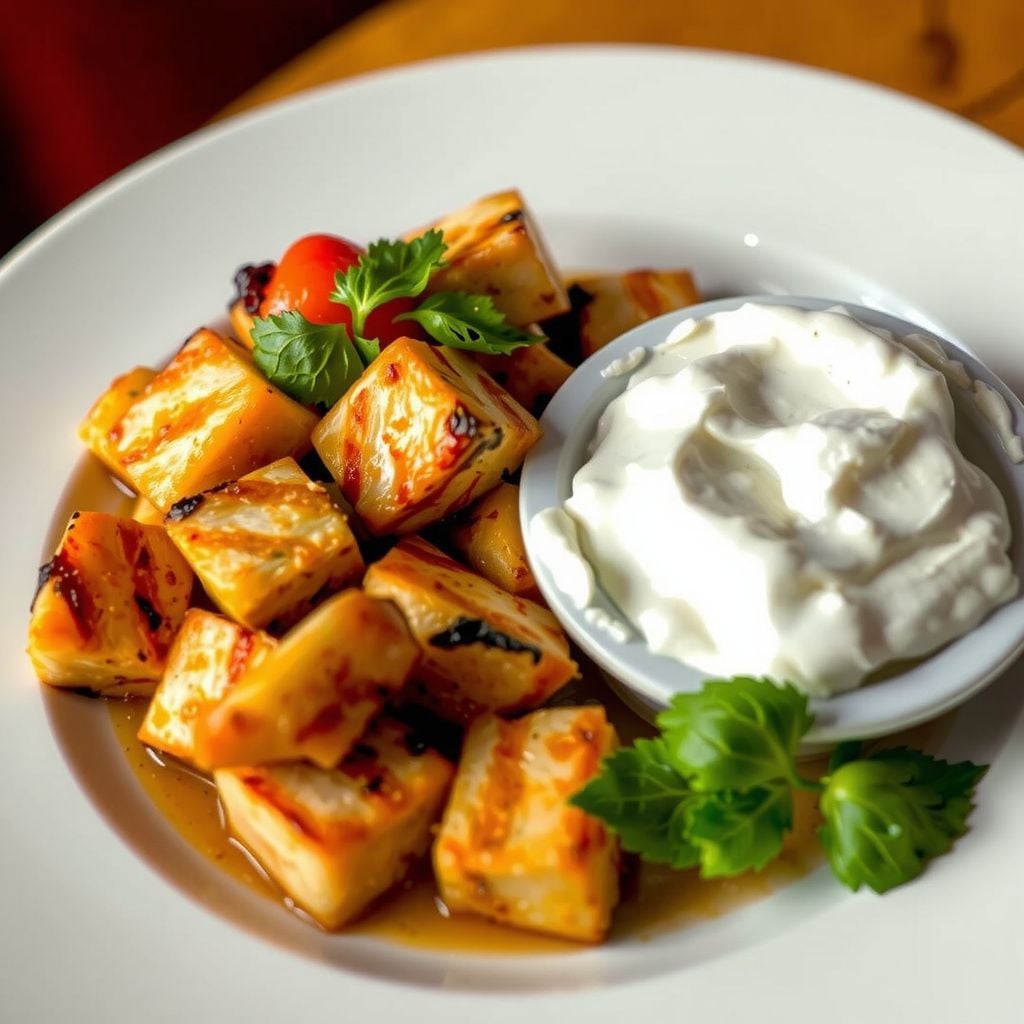
Shish Taouk with Whipped Toum
60min
4
View Full Recipe →
Ready to simplify your meal planning?
Let OttoChef AI create personalized meal plans for your family — free to use, no credit card.