
How to Maintain a Perpetual Master Stock for Meal Prep
Streamline your meal prep and build deep flavor with a perpetual master stock. Learn how to safely maintain, feed, and use this traditional culinary asset.
Sofia Rossi
Kitchen Editor
August 8, 2026
6 min read
4 views
For busy home cooks, the biggest hurdle of weekly meal planning isn't the time spent cooking—it's the constant battle against flavor fatigue. Preparing chicken breasts, tofu, or boiled eggs for the week often results in dry, uninspiring proteins that rely heavily on store-bought sauces to taste interesting.
There is a better way to infuse deep, complex flavor into your meal prep with almost zero active effort on weeknights. By establishing and maintaining a perpetual master stock in your kitchen, you create a reusable culinary asset that grows richer, more complex, and more delicious with every single use.
What is a Master Stock?
A master stock is a seasoned braising liquid that is never discarded. Instead, it is strained, boiled, stored, and reused repeatedly. Every time you cook a protein—whether it is chicken, pork, beef, or tofu—inside this liquid, the ingredient absorbs the rich seasoning of the stock. Simultaneously, the protein releases its own juices, fats, and gelatin back into the pot.
Over time, this continuous exchange creates an incredibly complex flavor profile that cannot be replicated by a single-use recipe. It becomes a concentrated source of umami, sweetness, salt, and spice that transforms ordinary meal prep ingredients into restaurant-quality components.
The Origins of Lu Shui
In Chinese culinary traditions, particularly Cantonese and Chiu Chow cuisines, this seasoned braising liquid is known as Lu Shui (滷水) or Lou Mei. In professional kitchens, some master stocks are treated as prized family heirlooms, maintained continuously for decades, and passed down through generations of chefs to preserve their irreplaceable flavor profiles.
The Flavor Blueprint: Starting Your Stock
While traditional master stocks vary by region, they generally begin with a balanced combination of liquid, aromatics, and spices. To start your own, you will need:
- The Liquid Base: A mixture of water, light soy sauce (for salinity), dark soy sauce (for color and deep caramel notes), and Shaoxing rice wine (for acidity and aroma).
- The Sweetener: Rock sugar is traditional, as it provides a shiny glaze to the cooked foods, but brown sugar or palm sugar works well too.
- Fresh Aromatics: Generous amounts of smashed ginger, whole garlic cloves, and bruised green onions.
- Dry Spices: Star anise, cassia cinnamon bark, fennel seeds, Sichuan peppercorns, cloves, and bay leaves.
These ingredients are simmered together to create the initial batch. However, the first time you use your stock, it will taste relatively simple. The real depth develops after the third or fourth cook.
“A master stock is a living culinary diary. Every protein braised within it leaves behind a microscopic layer of gelatin and savory depth, making the next batch even better than the last.”
OttoChef Culinary TeamHow to Build and Maintain Your Stock
Maintaining a master stock requires a simple but disciplined routine. Because the stock is reused, food safety is of the utmost importance. Following a strict cycle of cooking, purifying, and pasteurizing ensures your stock remains safe to use indefinitely.
The Foundation
Combine your liquid base, sugars, fresh aromatics, and spices in a large stockpot. Simmer gently for 30 to 45 minutes to extract the essential oils from the spices and soften the sharp bite of the raw garlic and ginger.
The Braise
Submerge your meal prep proteins—such as chicken thighs, pork belly, beef shank, or firm tofu—into the gently simmering stock. Cook until tender, ensuring the heat remains low so the proteins do not toughen.
The Purification
Remove the cooked food. Pour the remaining stock through a fine-mesh sieve lined with cheesecloth. This step is non-negotiable; it removes all solid food particles, coagulation from the proteins, and spent spices, preventing the stock from turning bitter or spoiling.
The Pasteurization
Bring the strained, clean stock back to a rapid, rolling boil for a full 10 minutes. This sterilizes the liquid. Cool the stock as quickly as possible—preferably in an ice bath—before transferring it to an airtight container for storage.
Critical Safety and Storage Rules
Because a master stock contains organic proteins and sugars, it is a potential breeding ground for bacteria if handled incorrectly. You must respect the rules of kitchen hygiene to keep your stock healthy.
Food Safety is Paramount
If you store your master stock in the refrigerator, you must bring it to a rolling boil for 10 minutes every 3 to 4 days, even if you are not using it. For home cooks, the safest and most practical method is to freeze the stock between uses. It will keep perfectly in the freezer for months, and you simply melt it down when you are ready to prep again.
Additionally, always skim off the excess fat that rises to the top of the stock after it cools in the refrigerator. While a small amount of fat carries flavor, too much fat can seal off oxygen, creating an environment where anaerobic bacteria can thrive, and it can make your future braises greasy.
Feeding Your Master Stock
As you use your stock, the volume will decrease, and the flavors will shift. Every third or fourth use, you must "feed" your stock to keep it balanced.
Taste the stock after boiling and straining it. If it tastes diluted, add a splash of light soy sauce and a pinch of sugar. If the spiced aroma has faded, place a small sachet of fresh spices (star anise, cinnamon, and Sichuan peppercorns) into the pot during your next braise.
Vegetable and Seafood Exceptions
Never use your master stock to cook fish, seafood, or brassica vegetables like broccoli or cabbage. Seafood will impart a strong, fishy odor that ruins future batches of chicken or pork, while brassicas release sulfur compounds that turn the stock bitter. Cook these items separately using a small portion of stock ladled out into a different pan, then discard that portion.
Integrating Master Stock into Your Meal Prep
Once you have a master stock ready in your freezer, meal prep becomes incredibly efficient. On Sunday afternoon, melt your stock, drop in a dozen hard-boiled eggs, a block of sliced extra-firm tofu, or a package of chicken thighs, and simmer.
Within thirty minutes, you will have highly seasoned, deeply savory proteins ready to be packed into containers alongside rice and steamed vegetables. The remaining stock is simply strained, boiled, cooled, and returned to the freezer, waiting to deliver even more flavor to your next meal prep session.
Try This Recipe
Now that you've learned about how to maintain a perpetual master stock for effortless, flavor-rich meal prep, put your knowledge into practice with this recipe:
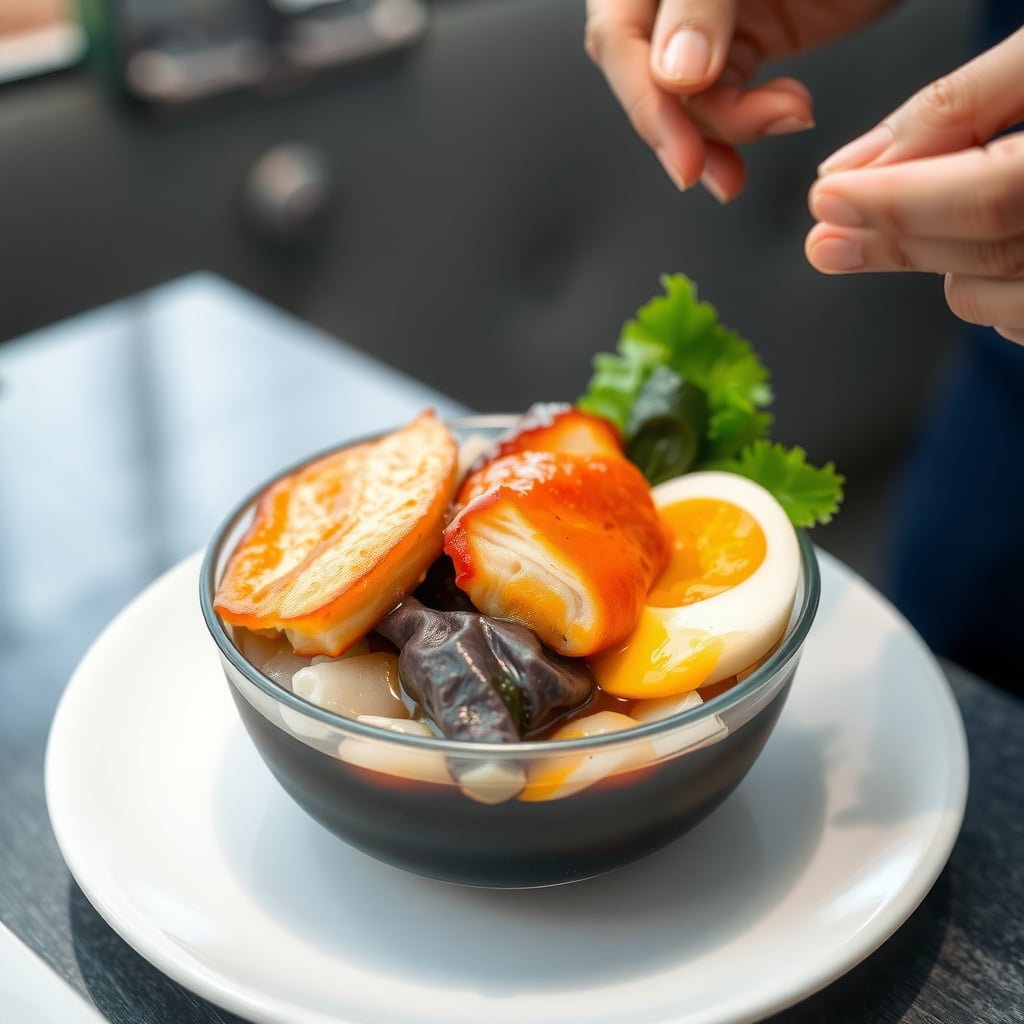
Master Stock Poached Chicken and Soy Egg Bento
40min
4
View Full Recipe →
Ready to simplify your meal planning?
Let OttoChef AI create personalized meal plans for your family — free to use, no credit card.