
Demystifying Okra: How to Control Mucilage for Taste and Gut Health
Learn the science behind okra's mucilage, how to control its viscosity in the kitchen, and why this unique soluble fiber is incredibly beneficial for gut health.
Emma Chen
Recipe Developer
October 7, 2026
5 min read
7 views
Many home cooks avoid okra because of its signature texture—often referred to less-than-appetizingly as "slime." This texture is caused by mucilage, a naturally occurring, viscous substance found in the plant's pods. While this texture can be polarizing, it is actually a culinary superpower and a nutritional powerhouse. Once you understand the science of mucilage, you can learn to dial it up or dial it down to suit your personal palate while maximizing its profound benefits for gut health.
By mastering a few simple kitchen techniques, you can transform okra from a challenging ingredient into a versatile staple of your culinary repertoire.
The Science of Mucilage and Gut Health
From a botanical standpoint, mucilage is a highly branched polysaccharide (a complex carbohydrate) that okra uses to store water and food. When the cell walls of the okra pod are ruptured by cutting, and those carbohydrates come into contact with liquid, they swell and dissolve, creating a gelatinous substance.
While this gel can be a challenge in the pan, it is incredibly beneficial for your digestive system. Mucilage acts as a soluble dietary fiber. Because human enzymes cannot break it down, it passes into the lower digestive tract largely intact.
The Gut-Brain Connection
As a soluble fiber, okra mucilage acts as a potent prebiotic. It feeds beneficial gut bacteria like *Bifidobacteria*, which produce short-chain fatty acids that strengthen the gut barrier and reduce systemic inflammation.
Additionally, this viscous fiber creates a soothing, protective coating along the mucosal lining of your stomach and intestines. This action can help soothe irritation, slow down the absorption of glucose (helping to stabilize blood sugar levels), and bind to cholesterol in the digestive tract so it can be safely eliminated.
The Viscosity Scale: Customizing Your Culinary Approach
In the culinary world, you do not have to eliminate mucilage entirely to enjoy okra. Instead, think of viscosity on a sliding scale. Depending on the cooking method, you can either highlight this thickening power or minimize it for a dry, crispy finish.
High Viscosity: Embracing the Thickening Power
In liquid-based dishes, okra's mucilage acts as a natural thickener. This is a foundational technique in West African soups and Louisiana gumbos, where the chopped pods are simmered slowly to body the broth.
“In many West African and Southern American culinary traditions, the viscosity of okra is not a defect to be cured, but a prized culinary characteristic that binds a dish together.”
Chef and culinary historian notesLow Viscosity: Achieving a Crisp, Dry Finish
If you prefer okra with a firm, tender-crisp texture and minimal gel, your goal is to prevent the mucilage from fully hydrating and escaping the cell walls. This is achieved using dry heat, high temperatures, and acidic ingredients.
Avoid Overcrowding
When pan-frying or roasting okra, packing the pods too tightly in the pan traps steam. This ambient moisture hydrates the mucilage, resulting in a wet, gummy texture instead of a crisp, caramelized exterior. Always cook in a single, spacious layer.
How to Minimize Okra Viscosity
If you want to enjoy the nutritional benefits of okra without the slippery texture, follow this three-step technique to keep the mucilage locked inside the pod.
Dry the Pods Thoroughly
After washing your okra, dry each pod meticulously with a clean kitchen towel. Any moisture left on the exterior of the pod when you slice it will immediately activate the mucilage.
Make Large Cuts or Cook Whole
The more cuts you make, the more cell walls you rupture, releasing more mucilage. To minimize slime, keep the pods whole (trimming only the very tip of the stem) or cut them into large, one-inch pieces.
Introduce High Heat and Acid
Cook the okra quickly over high heat (such as a sear, stir-fry, or high-temp roast). Introduce an acidic ingredient like lemon juice, vinegar, or tomatoes late in the cooking process. Acid denatures the proteins and breaks down the mucilage, significantly reducing its viscosity.
The Pre-Soak Solution
If you plan to stir-fry sliced okra, try soaking the whole pods in vinegar for 30 minutes before drying and slicing them. The acid penetrates the skin and helps keep the mucilage structurally stable when heat is applied.
Expanding Your Culinary Horizons
Understanding the behavior of mucilage allows you to approach global cuisines with confidence. In Indian cooking, Bhindi Masala utilizes dry heat, spices, and dried mango powder (amchur) to create a dry, spiced okra dish with no trace of sliminess. Conversely, a traditional Brazilian Frango com Quiabo (chicken with okra) intentionally uses a touch of water to create a silky, rich gravy that coats the chicken perfectly.
By viewing mucilage as a functional culinary tool rather than an obstacle, you can unlock both its incredible health benefits and its diverse culinary potential. Experiment with different heat levels and acidities to find the exact texture that delights your palate.
Try This Recipe
Now that you've learned about the science of okra mucilage: controlling viscosity for gut health, put your knowledge into practice with this recipe:
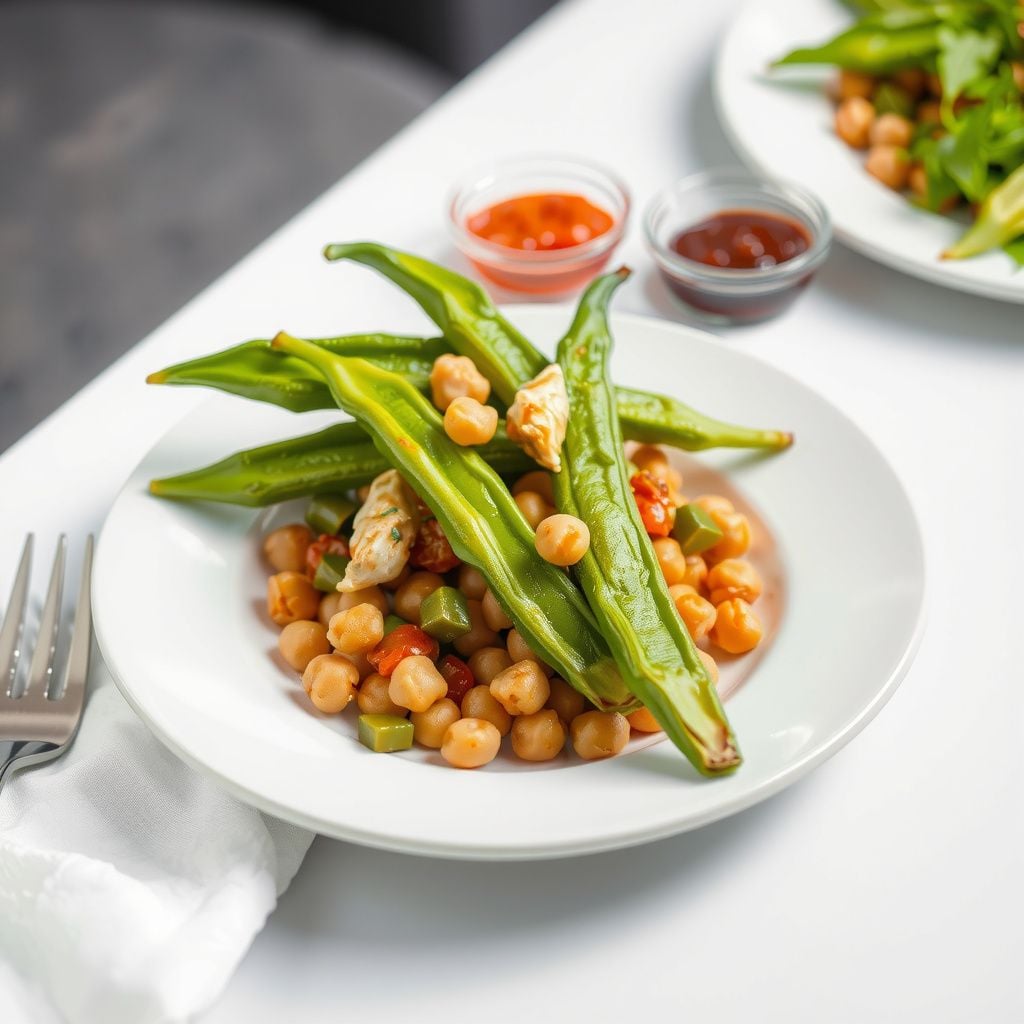
Crispy Blistered Okra and Chickpea Warm Salad
30min
4
View Full Recipe →
Ready to simplify your meal planning?
Let OttoChef AI create personalized meal plans for your family — free to use, no credit card.