
Crispy-Skin Chicken Perfection: Roasted vs. Pan-Seared Techniques
Master two foolproof methods for achieving restaurant-quality crispy chicken skin. Learn the science behind perfect roasted whole chicken and glass-like pan-seared thighs.
Alex Thompson
Food Editor
March 14, 2026
6 min read
8 views
Ask any chef what separates home cooking from restaurant-quality dishes, and crispy chicken skin will be near the top of the list. That golden, crackling exterior paired with juicy, tender meat underneath is the hallmark of proper technique—and it's absolutely achievable in your home kitchen.
The secret isn't expensive equipment or culinary school training. It's understanding two fundamental approaches: the dry-heat roasting method for whole birds, and the cold-pan rendering technique for individual pieces. Each produces spectacular results, but they work in completely different ways. Let me show you how to master both.
The Whole Bird Approach: Roasting for Maximum Impact
When you want to feed a crowd (or have leftovers for days), nothing beats a perfectly roasted whole chicken. The key is creating an environment where the skin can dry out and crisp up while the meat stays moist.
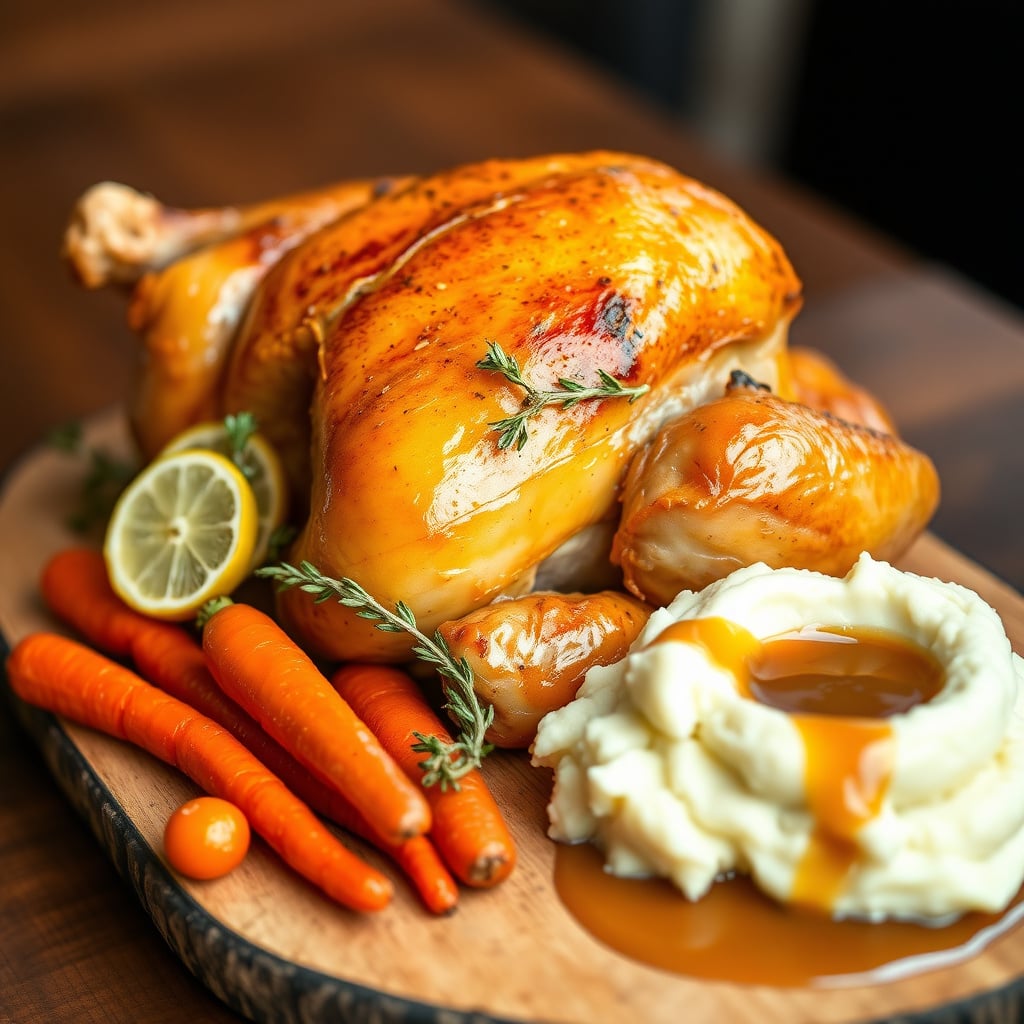
Lemon-Thyme Roasted Whole Chicken with Pan-Dripping Gravy, Honey-Glazed Carrots, and Buttermilk Mash
120min
4
View Full Recipe →
Whole Chicken
Starting with a quality bird makes all the difference. Look for chickens labeled 'air-chilled' rather than water-chilled—they have drier skin that crisps better. Pat the skin completely dry with paper towels before seasoning.
The technique here relies on high, consistent heat. As the chicken roasts, the skin's moisture evaporates and the fat renders out, leaving behind that coveted crispy texture. But here's what most people get wrong: they don't let the chicken rest properly after roasting.
The Resting Rule
Always rest your roasted chicken for at least 15 minutes after it comes out of the oven. Cover it loosely with foil—tight wrapping creates steam that softens the skin. During this time, the juices redistribute throughout the meat, and the internal temperature actually rises by 5-10°F.
While your chicken rests, those beautiful browned bits stuck to the roasting pan (called fond) become the foundation for an incredible pan gravy. Deglaze the pan while it's still hot with wine or stock, scraping up every caramelized morsel. This isn't just about sauce—it's about capturing every ounce of flavor you worked so hard to develop.
"The fond in your roasting pan contains more concentrated chicken flavor than any store-bought stock could ever provide."
Chef Thomas KellerThe Individual Piece Method: Cold-Pan Perfection
Now, what if you're cooking for a weeknight dinner and want something faster? Or perhaps you prefer dark meat? This is where the cold-pan technique shines—quite literally.
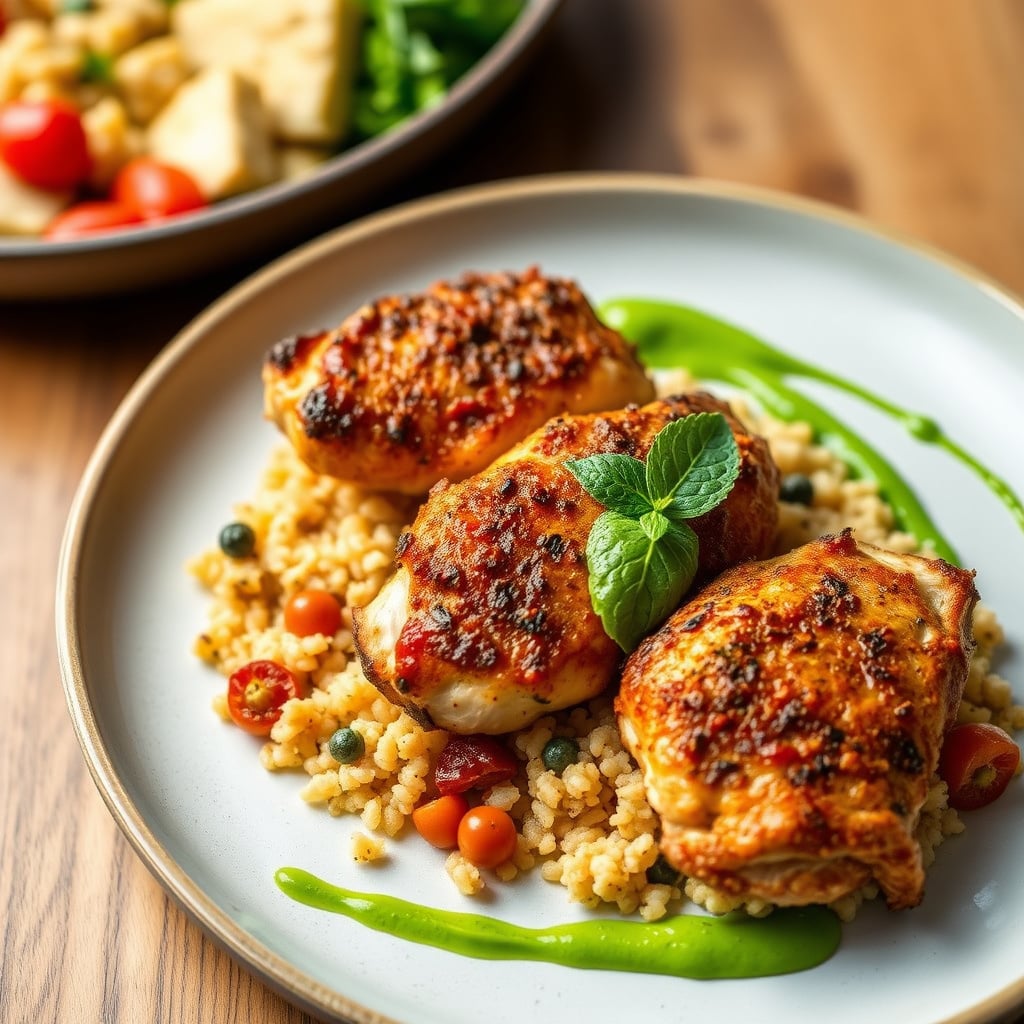
Featured Recipe
Moroccan-Spiced Crispy Chicken Thighs with Apricot-Bell Pepper Couscous and Minted Pea Puree
65 min
4
This Moroccan-inspired dish teaches you a counterintuitive method that produces what chefs call 'glass-like' skin. Instead of preheating your pan, you start with cold cast iron or stainless steel.
Start Cold
Place seasoned chicken thighs skin-side down in a cold pan, then turn the heat to medium. This gradual temperature increase allows the fat to render slowly and completely.
Resist the Urge
Don't move the chicken for at least 15 minutes. The skin will release naturally when it's properly crisped. If it's sticking, it's not ready yet.
Flip and Finish
Once the skin is deep golden and releases easily, flip and cook the other side for just 5-7 minutes. The skin side did most of the work already.
Ras el Hanout
This North African spice blend typically contains cardamom, cumin, coriander, cinnamon, and sometimes rose petals. It creates a warm, complex flavor that pairs beautifully with the sweet apricots in the couscous. If you can't find it, make your own with equal parts cumin, coriander, cinnamon, and paprika.
The beauty of this method is twofold: you get incredibly crispy skin without any risk of burning, and the rendered fat becomes the cooking medium for building flavor in your accompanying dishes. That chicken fat is liquid gold for sautéing vegetables or toasting couscous.
Temperature Matters
Chicken thighs are done at 175°F internal temperature (not the 165°F you'd aim for with breasts). Dark meat has more connective tissue that needs higher heat to break down properly. Undercooked thighs are rubbery; properly cooked ones are fork-tender.
Choosing Your Technique
So which method should you use? It depends on your situation:
Choose whole bird roasting when:
- You're feeding 4+ people
- You want leftovers for sandwiches and salads
- You have time for the full cooking and resting process
- You want to make homemade stock from the carcass
Choose the cold-pan method when:
- You're cooking for 2-4 people
- Weeknight timing is tight (45 minutes vs. 2 hours)
- You prefer dark meat
- You want more control over individual portions
Both techniques share one critical principle: patience. Crispy skin can't be rushed. Whether you're waiting for a whole chicken to roast through or resisting the urge to flip those thighs too early, the cook who waits wins.
The Dry Skin Secret
Regardless of which method you choose, the dryer your chicken skin before cooking, the crispier it will become. For next-level results, refrigerate your seasoned chicken uncovered for 2-24 hours. The cold air circulation dries the skin even further. Just remember to bring it to room temperature for 30 minutes before cooking.
Beyond Basic Seasoning
Notice how these two recipes take completely different flavor directions? The lemon-thyme roasted chicken is classic European comfort food—bright citrus, herbaceous thyme, and rich butter. The Moroccan-spiced thighs travel to North Africa with warm spices, sweet fruit, and fresh mint.
This is the beauty of mastering technique. Once you understand how to achieve crispy skin consistently, you can apply any flavor profile you desire. Asian five-spice and ginger. Mexican chipotle and lime. Indian garam masala and yogurt. The crispy skin is your canvas.
The Science of Crispy
Chicken skin is essentially fat and collagen held together by protein. When heated, the collagen breaks down, the fat renders out, and the proteins tighten and crisp. The Maillard reaction (browning) creates hundreds of new flavor compounds. This is why properly crisped skin tastes so much better than rubbery skin—it's not just texture, it's complex flavor development.
Your Crispy-Skin Journey Starts Now
You now have two proven techniques for achieving restaurant-quality crispy chicken at home. The whole bird roast delivers Sunday dinner grandeur with minimal hands-on time. The cold-pan thighs offer weeknight elegance with maximum control.
Start with whichever appeals to your schedule and preferences. Master that technique until it becomes second nature. Then tackle the other. Before long, you'll be the person your friends ask for chicken cooking advice.
Ready to transform your chicken game? Choose your recipe, gather your ingredients, and remember: patience and technique beat expensive ingredients every time. Your crispiest chicken ever is just one properly executed recipe away.
Pick your technique and start cooking tonight—your family will taste the difference.
Ready to simplify your meal planning?
Let OttoChef AI create personalized meal plans for your family in seconds.