
Conquering Kid Food Neophobia with Flavor-Bridge Pairing
Learn how to use the sensory science of flavor-bridge pairing to help your children overcome food neophobia and enjoy new ingredients without the struggle.
James Okonkwo
Food Writer
September 21, 2026
5 min read
4 views
You place a beautifully roasted floret of broccoli on your child's plate, only to be met with immediate resistance. To a parent, it can feel like a personal rejection of your cooking or a sign of stubbornness. To a child, however, that green vegetable represents a genuine biological threat. This natural reluctance to try new foods is known as food neophobia, and it is a completely normal developmental phase.
Understanding how to navigate this phase does not require turning dinner into a battleground. Instead, you can use a sensory science technique used by professional product developers and chefs alike: the "flavor-bridge" pairing method. By linking unfamiliar ingredients to familiar, well-loved flavors, you can gently expand your child's palate and make family meal times peaceful again.
The Evolutionary Root of Neophobia
In ancestral times, a child's sudden reluctance to eat unfamiliar plants around age two—just as they became mobile—kept them from accidentally poisoning themselves. It is an evolutionary defense mechanism, not bad behavior. Knowing this can help you approach meal times with empathy rather than frustration.
The Science of the Flavor Bridge
Humans are hardwired to prefer sweet, salty, and savory (umami) flavors because they historically signaled energy-dense, safe foods. Conversely, bitter and sour flavors often signaled toxins or spoilage. Vegetables, which are frequently bitter due to natural calcium and polyphenols, naturally trigger a child's defense systems.
Flavor-bridge pairing is the practice of introducing a novel food (the "target") alongside a highly accepted food (the "anchor") that shares similar flavor compounds, textures, or preparation methods. The familiar anchor acts as a sensory translator, making the brain register the new food as safe and palatable.
“Familiarity is the greatest seasoning for a child's palate. By anchoring the unknown to the known, we disarm the evolutionary fear response.”
Dr. Clara Davis, Pediatric Nutrition ResearcherHow to Build a Flavor Bridge
Transitioning your child to new foods is a gradual process. Rather than hiding ingredients, which can damage trust if discovered, flavor bridging relies on transparency and culinary technique. Here is how to apply this method systematically in your home kitchen.
Identify the Anchor Food
Start by choosing a food your child already loves and eats consistently. This is your anchor. It could be something simple like roasted potatoes, mild cheddar cheese, buttered noodles, or applesauce.
Select a Related Target Food
Choose a new ingredient that shares at least one sensory characteristic with your anchor. If your anchor is roasted potatoes, an excellent target is roasted parsnips or sweet potatoes. If the anchor is mild cheddar, the target could be a mild, creamy goat cheese or Monterey Jack.
Establish the Sensory Bridge
Prepare the target food using the exact same cooking technique, seasoning, and presentation as the anchor. If they love crispy, salty potato wedges, cut the parsnips into identical wedges, toss them in the same oil and salt, and roast them to the same level of crispness.
Introduce and Transition
Serve a small portion of the target food right next to the anchor food. Encourage them to try them together or alternating bites. Over subsequent meals, gradually increase the ratio of the target food while decreasing the anchor.
Avoid the "Sneaking" Trap
Hiding puréed vegetables in sauces can get nutrients into a child's diet, but it does not cure neophobia. To build long-term food acceptance, children need to consciously identify, chew, and accept the sensory properties of the new ingredient.
Practical Pairing Combinations to Try
To help you get started, here are three highly effective flavor-bridge combinations based on common child preferences:
The Sweet and Golden Bridge
- Anchor: Roasted Sweet Potatoes
- Target: Roasted Carrots or Butternut Squash
- The Bridge: Caramelization. Roasting these root vegetables at high heat (400°F/200°C) coaxes out their natural sugars, mimicking the sweet, comforting profile of the sweet potato.
The Creamy and Savory Bridge
- Anchor: Macaroni and Cheese
- Target: Cauliflower florets
- The Bridge: Cheese Sauce. Toss small, tender-crisp cauliflower florets directly into the cheese sauce alongside the pasta. The rich, salty cheese coats the cauliflower, masking any sulfurous aromas and providing a familiar texture.
The Crispy and Salty Bridge
- Anchor: Potato Chips or French Fries
- Target: Baked Kale Chips or Zucchini Fries
- The Bridge: Texture and Salt. When baked with olive oil and sea salt until shatteringly crisp, kale loses its tough texture and bitter edge, mimicking the satisfying crunch of a potato chip.
The Power of Fat and Salt
Fat and salt are highly effective flavor bridges because they coat the tongue and physically block bitter taste receptors. A light sprinkle of Parmesan cheese, a drizzle of butter, or a dip of ranch dressing can make a bitter green vegetable instantly acceptable to a sensitive palate.
Patience Over Pressure
It can take anywhere from 10 to 15 exposures to a new food before a child's brain accepts it as safe. If they spit it out or refuse it on the first try, do not despair. Neutral exposure without pressure is key. Simply try again a week later using a different bridge.
By treating food neophobia as a culinary puzzle rather than a behavioral issue, you can systematically expand your child's palate. Using flavor bridges respects their sensory boundaries while gently guiding them toward a lifetime of diverse, adventurous eating.
Try This Recipe
Now that you've learned about conquering kid food neophobia using the 'flavor-bridge' pairing method, put your knowledge into practice with this recipe:
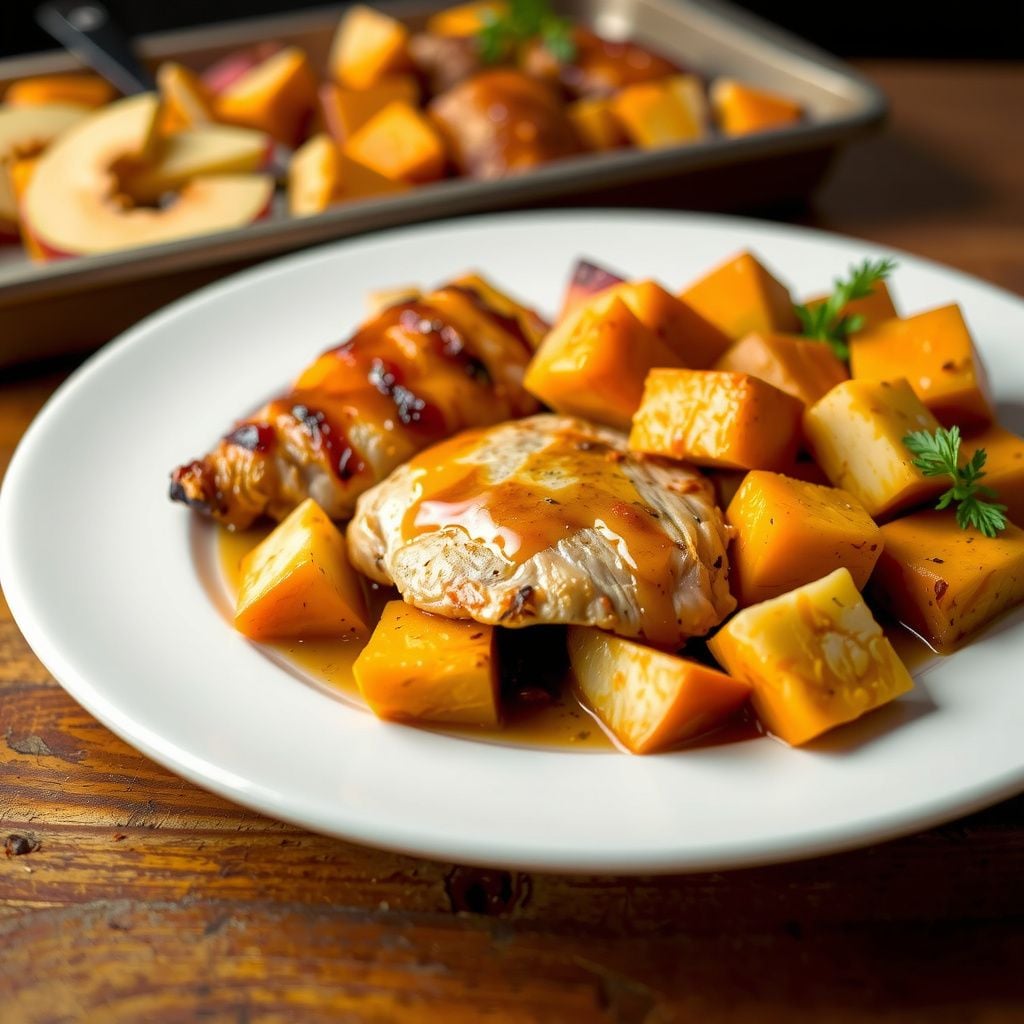
Maple-Glazed Sheet Pan Chicken with Roasted Apples and Butternut Squash
50min
4
View Full Recipe →
Ready to simplify your meal planning?
Let OttoChef AI create personalized meal plans for your family — free to use, no credit card.